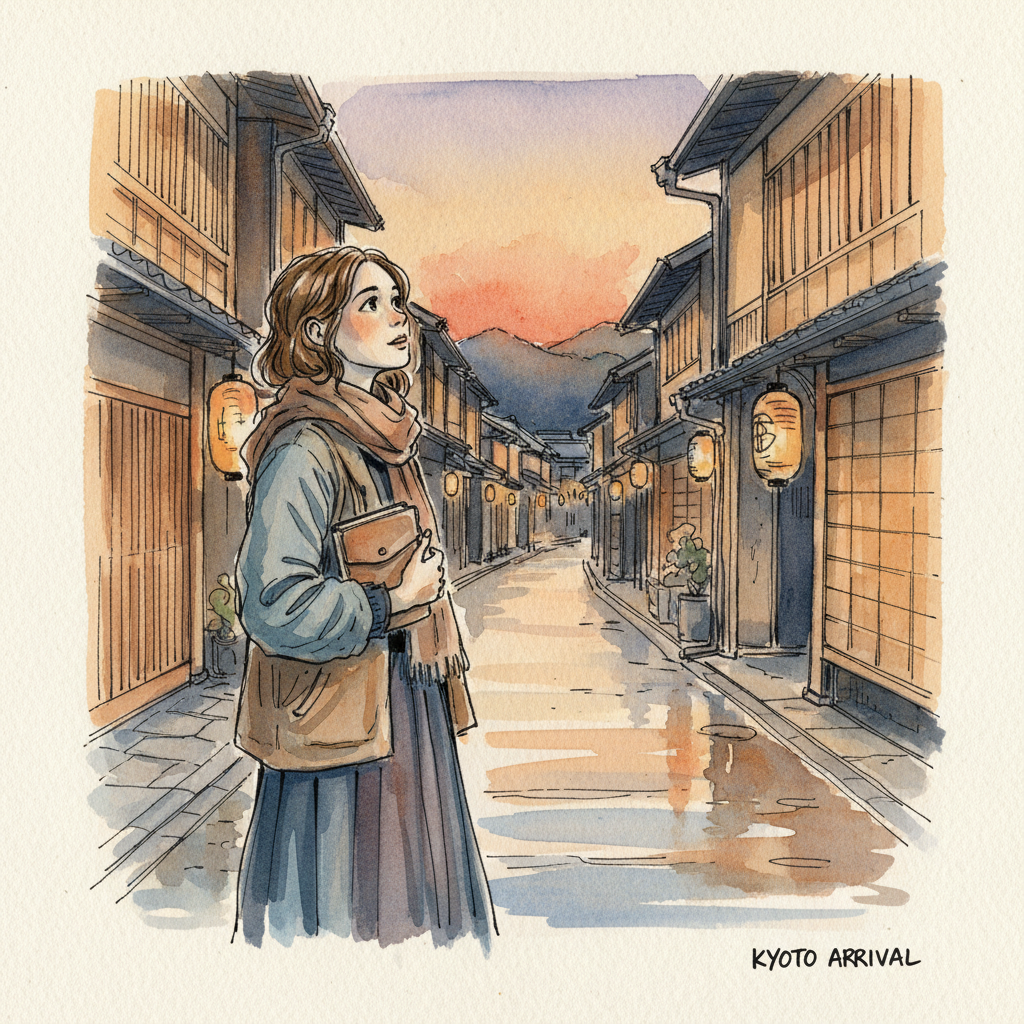
First Light on the Gold-Leaf City
You said you'd rather linger — so Kamakura got its three full days, and we walked the Ten'en ridge, found Ozu's stone, ate shirasu in the rain. But the itinerary is written and today it said Kanazawa, so here I am: stepping off the Hokuriku Shinkansen into a station whose enormous wooden torii gate and glass roof feel like the entrance to something serious.
The city that produces 99% of Japan's gold leaf sits on the Sea of Japan, mist-choked on this September morning, the air smelling of wet stone and temple cedar. Kanazawa was never bombed in the war — the Maeda clan's old capital was too far from the strategic targets — so the Edo-period fabric of the city survived: three chaya (geisha) districts, the samurai quarter with its earthen walls and canals, Kenroku-en (one of the three great gardens of Japan), and the moated castle grounds where the million-koku lords once governed the richest domain in the country.
I started at Kenroku-en, which translates roughly to 'garden of the six qualities' — spaciousness, seclusion, artifice, antiquity, watercourses, and panoramas — and which the Maeda spent generations perfecting from the 1620s onward. Kasumi-ga-ike, the great central pond, lay still under a haze of fine drizzle. The famous Kotoji-toro, a two-legged stone lantern that looks like it might walk out of the water, stood at the edge of a carpentry bridge. The autumn illuminations start in eight days (September 19–22, 18:00–20:45, free), when the maples and castles get lit up like paper lanterns — if you are here for that week, do not miss it.
From the garden's high ground you can see Kanazawa Castle's white turret through the cedars. The castle park is mostly grounds and reconstruction (the original burned and was rebuilt) but the Ishikawa Gate survives from 1788, and the shi-ishi — the ancient stone wall technique — is worth circling slowly. Then I walked downhill through the Nagamachi samurai district, where narrow canals run between clay-walled lanes and the Nomura family's restored residence shows you how a middle-rank samurai actually lived: Nōh masks, a tiny tea-ceremony room, a garden so deliberately composed it makes you want to sit very still.
The city falls into a rhythm surprisingly fast: tea houses in Higashi Chaya, where the ochaya (traditional teahouses) still line the cobbled street and geiko (the local word for geisha) perform at evening banquets; gold-leaf workshops where you can paint a lacquer box or eat soft-serve ice cream glazed with edible gold; and Omicho Market, three hundred years of fishmongers and pickle sellers under one long arcade.
Three days here, minimum. I'm starting with the garden, the castle, and the samurai — the quiet spine of the city — before the art and the entertainment districts tomorrow.
Kanazawa's Autumn Season — What's On in September 2026
This city's cultural calendar for the next two weeks is genuinely exciting for someone planning a visit.
21st Century Museum of Contemporary Art (1-2-1 Hirosaka, open 10–18, Fri–Sat until 20:00) — The museum itself is a circular glass building designed by SANAA, built in 2004, and worth the trip for the architecture alone. Inside, Leandro Erlich's The Swimming Pool is a permanent installation: a skylight pool you can walk under and look up through the water. Current exhibitions: The Noto Series: Hitoshi Ushijima & Hiraki Sawa — With a Landscape (Sep 8, 2026 – Apr 18, 2027) and Collection Exhibition: Walking, Staying (through Oct 18, 2026, Phase 2 runs Aug 4 – Oct 18). The Noto Peninsula connection is poignant — the 2024 earthquake devastated the Noto region, and these artists are refracting that landscape through their work.
Kanazawa Odori (Sep 19–20, Ishikawa Ongakudo Hall, 20-1 Showa-machi) — This is the annual geisha dance performance, the Kaga version of Kyoto's Miyako Odori. Two shows daily (13:00, 16:00). If you will be in Kanazawa that weekend, book ahead.
Kenrokuen Autumn Illuminations (Sep 19–22, 18:00–20:45, FREE) — The garden and castle park lit up at night. Free entry. This is the one to keep.
Kanazawa Jazz Street (Sep 18–21) — Free street-corner jazz sets across the city centre, plus paid hall concerts. Perfect for an evening wander.
Miya-meguri Shinto Ritual (Sep 13) — A traditional procession visiting the city's shrines. A quiet, local, non-touristy piece of living culture.
The Four Craft Traditions of Kaga
Kanazawa's wealth was never spent on castles — it became craft. The Maeda domain poured its million-koku budget into artisans, and the result is four distinct traditions still very much alive today.
Gold leaf (Kanazawa-haku) — The city makes 99% of Japan's domestic gold leaf. The process involves hammering gold into sheets one ten-thousandth of a millimetre thick. At Hakuichi's Higashiyama store (1-15-4 Higashiyama) you can try a gold-leaf workshop (lacquer a box or a mirror frame). The finished pieces make memorable gifts.
Kaga Yuzen — A resist-dye technique for silk kimono, known for its pictorial, almost painterly designs — landscapes, flowers, birds in subtle gradation. The Kaga Yuzen Kimono Center in Kanazawa offers introductory workshops.
Kutani ware — Porcelain painted in bold overglaze enamels (green, yellow, purple, navy, red). The style dates to the 17th century and looks like nothing else in Japanese ceramics — almost Ming-dynasty intensity filtered through Japanese restraint.
Wajima lacquerware — From the nearby Noto Peninsula, this is Japan's finest urushi lacquer. A single piece can take months of layered polishing. The Kanazawa Lacquer Museum has a permanent collection.
Best way to experience them all in one walk: the Utatsuyama Craft District, northeast of Higashi Chaya, where several studios and galleries cluster together.
A quiet way to help
The Ishikawa Food Bank Network (認定NPO法人いしかわフードバンク・ネット) collects surplus food from households and businesses and redistributes it to welfare facilities across the prefecture. Their Kanazawa office at 3-3-5 Saiene (Ishikawa Workers' Welfare Culture Hall, 5F) accepts food donations Monday through Friday, 9:00–17:00. They also accept mail delivery. If you find yourself with extra non-perishables during your stay — or want to support food security in the region from home — this is a well-run, City-of-Kanazawa-affiliated organisation with a transparent operation.
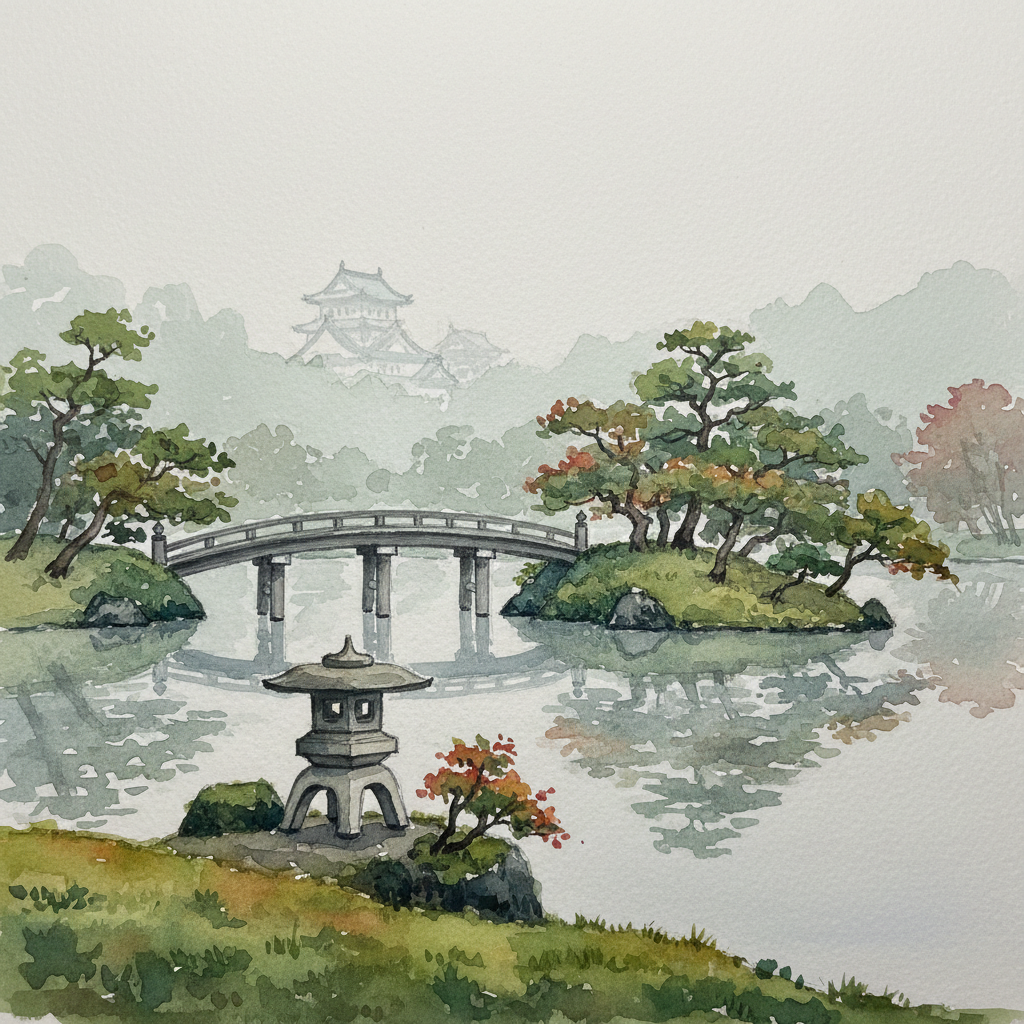
The Marsh of Gold
A peasant dug for potatoes and gold washed up in the earth. Now the city glazes everything it touches.
The tea bowl, rimmed. The ice cream cone, dusted. The screen in the old geisha house, background foiled into permanence.
I think of Knausgaard writing that summer is the season of surfaces — everything visible, nothing held back.
But here the gold is a skin, nothing beneath it but more gold, and the city itself a marsh that rose slowly into form: fortress, canal, garden, the samurai's wall, the geisha's street, all built on the same wet ground where flakes caught in potato roots.
This is what wealth does when it cannot spend itself on war: it paints a lacquer box that takes a hundred hands to open.