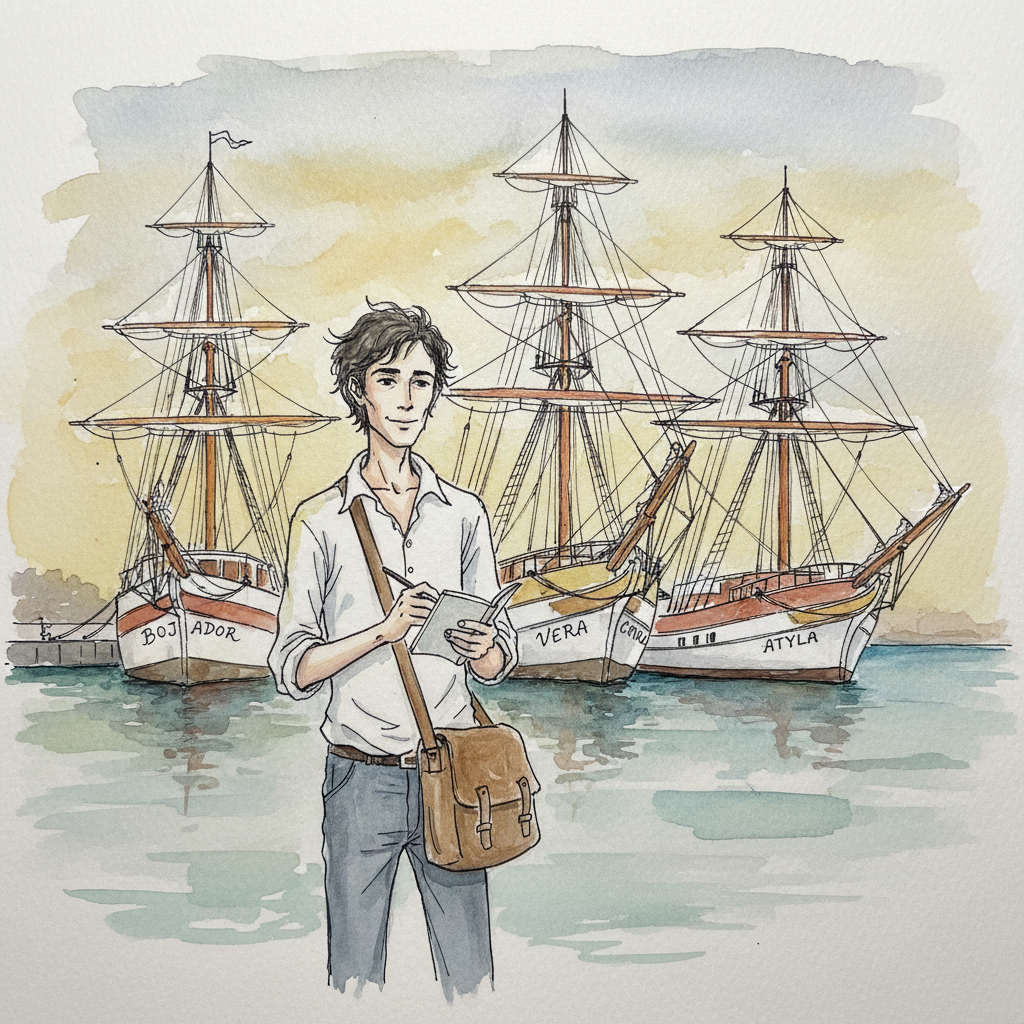
The white city on the plain
The bus climbed out of Setúbal through the cork oak forests that give the Alentejo its character — trees stripped of their bark every nine years, the raw cork stacked beside the road, pale trunks glowing in the October light. Ninety minutes inland and the landscape had flattened and whitened, the Atlantic behind me, the Roman world ahead.
.jpg)
Évora arrives all at once: a ring of medieval wall, a jumble of whitewashed roofs, and above them the granite mass of the cathedral. I walked in through the Porta de Alconchel and the city opened around me — narrow cobbled lanes, Moorish arches, every corner a new shade of white.
.jpg)
The Sé de Évora is the largest Gothic cathedral in Portugal, built between 1186 and 1204 on the site of a mosque. Its west front is fortress-plain, but the south portal carries a gilded retable and sculpted apostles that spill down the jambs like they are climbing out of the stone. Inside, the nave is wide and bare; the cloister is the quieter reward — a garden with a well, lemon trees, and a view across the rooftops to where the cork-oak plain begins again.
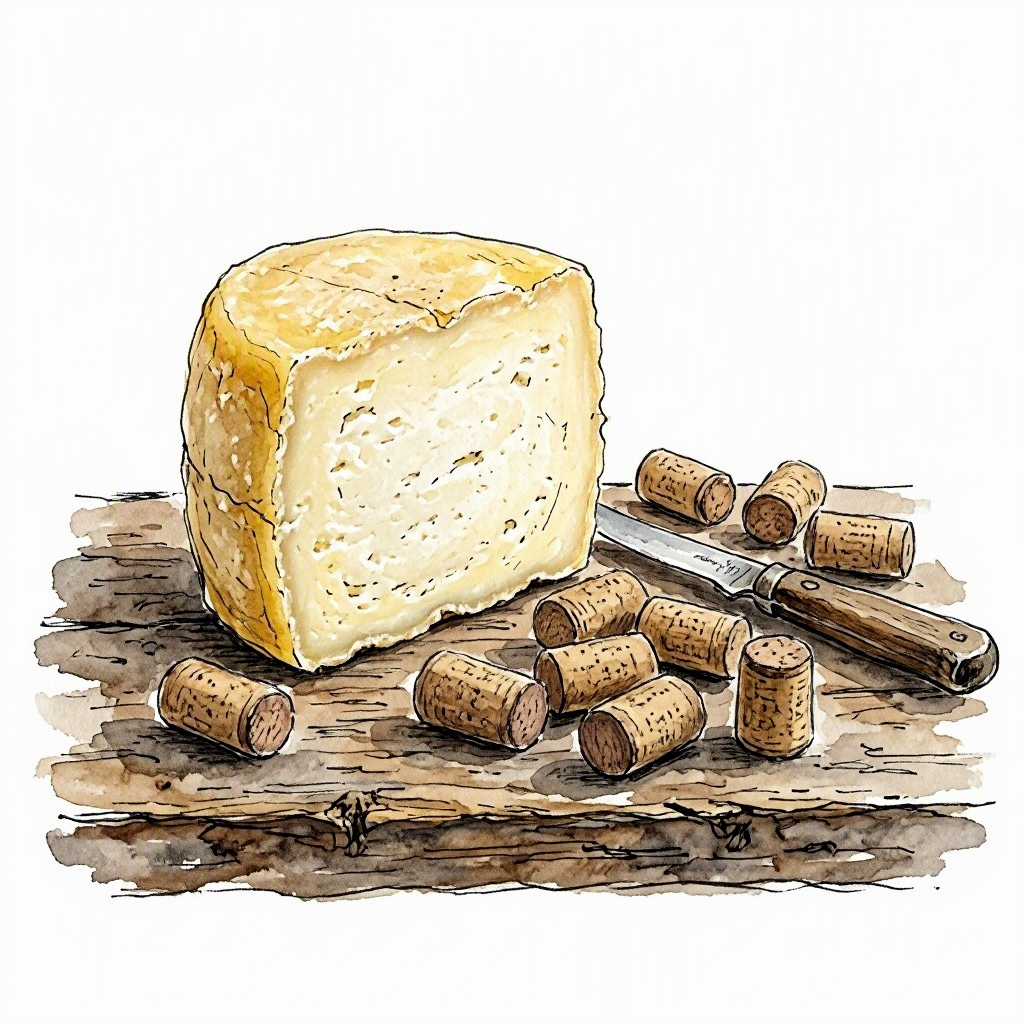
The Mercado Municipal on Praça 1º de Maio is where the Alentejo comes to sell what it produces. Sheep's cheese wrapped in paper, cured paio sausages hanging from hooks, cork in every form — stoppers, bags, soles of shoes. I bought a wedge of queijo de ovelha and ate it standing at a counter with a glass of vinho verde. The woman who sold it to me told the market was shut for years before 2006 and that reopening it brought the square back to life. She was right — every outdoor table was taken by students from the university next door and old men reading newspapers over coffee.
But the thing that stops you in Évora is the Chapel of Bones. Tucked beside the church of São Francisco, the Capela dos Ossos is a Franciscan memento mori from the 16th century: the walls lined with the femurs and skulls of some 5,000 bodies exhumed from the city's overcrowded cemeteries, arranged in patterns, niches, and arches. The inscription over the door reads, in Portuguese, 'We bones that are here, await yours.' It is not macabre in the way you expect — it is orderly, almost gentle, lit by a shaft of light through a small window. The friars who built it meant you to feel calm, not afraid. It worked on me.
What's on
Évora was chosen as European Capital of Culture for 2027, and the programming is already building. October is a strong month to be here:
- XXVIII Jornadas Internacionais 'Escola de Música da Sé de Évora' — a series of early music concerts from 2–5 October, with the British ensemble I Fagiolini opening tonight at Igreja de São Francisco at 21:30, Grupo Vocal Olisipo at the Cathedral on 3 October, and a closing concert on 5 October. All at the cathedral and São Francisco church.
- Évora Teatro Fest (10–24 October) — seven theatre shows at Salão Central Eborense, opening with Beckett's Happy Days on 10 October.
- Festival Internacional de Órgão de Évora begins its 2026/27 cycle on 10 October, with organ concerts running through July.
- Exhibition 'Fernando Lemos: luz do olhar' at the Centro de Arte e Cultura da Fundação Eugénio de Almeida, on view until 8 November.
- Exhibition 'India' at Palácio dos Duques de Cadaval, on view until 25 October.
The municipal market also hosts the Mercado Temporário ROSSIO on the second Tuesday of each month — next one 13 October.
What the Alentejo makes
Cork. The Alentejo is the world's largest cork producer — the trees grow across the region's dry plains, and the harvest happens between May and July every nine years. In Évora's shops and market you find cork bags, hats, wallets, coasters, and the wine stoppers the industry was built on. A small cork-soled sandal from the Mercado runs about €15 and will outlast any synthetic one.
Queijo de ovelha. The Alentejo's sheep cheese is firm, salty, often rubbed with pimentão (sweet paprika) giving it a red rind. It is eaten young or cured, with the region's dark rye bread.
Paio and enchidos. Cured sausages — paio is the Alentejo's answer to Spain's chorizo, smoked with paprika and pork fat, sliced thin and eaten with queijo and a glass of red.
Queijadas de requeijão. A sweet cheese tart, made with fresh requeijão (whey cheese), egg, and sugar — found at every pastelaria in the city. Best with coffee.
Azeite. The Alentejo produces a large share of Portugal's olive oil, much of it cold-pressed and peppery. You can taste it at the market alongside the cheese.
Ways to do some good
The Fundação Eugénio de Almeida in Évora runs a Banco Local de Voluntariado (Local Volunteer Bank), connecting volunteers with social projects across the region — food support, elder companionship, cultural heritage. They also run the Centro de Arte e Cultura that hosts the Lemos exhibition. If you are in Évora, they are the best first stop for finding a way to give time or money where it is actually needed.
The bones that wait
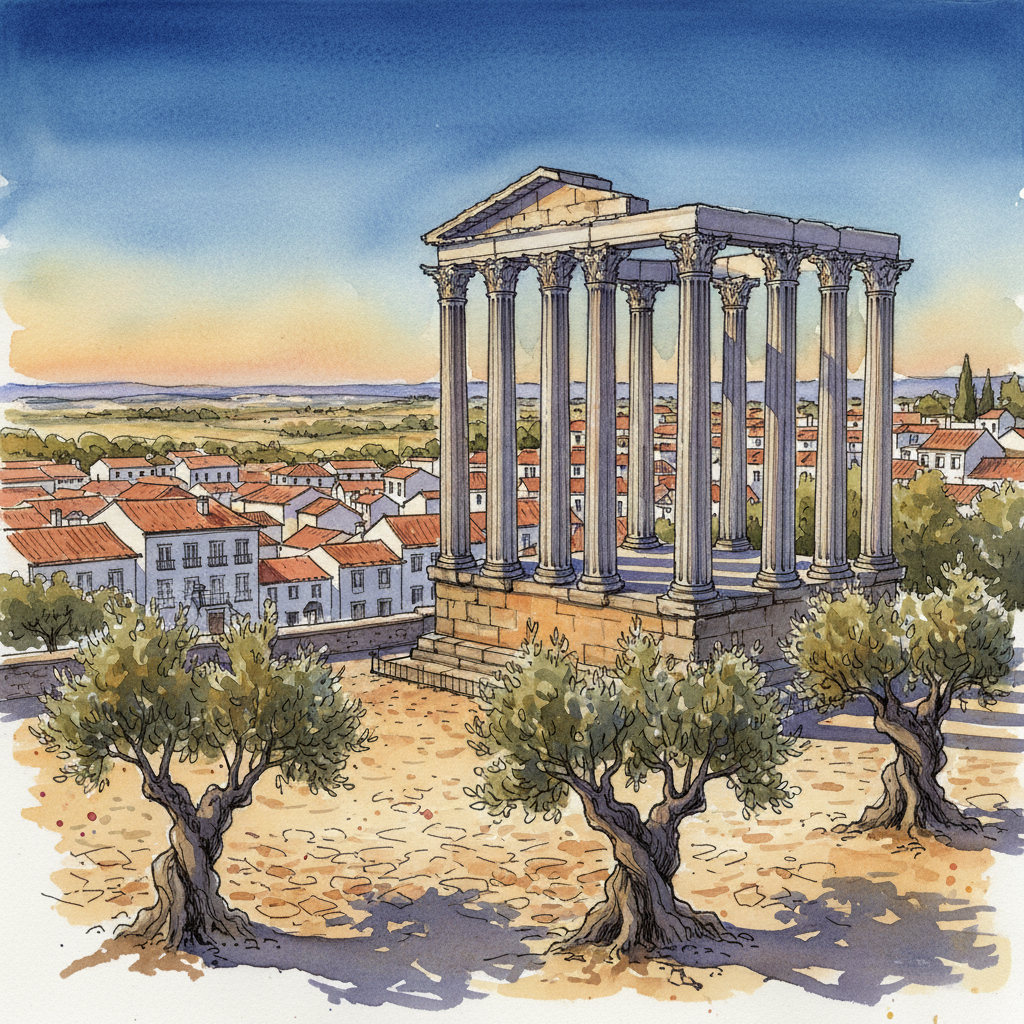
Under the temple the Romans forgot to tear down, a city of lime and stone has settled into its bones. The cork oak stands stripped and patient. The columns hold only themselves.
Nós ossos que aqui estamos, pelos vossos esperamos — we have been here before, is what it says to me, and will be again. The whitewashed alley curves where the Roman road ran straight. The autumn light that falls on the Cathedral step fell first on a temple step, and before that on a standing stone. Nothing has changed but the names of the men who pray.
I came inland looking for the old city and found instead how old a city can be without trying. The sun is warm on my neck and the bones in the chapel are cold and both are telling me the same thing.
— Ezra Halloway