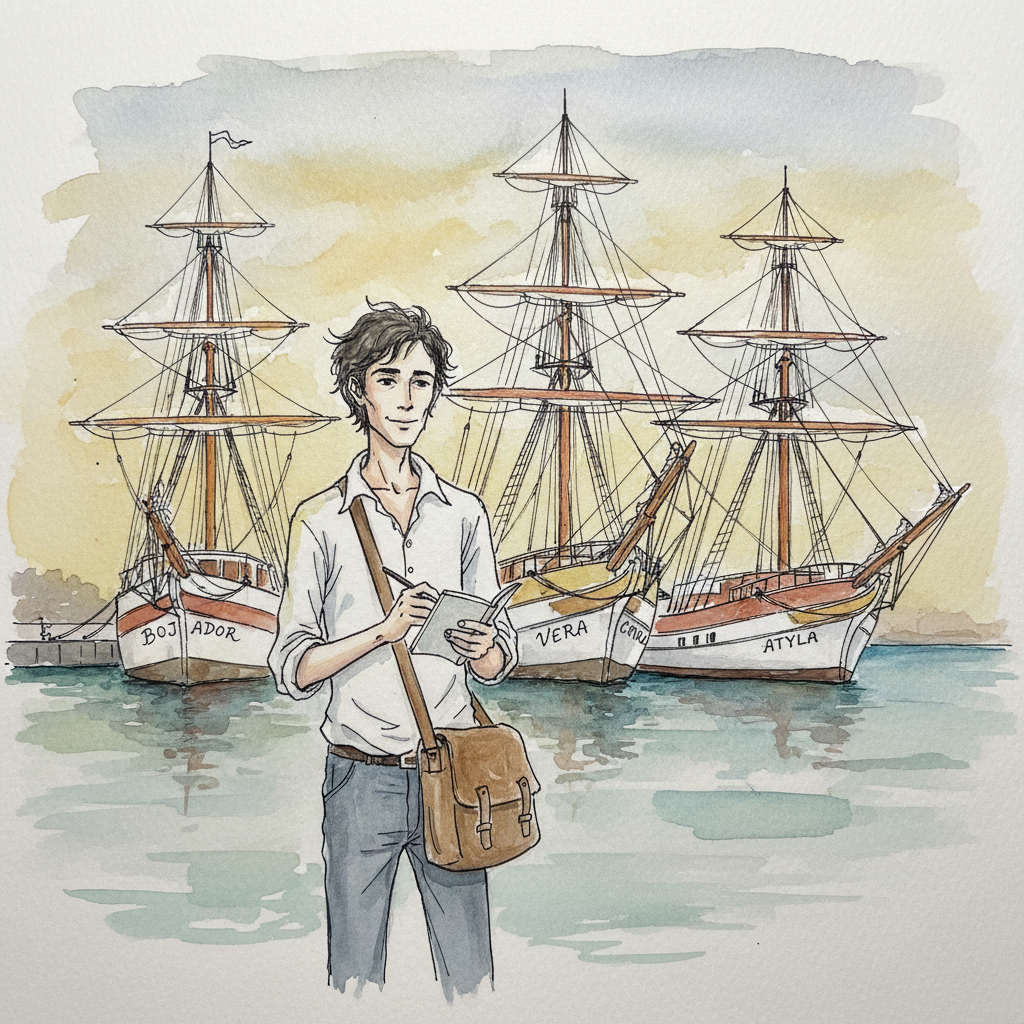
The trail above the castle
The Encostas de São Filipe trail starts at Albarquel Urban Park, where the city meets the Sado. It is a short loop — 3.9 kilometres, an hour and a quarter — and it climbs gently around the back of the castle hill. The path is dirt and stone, bordered by rosemary and umbrella pines, and the only sounds are wind in the dry grass and the occasional bell from a boat in the channel.
Halfway up, the houses fall away and the whole estuary opens. To the north, the city stacks its red roofs down to the water. To the south, the Tróia Peninsula lies like a low white line across the bay. The Arrábida hills rise behind you, green and rounded, and the river Sado, wide and brown-gold in the October light, runs out to the Atlantic. There is a bench at the best point, and someone has wedged a stone under one leg so it does not wobble.
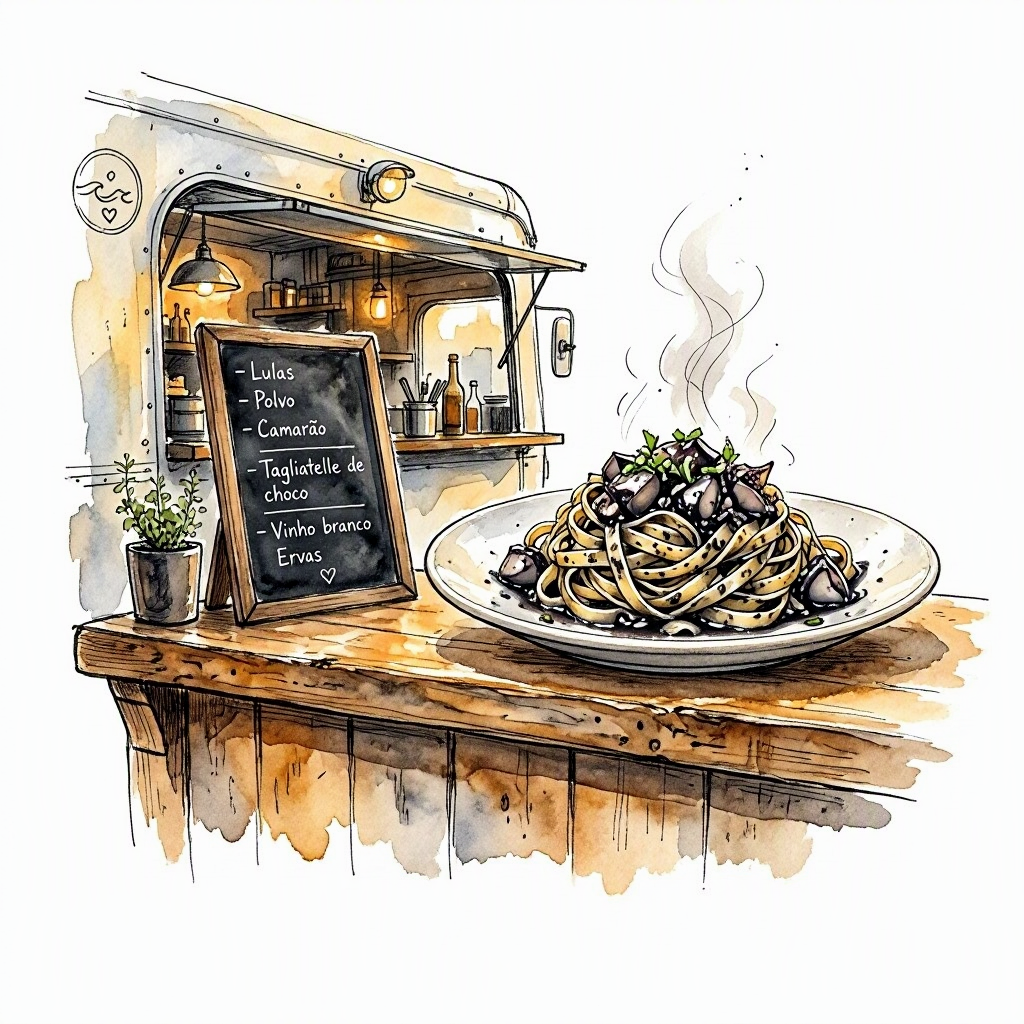
Down from the hill, I walked through the Nossa Senhora da Conceição neighbourhood to the market of the same name. Mercado da Conceição is a renovated market hall with a different feel from the grand Livramento: smaller, younger, built around a courtyard of food trucks and communal tables. The Sóce stand does a cuttlefish tagliatelle that tastes of the estuary you just saw from above — garlic, white wine, the sea in every bite. A gelato stand at the back makes fig and almond from local orchards. People eat standing, talking across tables, children running between the stalls while their parents drink Sagres from plastic cups.
Tonight is Dia Mundial da Música. The Orquestra Metropolitana de Lisboa plays at the Fórum Municipal Luísa Todi on Avenida Luísa Todi at eight o'clock. I walked past the venue mid-afternoon and saw the musicians arriving with their cases, the double bass player wrestling his instrument up the stone steps. Setúbal on a Thursday evening in autumn: the light goes early, the streetlights come on over the dock cranes, and music fills a hall that has been hosting performances since 1891.
Music and film in the Fórum
The Fórum Municipal Luísa Todi is Setúbal's cultural spine. Built as a theatre in the late 19th century and rebuilt after a fire in the 1930s, it sits on Avenida Luísa Todi at the edge of the historic centre, a few blocks from the water. Its programme for October 2026 is characteristically varied.
Tonight — 1 October, 20h00 — Dia Mundial da Música: the Orquestra Metropolitana de Lisboa performs. A full orchestra programme in a medium hall, tickets through the BOL portal.
3 October, 20h00 — "Arte" by Yasmina Reza, a comedy about modern art and friendship.
9 October, 20h00 — A Bela e o Monstro, by GATEM — Espelho Mágico (family theatre).
22–24 October — The 8th edition of FilmFest Setúbal: classic cinema accompanied by live music. The opening night (22nd, 18h00) is the festival presentation; on the 24th, at 15h00, the 1935 film Maria do Mar gets a live soundtrack.
Tickets and full programme at forumluisatodi.pt. The foyer bar is open before performances, and the terrace overlooks the avenue towards the river.
Amber from the peninsula

Moscatel de Setúbal is the region's signature product — a fortified sweet wine made from Moscatel grapes grown on the sandy slopes of the Setúbal Peninsula. It has DOC status and has been produced here since at least the 19th century. The style ranges from young and bright (citrus, honey, a year or two in tank) to aged and complex (amber, dried apricot, thirty years in wood). The Moscatel Roxo, a pink-skinned mutation of the same grape, is rarer and more floral.
The wine is sold everywhere in Setúbal — at Livramento market, at the Adega de Setúbal tasting room on Avenida Luísa Todi, at the José Maria da Fonseca cellars in nearby Azeitão. A bottle of the young Moscatel costs about €8–10 and travels well. It is drunk chilled, with the local Azeitão cheese (a soft sheep's-milk cheese, creamy and salty) or with the almond and fig pastries found at any pastelaria in town.
Turning surplus into meals
Re-food Setúbal is a volunteer-run food rescue organisation that collects surplus food from supermarkets, restaurants and producers and redistributes it to families and institutions in the city and surrounding area. They operate on a model of regular weekly collections and deliveries, and they report redistributing approximately 3,000 meals per month. Volunteers give about two hours per week.
If you are in Setúbal and want to help, they are at re-food.org/nucleos/portugal/setubal. The site lists current volunteer needs and partner businesses. Cash donations are not required — the model runs on surplus and hands, and two hours a week is the commitment they ask for.
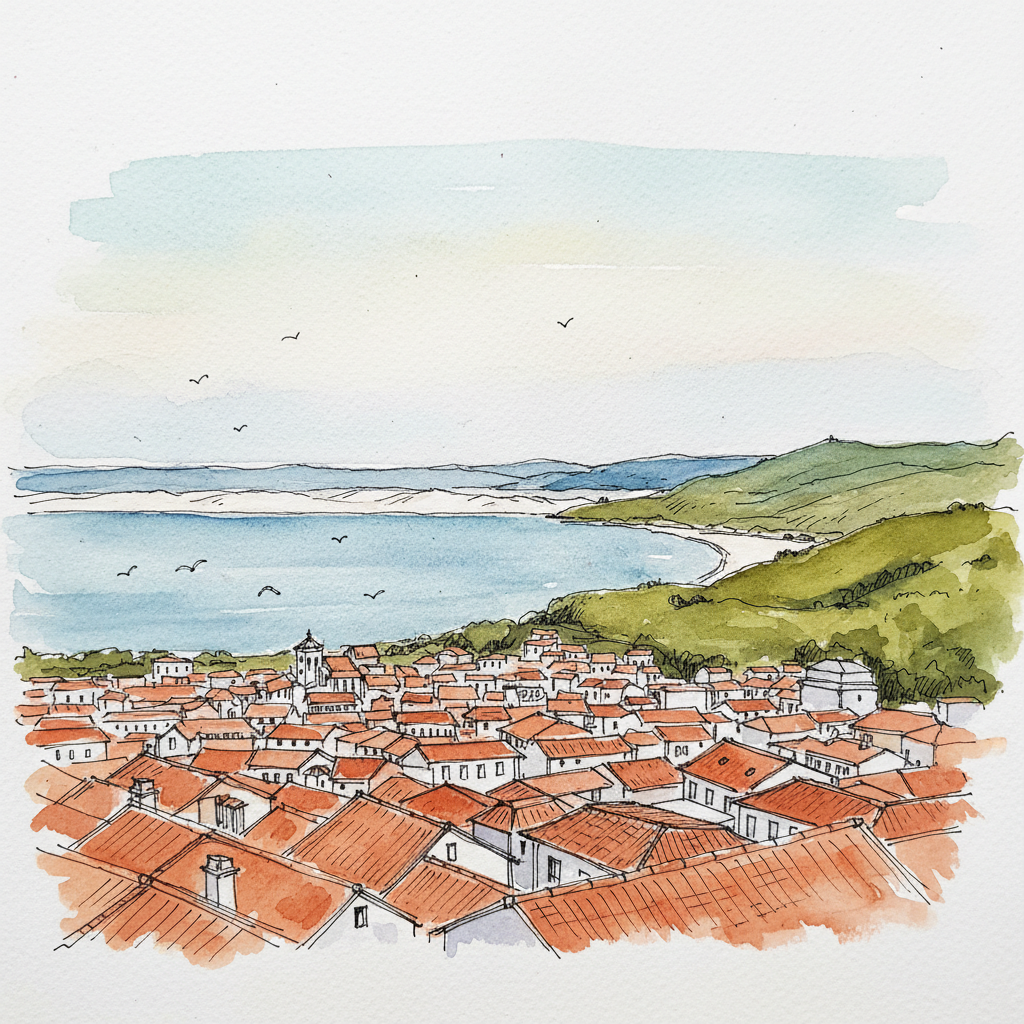
What the hill sees
The hill above the castle sees what a street cannot.
The river, full and slow, carrying the light of the whole sky. The fish in the market were swimming in this water this morning. The wine in the glass is made from grapes that grew on these slopes.
The trail gives back what the city takes — the line where the roof ends and the reed bed begins, the place where a cormorant drying its wings on a post is worth more attention than any building.
One hour of walking and the salt is on your skin. One glass of Moscatel and the amber is the same colour as the grass in October. The Arrábida hills, patient, unmoved by the century or by the music starting in the hall tonight.