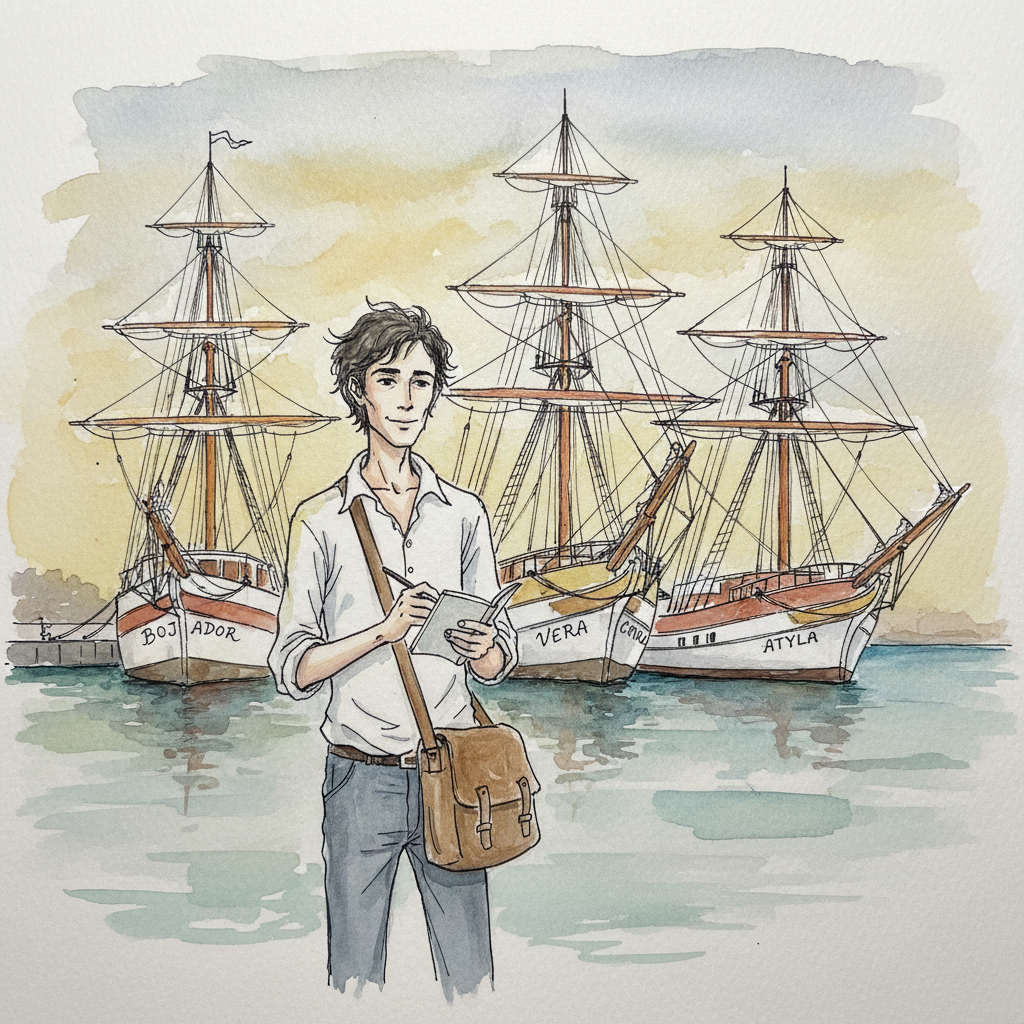
The train from Cascais crosses the southern suburbs of Lisbon, then the salt flats of the Tagus, and finally the brown hills of the Arrábida peninsula before dropping into Setúbal. The approach tells you everything: salt pans on the left, a chemical plant on the right, fishing boats moored at the mouth of the Sado. This is not a resort.
Setúbal is a working port city — 118,000 people, a deep-water harbour, a history of sardine canning that made it the most important fishing port in Portugal in the early 1900s. None of those factories operate today, but the town hasn't gentrified itself out of its character.

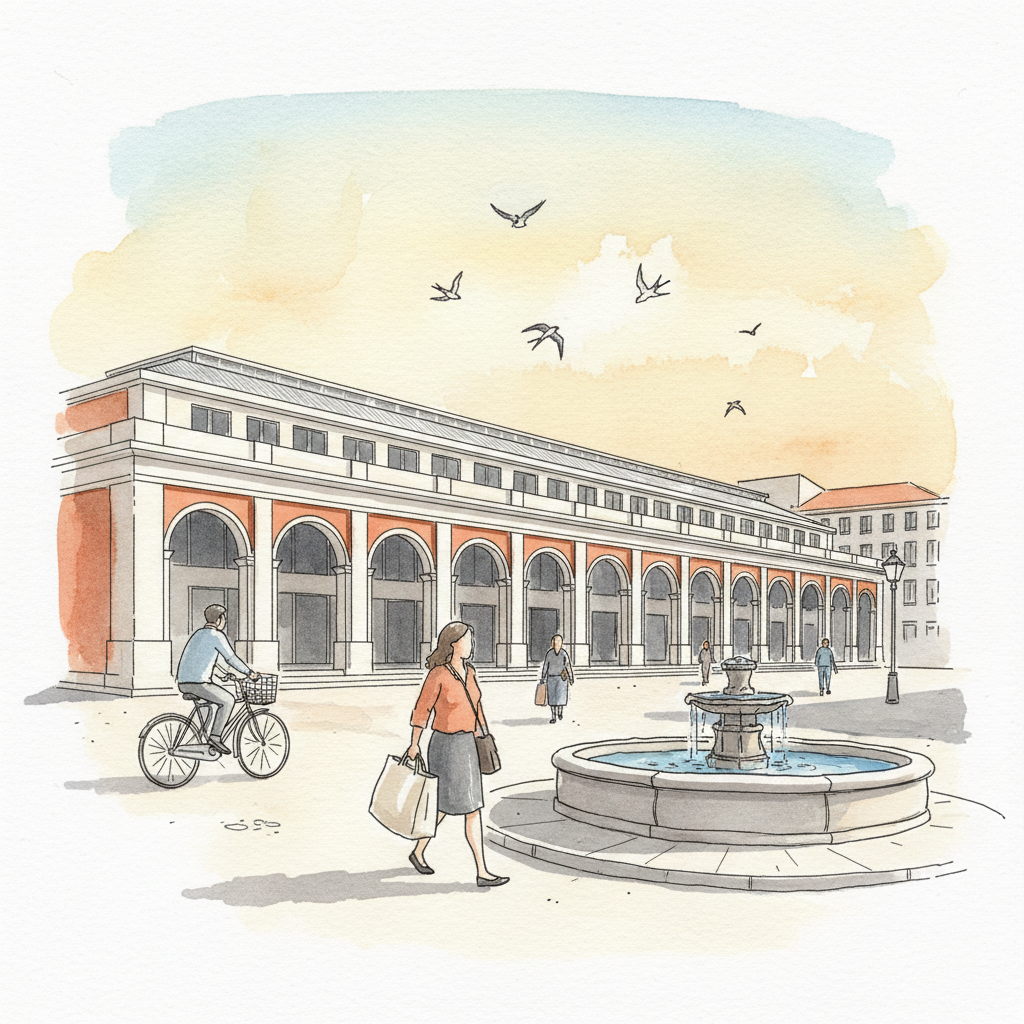
The Mercado do Livramento occupies a long 1930s building on Avenida Luísa Todi like a civic anchor. By late afternoon the fish stalls were hosing down their counters, but the produce stalls still had heaps of tomatoes and figs, and the choco frito counters along the market's edge were doing a steady trade — whole cuttlefish dusted in flour and lowered into hot oil, served on a square of paper with a wedge of lemon. You eat it standing, looking out at the street. The people eating are dockworkers, retirees, mothers with children just out of school. Nobody is taking a photograph of their food.
From the waterfront you can see the Tróia peninsula across the estuary, and somewhere in the grey-green water between them lives a resident colony of bottlenose dolphins — one of the few urban dolphin populations in Europe. I didn't see them today. But the fishermen I asked about them nodded toward the water as if I'd asked whether the tide comes in.
Art & culture

Setúbal's cultural anchor is the Museu de Setúbal housed in the Convento de Jesus, a monastery founded in 1490 that is one of the earliest examples of Manueline architecture in Portugal. Its collection includes a 14-panel altarpiece attributed to the workshop of Jorge Afonso — the Portuguese court painter of the early 1500s — alongside Flemish and Portuguese painting, sacred silver, and sculpture tracing the city's evolution from Roman Cetobriga to the present.
The Castelo de São Filipe, a star-shaped 16th-century fortress built under Philip I of Portugal, sits on a hill above the city and offers a panoramic view across the Sado estuary to the Tróia peninsula. It is open Tuesday to Sunday, 8:00 AM to 8:00 PM. For contemporary work, the Galeria Municipal do 11 hosts rotating exhibitions by regional artists, and the Casa do Corpo Santo holds a Baroque museum of 17th- and 18th-century religious art.
Local products
Moscatel de Setúbal — a fortified dessert wine from the Setúbal Peninsula, aged in oak, carrying notes of dried apricot and honey. The region's signature wine, available at Mercado do Livramento and specialist shops along Avenida Luísa Todi.
Torta de Azeitão — a thin rolled sponge cake filled with a sweet egg-cream filling, from the nearby village of Azeitão.
Queijo de Azeitão — a soft sheep's milk cheese from the Arrábida hills, creamy and slightly tangy, often sold wrapped in cloth at the market.
Ways to do some good
Cáritas Diocesana de Setúbal is the local branch of a global solidarity network, providing services to children, the elderly, homeless people, and those living with HIV/AIDS across the Setúbal diocese. They run community kitchens, social support programmes and emergency aid. If Setúbal's working port character moves you, their work touches the people who built it and now need a hand.
Salt
The fish are not decorative here. They arrive in plastic crates at four in the morning and by noon they are someone's lunch, their spines stacked on newspaper, their oil shining on the chin of a man in a hard hat who has been on his feet since it was dark.
I have been reading a book that begins with a flood and ends with an ocean that refuses to part. I think about the water that covers three quarters of this earth and how Setúbal built its whole life on top of it — not as a view, but as a floor.
At the counter they hand me a whole cuttlefish on a rectangle of waxed paper. It is still speaking steam. The salt on its skin is the same salt that hangs in the air above the estuary, the same salt that preserved the sardines when the canneries ran three shifts, the same salt the Romans harvested when this place was called Caetobriga. I am eating a line of continuity, and the man beside me is eating his, and neither of us says a word about it.