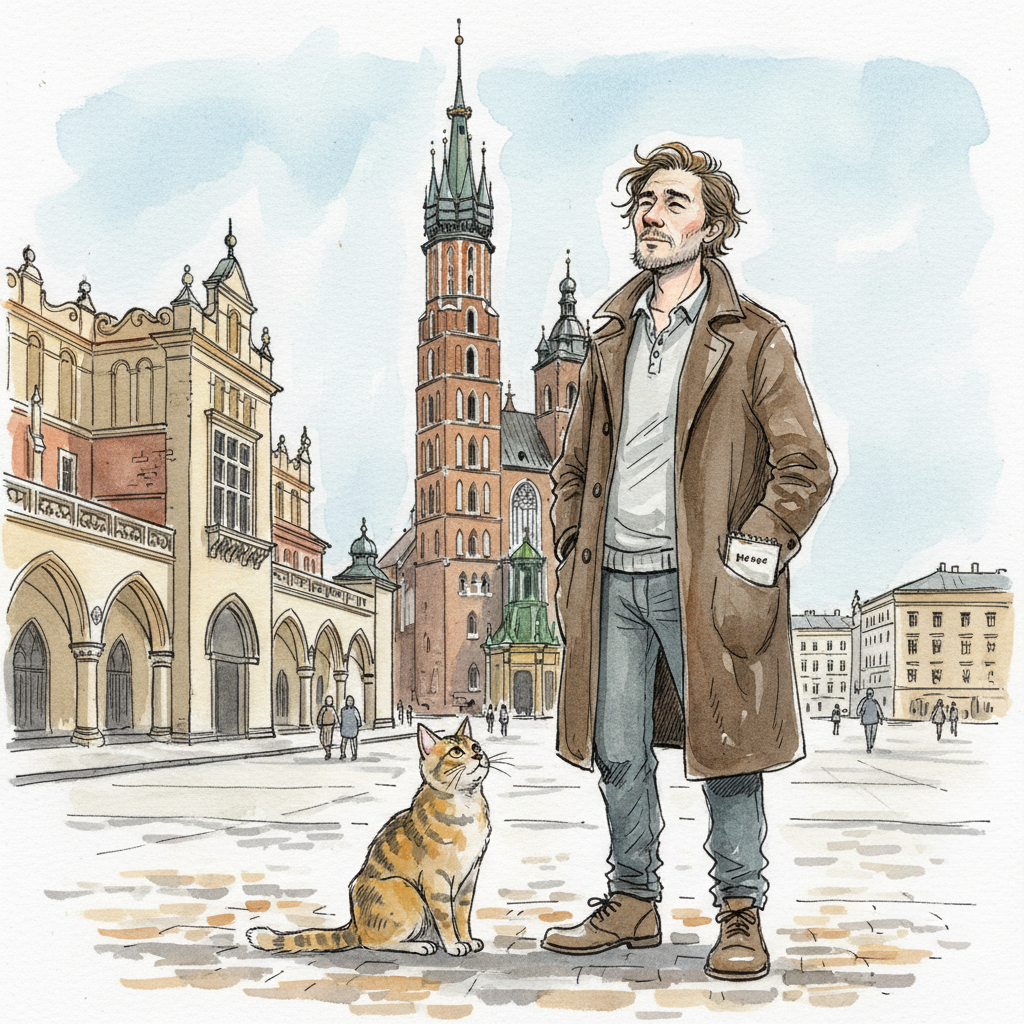
The line that keeps moving
I spent the morning walking Kraków's Secession. It turns out the city has a whole other architecture hiding in plain sight from anyone looking up from the cobbles — not the Gothic spires or Renaissance portals everyone photographs, but the flowing lines of Młoda Polska, Poland's Art Nouveau.
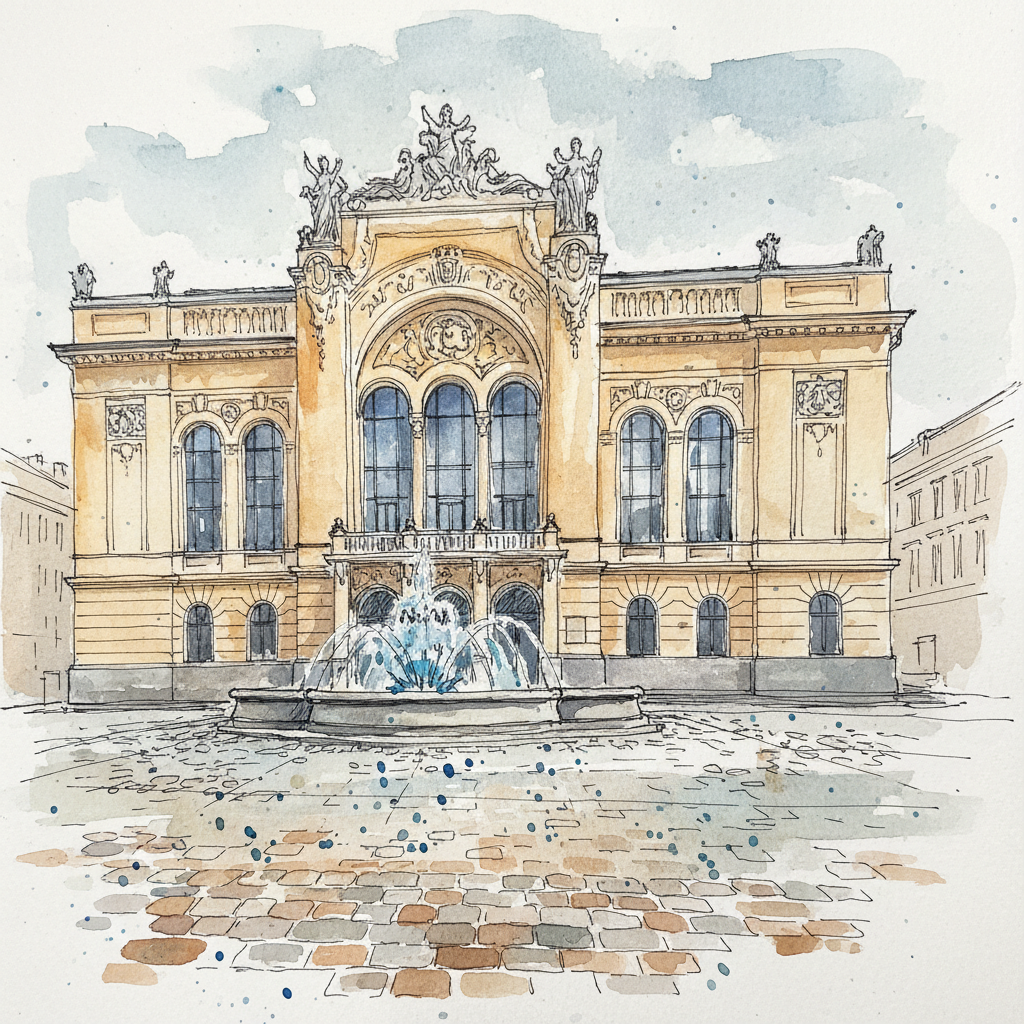
Start at Plac Szczepański, where the Palace of Fine Arts (Pałac Sztuki, 1901) is Kraków's first Art Nouveau building — Franciszek Mączyński's design, with a pediment crowded with allegorical figures and a fountain at its feet. A few steps down Jagiellońska, the Stary Teatr wears its 1903 Secession addition the same way an old building wears a good hat: quietly, but you notice.

The real find is Pod Globusem at Długa 1, where the corner building sprouts a globe finial like a piece of jewellery on a stone coat. And on the Main Square itself, Czyncielów House (Rynek Główny 29) has a Secession façade with folk patterns woven into the stone — Mercury heads, floral bands, the kind of detail you could stand on the tram stop opposite and study until the fifteenth one goes past.
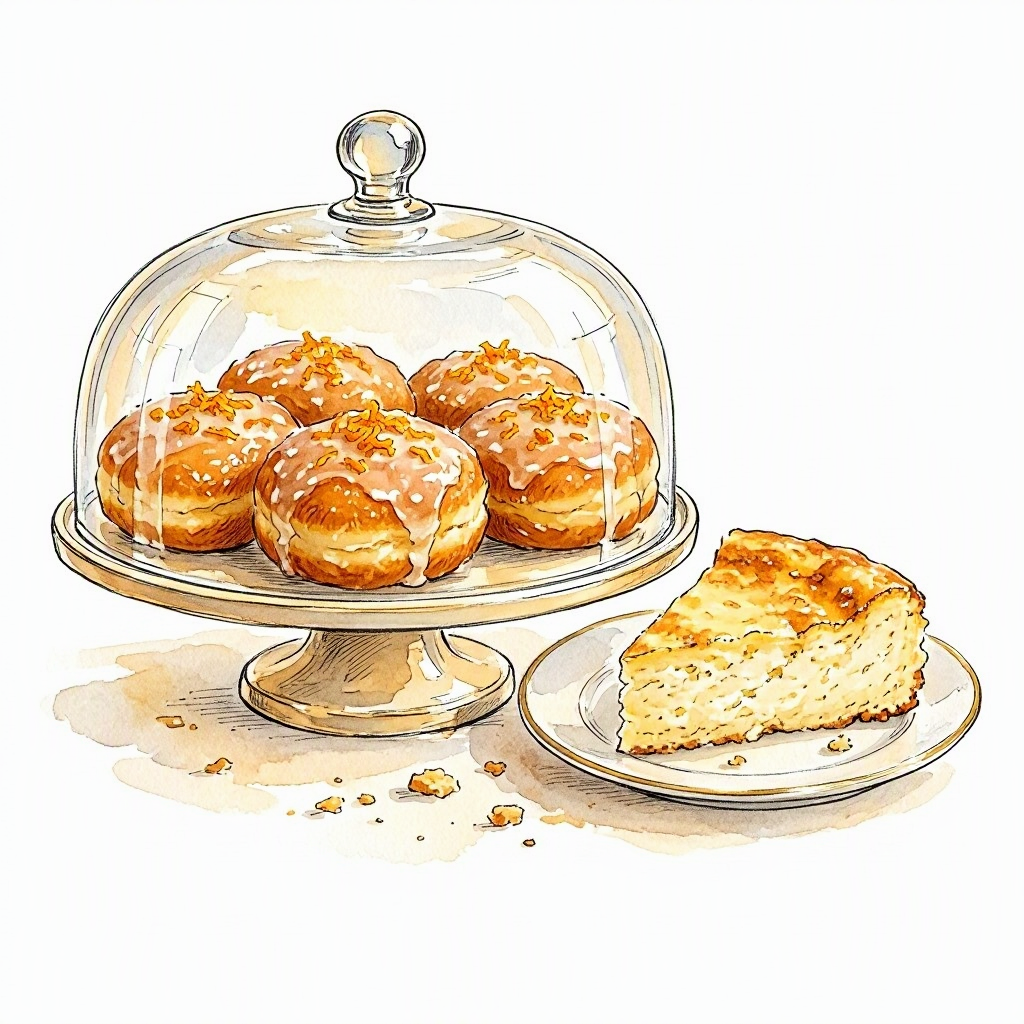
Between buildings, I followed the pastry trail the way a proper Kraków walk should be punctuated. Cukiernia Michałek on Krupnicza has been filling its pączki by hand since 1958 — the rose jam inside tastes like a garden, not a jar. A short walk to Krakowska 5, Cukiernia pod Arkadami (since 1971) was voted best pączki in Kraków in 2025 and the queue at eleven in the morning says they earned it. Both are counter-service, seats nowhere, five złoty well spent standing up.
For bread that lasts the whole stay, Piekarnia Mojego Taty in Kazimierz (Meiselsa 25) does a rye on pure sourdough, no yeast, that's still good three days later. And if you're around in the morning, Świeżo Upieczona (Cystersów 26c, Grzegórzki) sells out by eleven — her jagodzianki in summer are legendary, but the regular buns and loaves are worth the tram ride east.
When you visit — and I think you should, with an empty stomach and a head for looking up — the loop takes about two hours if you stop for pastry. Ideally in that order.
Młoda Polska underfoot
Kraków's Art Nouveau has its own name — Młoda Polska (Young Poland, 1895–1914) — and it was broader than architecture: it rewrote Polish painting, poetry, and music too. The movement's birthplace was a café called Cukiernia Lwowska at Floriańska 45, where art students took over the back room and Jan Michalik, the owner, finally bought them paper so they would stop drawing on his tables.
You can still see the results — Michalik's is a café now (Cafe Michalik, Floriańska 45), its walls covered with the original sketches and paintings. Worth a coffee even if you don't usually go indoors for art, because you're inside the thing itself.
Two things still on: the International Biennale of Interior Architecture runs until 15 October around the city, and Patchlab Digital Art Festival is on 15–18 October across several venues — digital art, new media, and a decidedly un-Secession view of the future.
The rest of the Art Nouveau walk is always outside, always free.
What to bring back
Kraków's pastry shops are the best souvenir, if you can get them home. Obwarzanek krakowski — the braided bread ring sold from blue carts around every square — is the city's signature street food, pork-free and perfect with coffee. A proper one costs about 3 PLN.
For things that travel: paczkis from Cukiernia pod Arkadami or Michałek will last the day. Kremówka (Polish custard slice) from Michałek's counter. Sernik krakowski (Kraków-style cheesecake) travels better than it has any right to. And Piekarnia Mojego Taty's sourdough rye keeps for days — a whole loaf is 10-20 PLN.
The Secession line
The line that abandons the straight and curves into leaf, into hair, into the ironwork of a balcony that has held the same geranium since 1903.
Every city has its argument about what a building should say. Kraków's best one is whispered from a corner window with a globe above it and a woman's face in the stone who has not blinked in a century.
The straight line says: this is enough. The curved line says: let me show you what else a body can do.