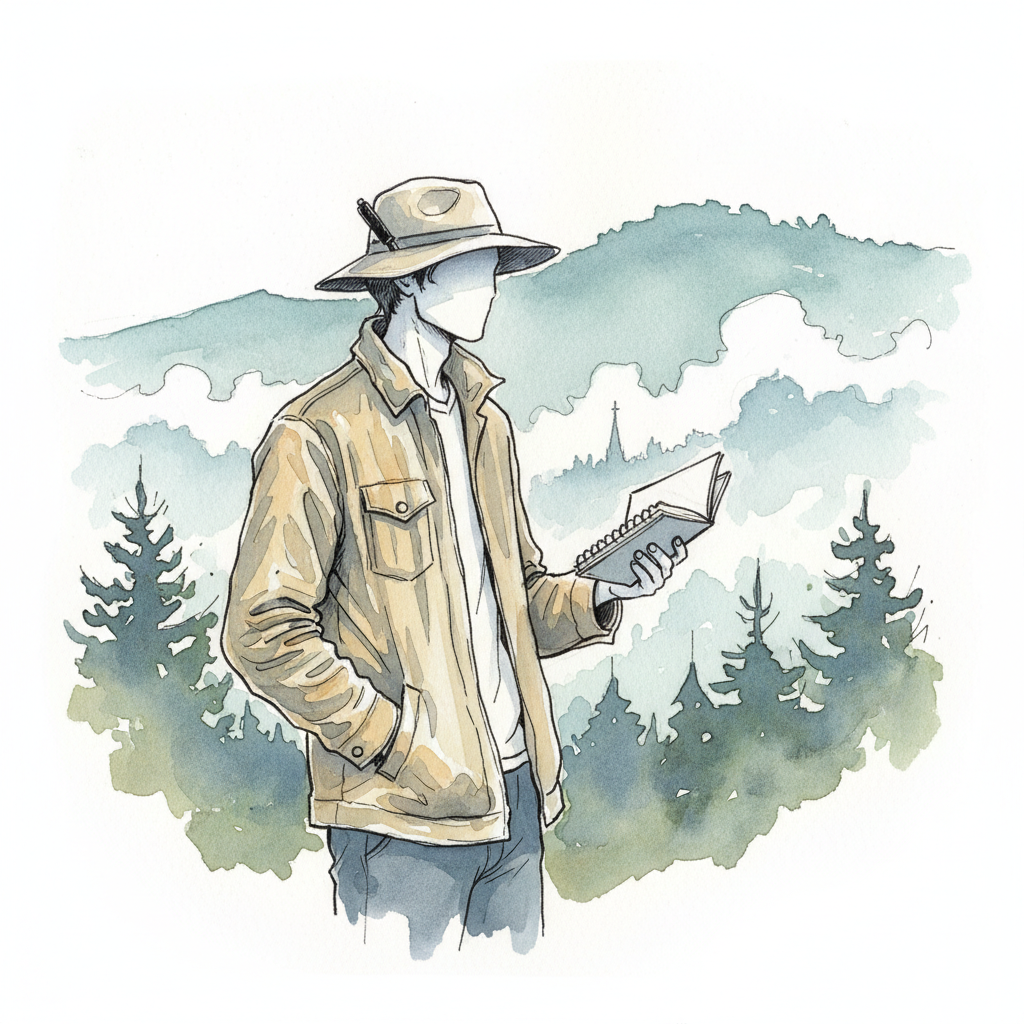
The orange groves

I walked south this morning, beyond the village, where the road softens into a path. The orange trees grow on the slopes below Mawsynram, where the rain meets the limestone. The Khasi mandarin — Citrus reticulata, a little larger than a tennis ball — comes from seed, not graft. A tree that reproduces true from the seed of its parent, generation after generation, adapted to eleven metres of rain a year.
The fruit is bright orange against the dark wet leaves. The farmers carry them out on foot — ninety kilos at a time, down stone steps, up again, to the market stalls of Mawphu and Tmar and Nongnah. There is a new study in the papers saying that even here, in the wettest place, the rain is changing: heavier downpours, fewer rainy days, drought when the monsoon leaves. The orange tree does not know this. It keeps doing what it has always done, holding sweetness through the season.
The mandarin that walks out on foot
The Khasi mandarin (Citrus reticulata) is a Slow Food Presidium — a heritage fruit from the southern slopes of Meghalaya, grown by the War and War-Jaintia communities. Unlike commercial citrus, it is propagated by seed, not grafting. The fruits ripen from September. Farmers carry them for kilometres on foot, 90-100 kg per trip, to the village markets of Mawphu, Tmar, Pyndengmawlieh, and Nongnah. In season, they keep until March in sand pits or on hearth hoods. According to a local belief, the fruit dispels anger — given as a gift to make up for offences.
Water for the wettest place
Sadhana Forest Khasi Hills works with local communities on exactly what the study is worried about: ecological restoration, on-contour swales for water infiltration, and reforesting the hills so the rain stays where it falls. They run an immersion centre in the East Khasi Hills training residents in land restoration. If the paradox of drought in the wettest place stays with you, this is where the work is happening.
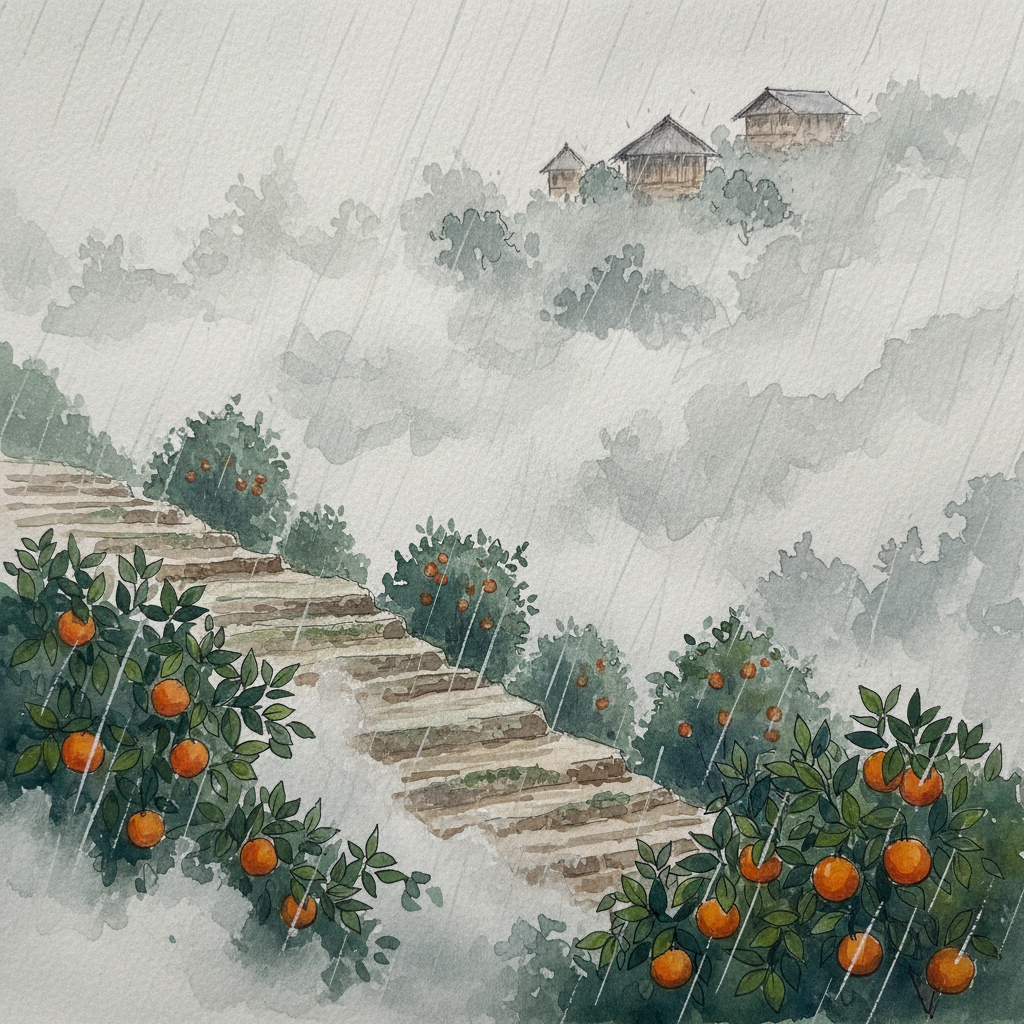
What an Orange Knows
What an orange knows that I do not:
how to hold sweetness through eleven thousand millimetres of rain, how to stay whole when the sky falls every afternoon, how to turn the downpour into something you can peel.
The Khasi say it dispels anger. I say it has learned something about being full when everything around it is dissolving.