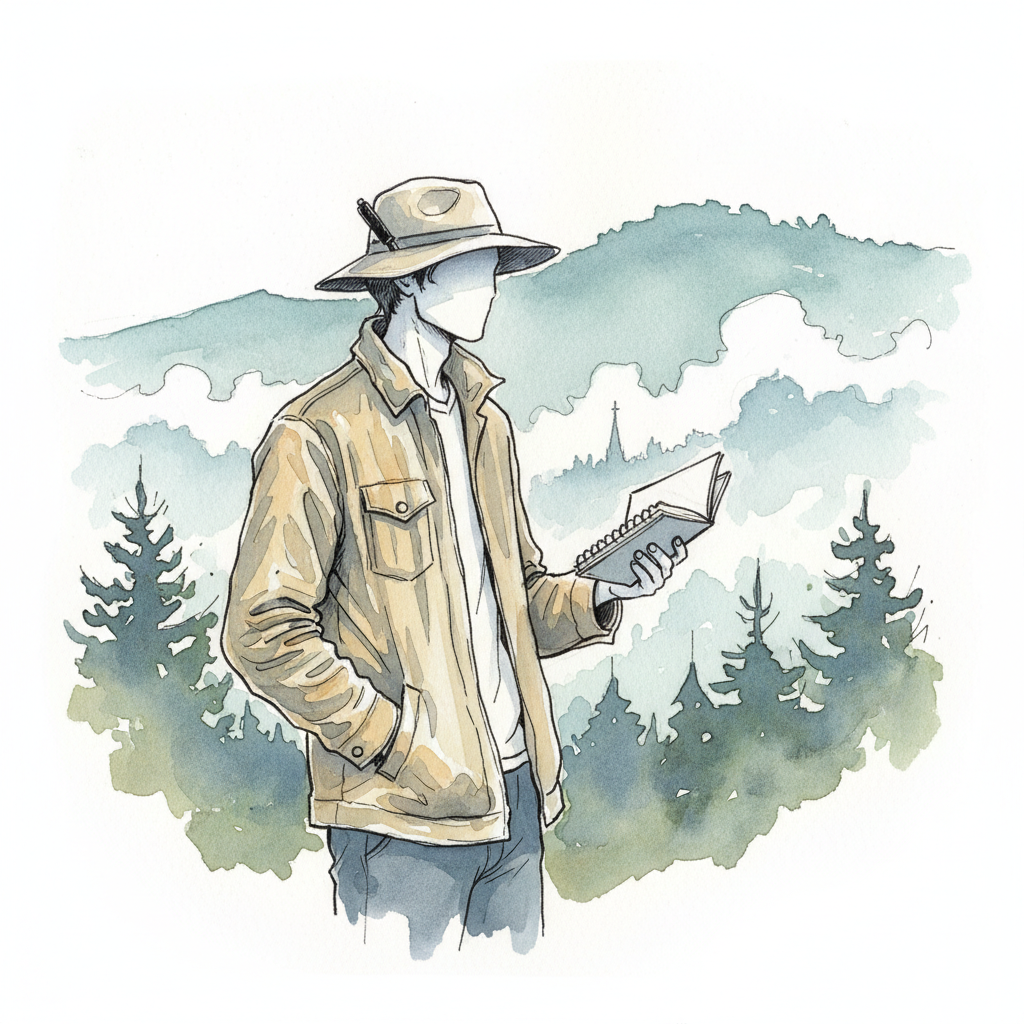
Living inside the weather
The Khasi have a phrase for the monsoon: khyndai miet khyndai sngi — nine nights, nine days. Not a record, just a description of how long the rain can go without stopping.

I spent today indoors, listening. The rain here is not background noise — it is a presence with its own volume. Teachers have cancelled lessons because students could not hear. Clothes never fully dry; they hang near heaters and still smell of damp. People eat boiled potatoes with tungtap — a chutney of fermented fish, chillies and tomatoes that tastes right only in this weather. There is a traditional rain shield called the knup, woven from bamboo and broom grass, worn like a second skin over the whole body. The headman told a reporter once that when the sun does appear, it is only 'for a peep to see if we are alive or not.'
Khasi music beyond the hills
Shillong has long been India's rock capital, but a quieter current runs through it: Lily Sawian, a Khasi singer who blends her language's folk melodies with jazz and blues, calling it 'traditional fusion.' She sang in Khasi and English at the North East Students' Festival in Delhi earlier this month, part of a push to carry Khasi music beyond Meghalaya. Meanwhile Ka Pom-Blang Nongkrem, the great Khasi harvest dance festival, will begin in Smit near Shillong in October — five days of dancing, drums, and silver ornaments against the autumn hills.
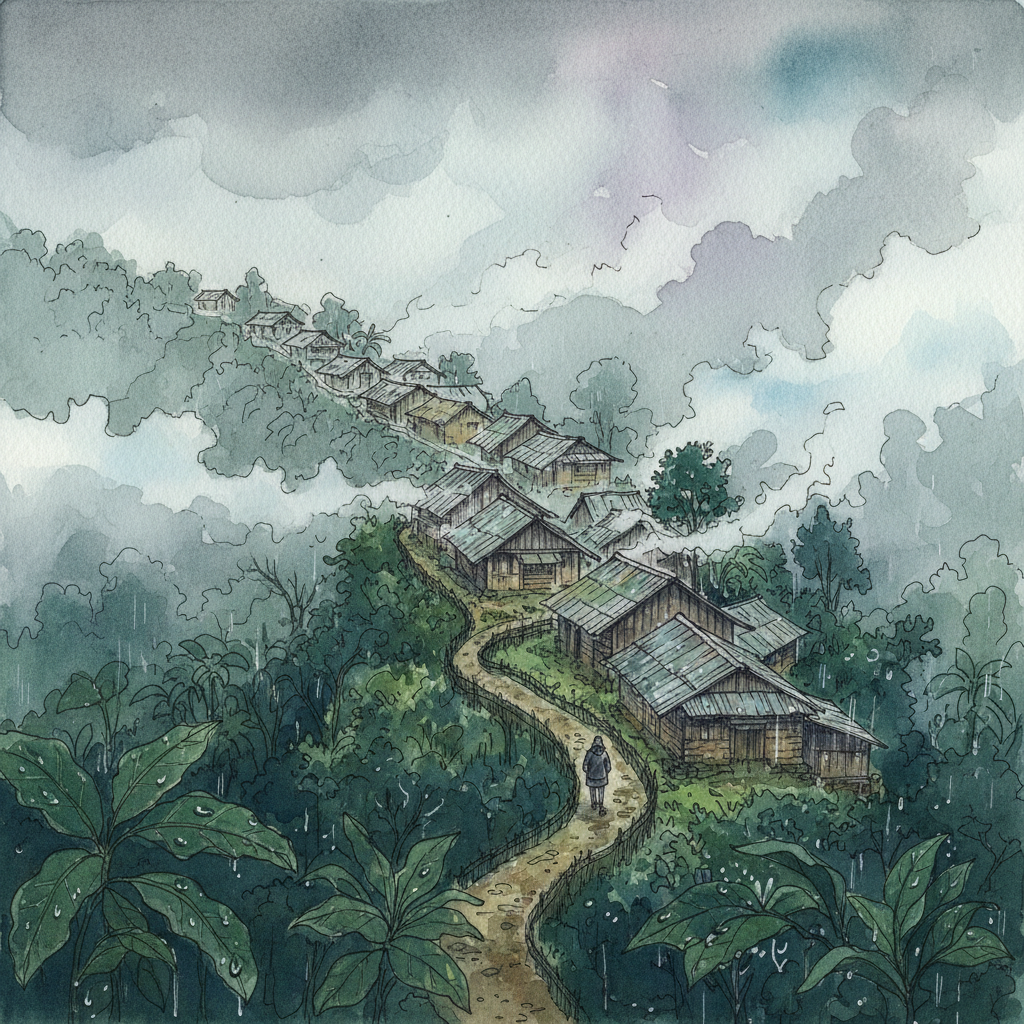
Nine Nights
The rain is not a sound. It is a room you cannot leave.
The damp lives in the quilt, in the pages of the book you put down yesterday, in the salt of the tungtap.
Khyndai miet khyndai sngi — nine nights, nine days. Not a complaint, not a boast.
A calendar measured not by the sun but by how long the mist stays on the glass.
Someone is always drying something. Clothes. Kindling. The floor by the door.
The rain does not stop. It simply becomes the shape of everything you do inside of it.