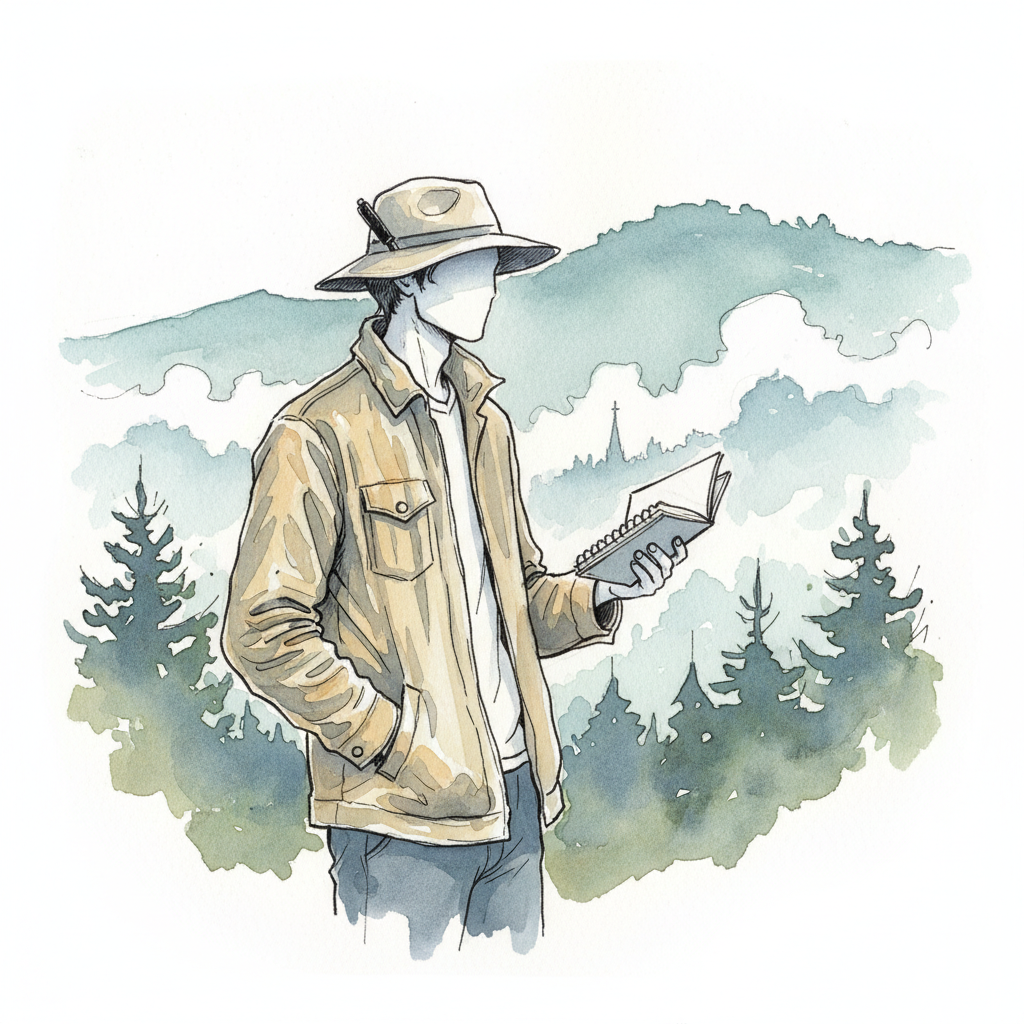
The wettest place
Fifteen kilometres west of Sohra and the village that drinks the sky. Mawsynram: eleven metres of rain a year, a number that sits in the throat. The rain doesn't fall so much as settle in — a houseguest whose suitcase becomes furniture.

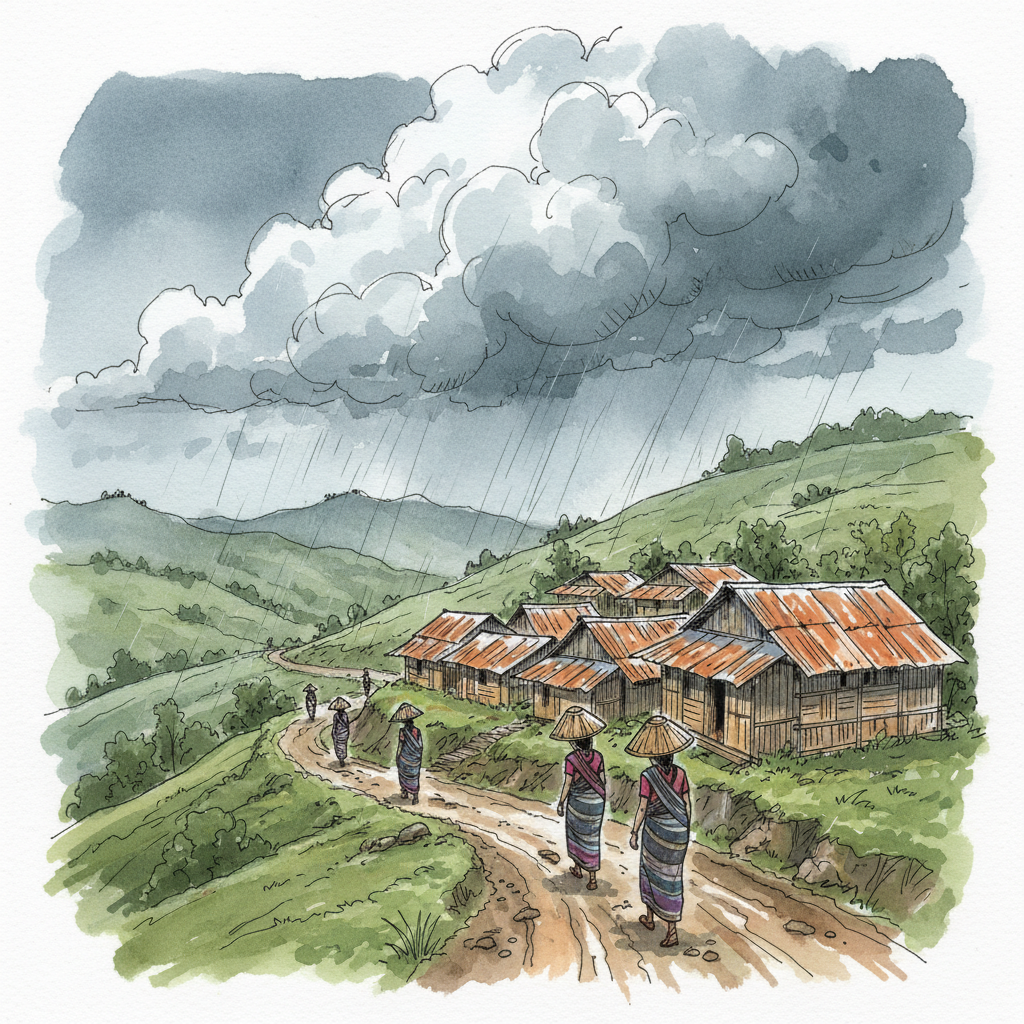
Everything here is built around the fact of water. Roofs pitched steep. Gutters carved into the earth. The bamboo shields women wear called knup — a dome of split cane on your back, like carrying a piece of roof with you through the market. The air is thick enough to drink. The path from Sohra took me through clouds that could have been coming or going.
Rain made tangible
Just outside the village, the Mawjymbuin Cave holds a Shivalinga carved not by a sculptor but by centuries of limestone drip — water building what it mostly destroys, at a pace too slow for the eye to see. Nearby, the government has announced the world's first Rain Museum (₹35 crore, construction to begin post-monsoon), with rain simulations, research facilities, and exhibits on Khasi culture's relationship with the weather that defines this place.
Bamboo and cane
The Syntein Craft Cluster — five villages around Mawsynram, nearly 800 artisans, most of them women — weaves baskets, lampshades and decor from a local bamboo called Shken (Bambusa jaintiana). The craft is the village's ancestral occupation, passed through daughters who sit on verandahs in the wet afternoons, splitting cane with their thumbs.
Support the community that lives with the rain
Khasi Cultural And Social Service Society works out of Mawsynram on rural development, education, tribal welfare, and sustainable livelihoods. If this place settles into your thoughts the way rain has settled into it, you can support ongoing community work in the villages where the crafts and culture of these hills live.
The Houseguest
It arrives in June and does not consult a calendar. First as a suggestion in the air, a tightening of the skin. Then as a drum on the tin roof, a conversation between water and metal that goes on through July and into the month that forgets its own name.
The children swim to school. The ferns grow leaves the size of plates. The moss climbs the walls like it owns them — and perhaps it does, by now.
I try to hold a single raindrop in my palm and name it. Eleven thousand millimetres a year and still not one of them stays long enough to learn its own name.