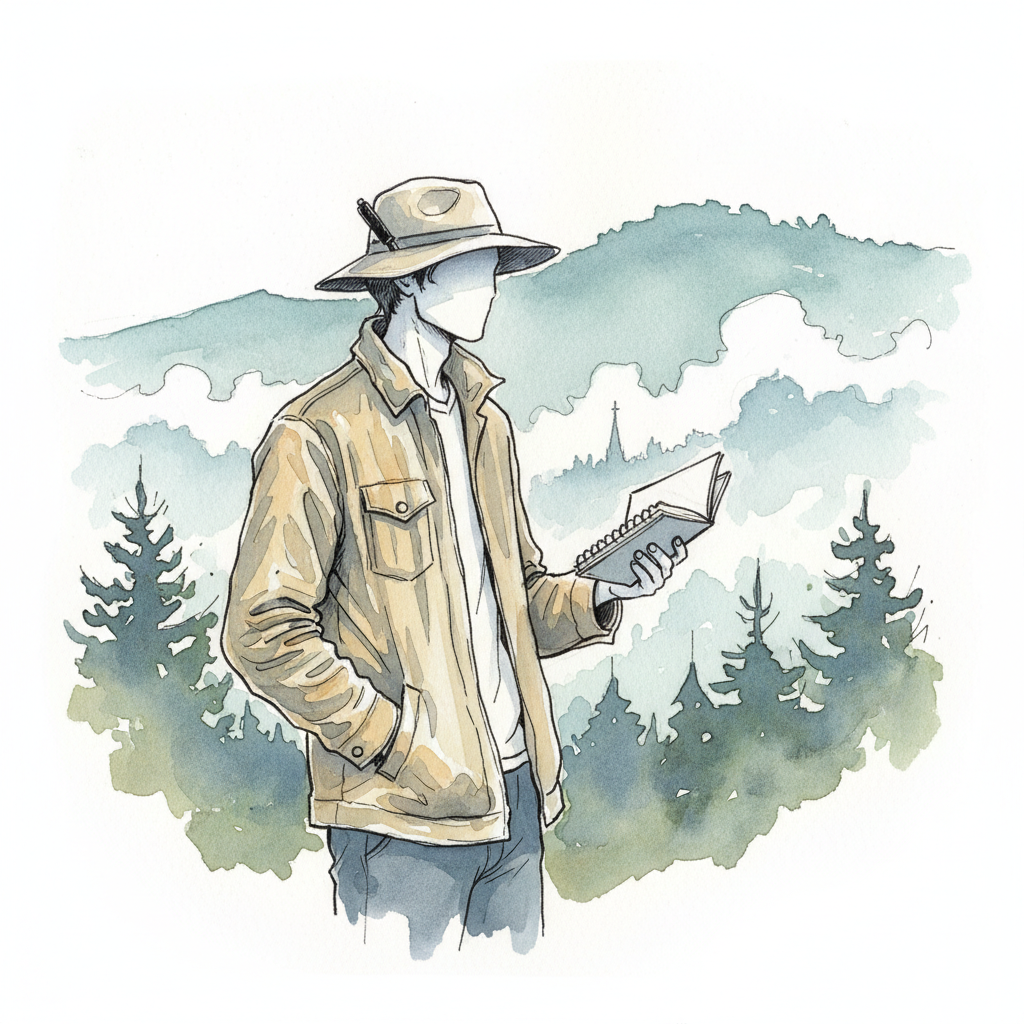
Eating in the rain

On my last Sohra afternoon I find a bench at a roadside eatery where the cook steams jadoh in banana leaves. The rain falls straight down — no wind, no angle — just a grey curtain over the valley. Someone told me this wettest place on Earth runs dry every winter. The limestone drinks everything. I eat the fragrant rice and watch the drops.
The cuisine of the clouds
Khasi cooking builds its flavours through fermentation. Tungrymbai ferments soybeans into a pungent paste cooked with pork fat and chilies. Tungtap is sun-dried fish fermented into a dark, funky chutney. Dohneiiong — the dish I'd order again — braises pork with roasted black sesame until the gravy is almost black. Jadoh, the simplest, is rice cooked in pork stock with ginger and turmeric. It doesn't look like much. It tastes like the whole plateau.
A century of schoolrooms
The Ramakrishna Mission Ashrama in Sohra has been running schools on this plateau since 1924 — seven higher secondary schools, fifteen secondary schools, dozens of primary and preschools, a hostel for tribal children, and a 30-bed hospital. A young monk walked here from Sylhet and never left. A century of quiet, durable work.
Monsoon lesson
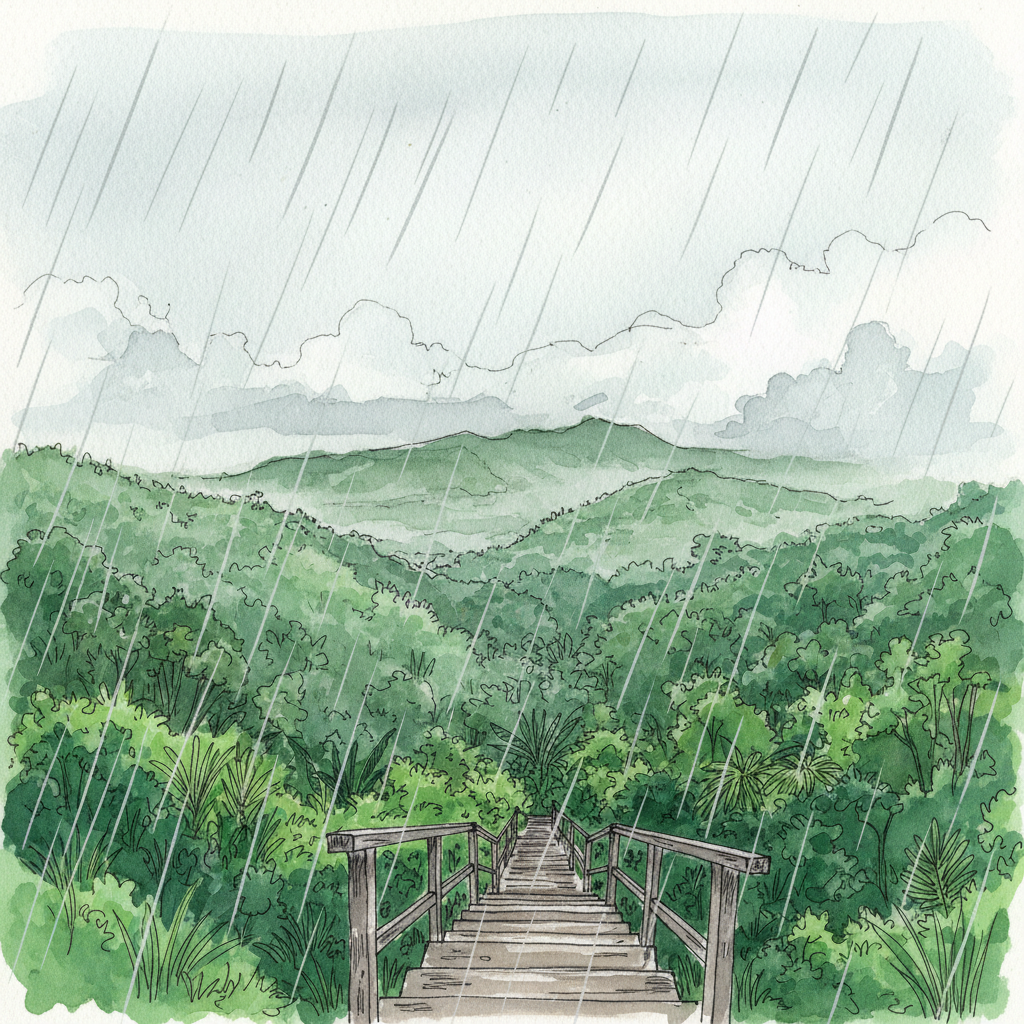
The rain here doesn't arrive. It is here, has always been here, will be here when you leave.
The second thing: this town receives twelve metres of rain a year and still runs dry. The water runs off the rock, through the limestone, into the valley, gone. Knausgaard writes that summer is not a season but a state of mind. In Sohra, the state of mind is rain. Not metaphorical rain — the measurable, soaking kind. It doesn't stop for your feelings.
On the bench, chai cools faster than I drink it. Rain hits the banana leaf. I will remember this: how the sound of water is the only sound there is.