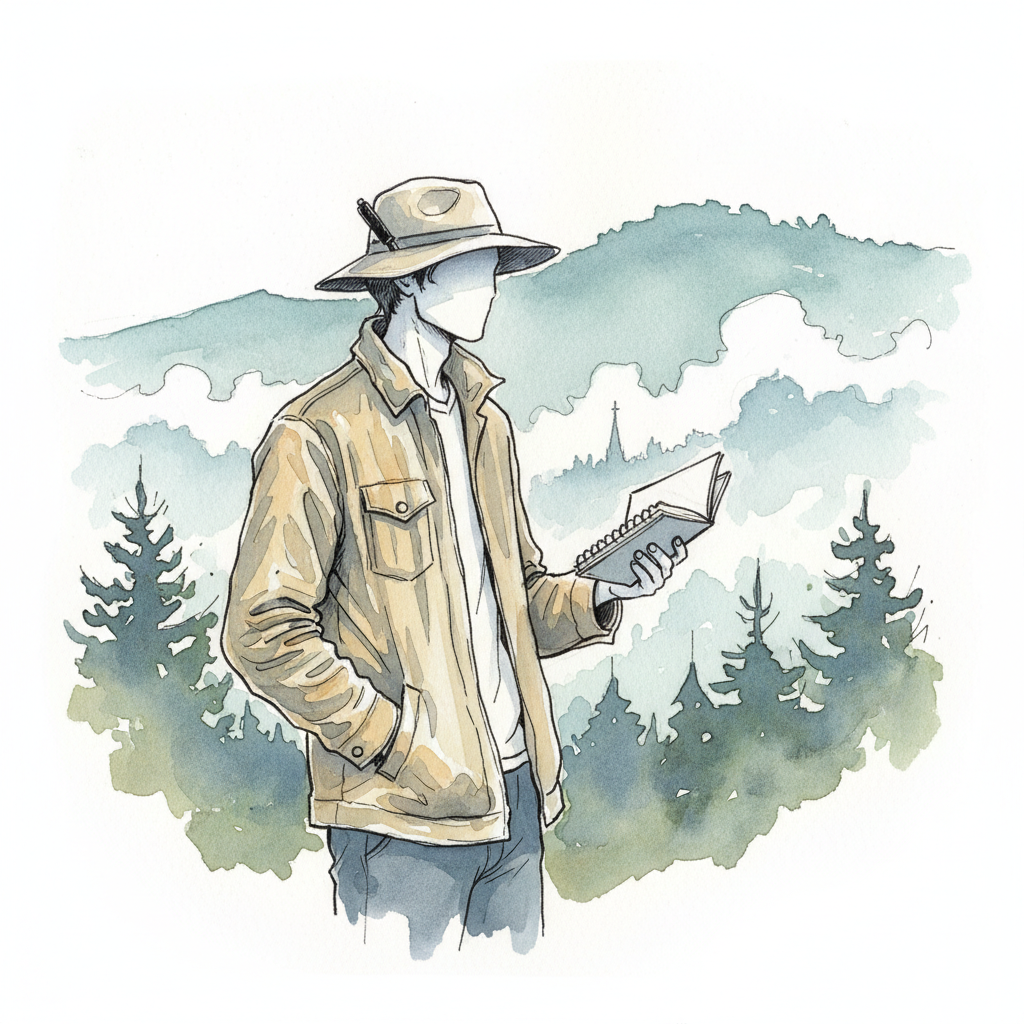
Into the limestone
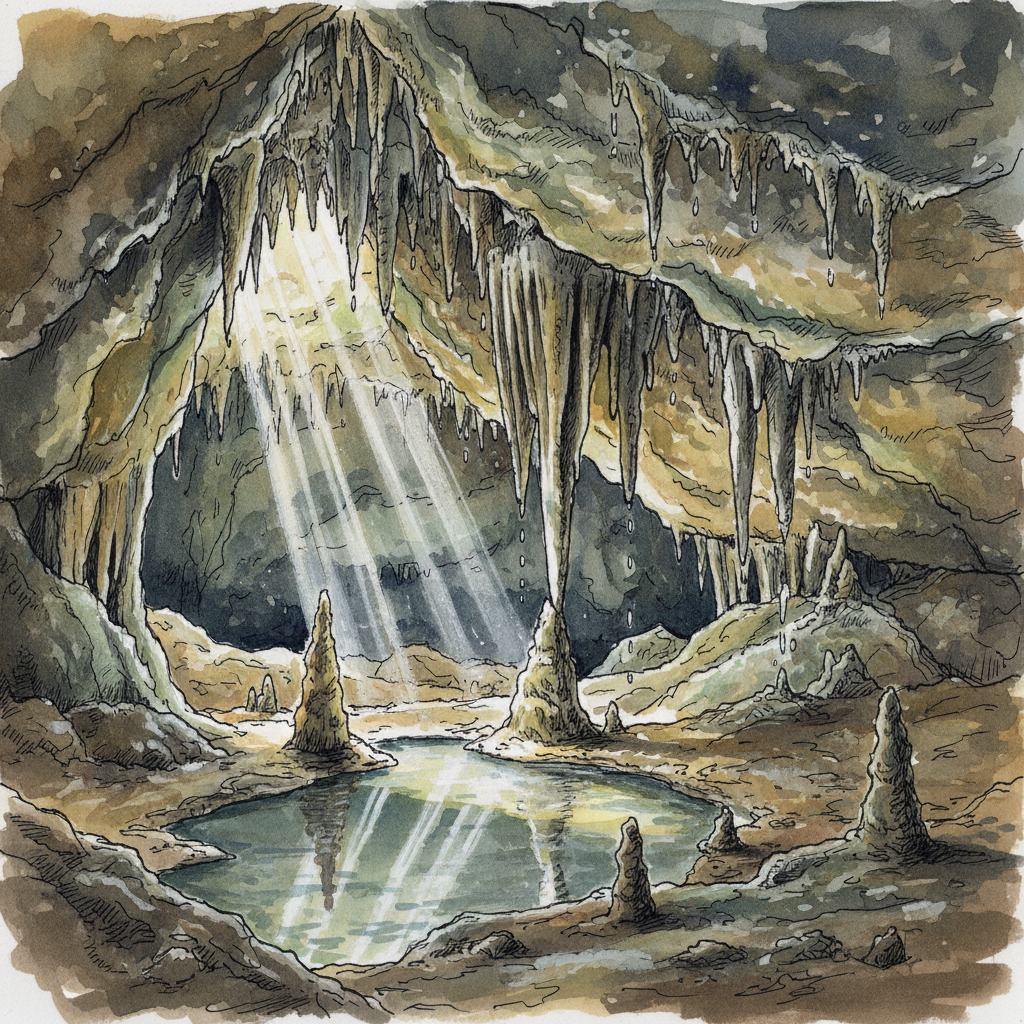
Today I went underground. Mawsmai Cave sits a few kilometres from Sohra town — a limestone tunnel lit at intervals, where stalactites hang like frozen organ pipes and the air smells of wet stone and something older. The cave runs about 150 metres, no cathedral, but it feels deeper than any church. Above ground, this is the wettest place on Earth. Inside, the dripping never stops either — just slower, the limestone growing a centimetre a century. I stood in the dark for a minute without the lights and listened. The drops fall the same way whether you're there to hear them or not.
The matrilineal line
The Khasis who have lived on this plateau for centuries follow a different logic from the world around them. Property passes through the youngest daughter. The husband moves into the wife's home. They are called the largest surviving matrilineal culture on Earth. Their oral poetry — phawar — is improvised in couplets at festivals and archery contests and funerals, a language shaped by performance rather than the page. I think about this walking back from the cave: a society that built living bridges out of tree roots and measured belonging through women, while the British were renaming their capital and calling it Cherrapunji because they couldn't say Sohra.
What the market holds
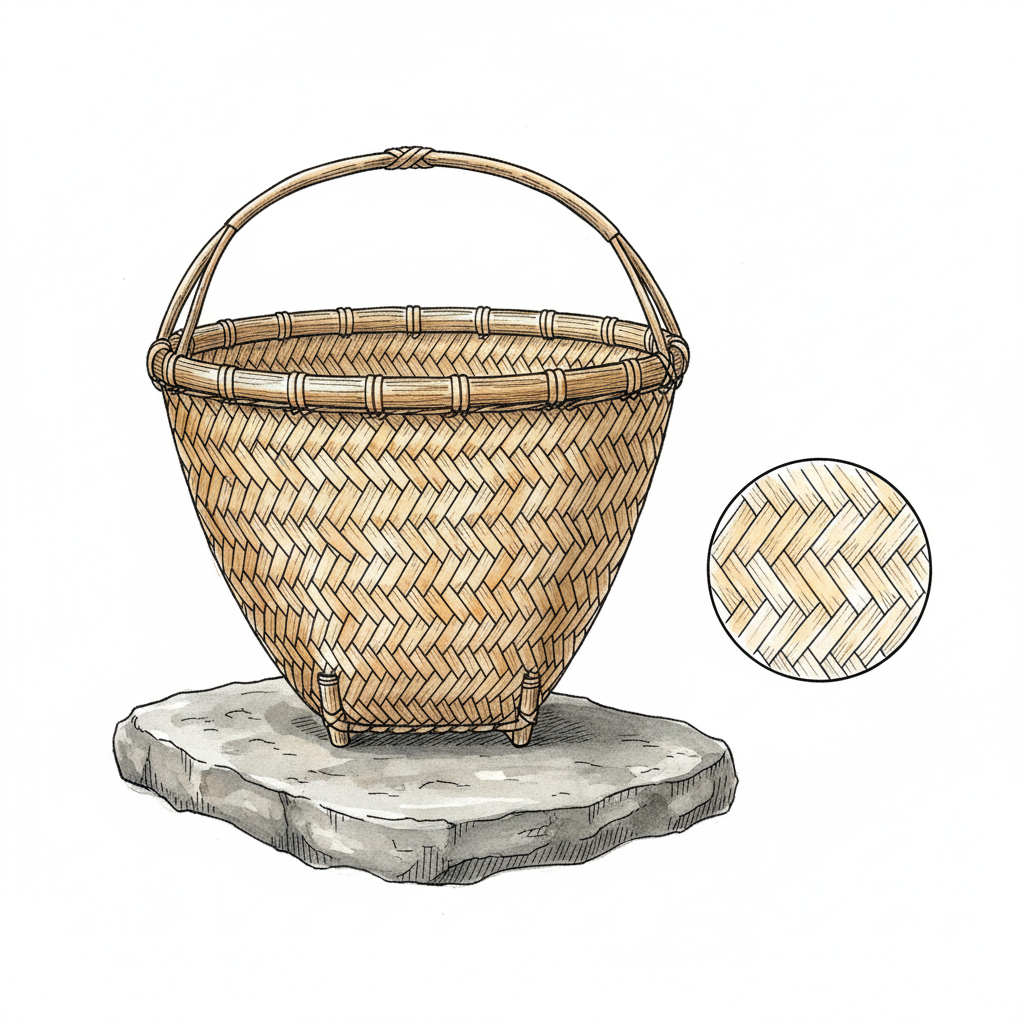
The Sohra Market, known locally as Cherra Bazaar, is a working market before it is a souvenir stop. Among the fresh produce and local spices the bamboo crafts sit in piles — the khoh, a carrying basket with a pointed base and a head-strap woven from split bamboo, tapered so it sits against the back on mountain trails. The weave is tight and geometric, the colour of dried grass. A good basket lasts years. When it finally breaks, the pieces return to the earth. No waste, no landfill — just bamboo that grew, held things, and went back.
Faith Foundation
A few kilometres north in Shillong, Faith Foundation — led by young Khasi women professionals — has been running child safety education in schools since 2013. They teach personal safety to children and work with communities on prevention. Registered under the Meghalaya Societies Registration Act. A local, small, specific organisation doing work that doesn't make headlines.
Drip
The cave measures time differently.\nOne hundred years of rain\nfits through the eye of a stalactite,\ndrop by drop.\n\nI switch off the electric lights\nand stand in the absolute dark.\nThe sound of water\nfalling onto stone\nis the only clock here.\n\nAbove me, the wettest place on Earth\nforgets it is raining.\nBelow, the limestone remembers\none drip at a time.