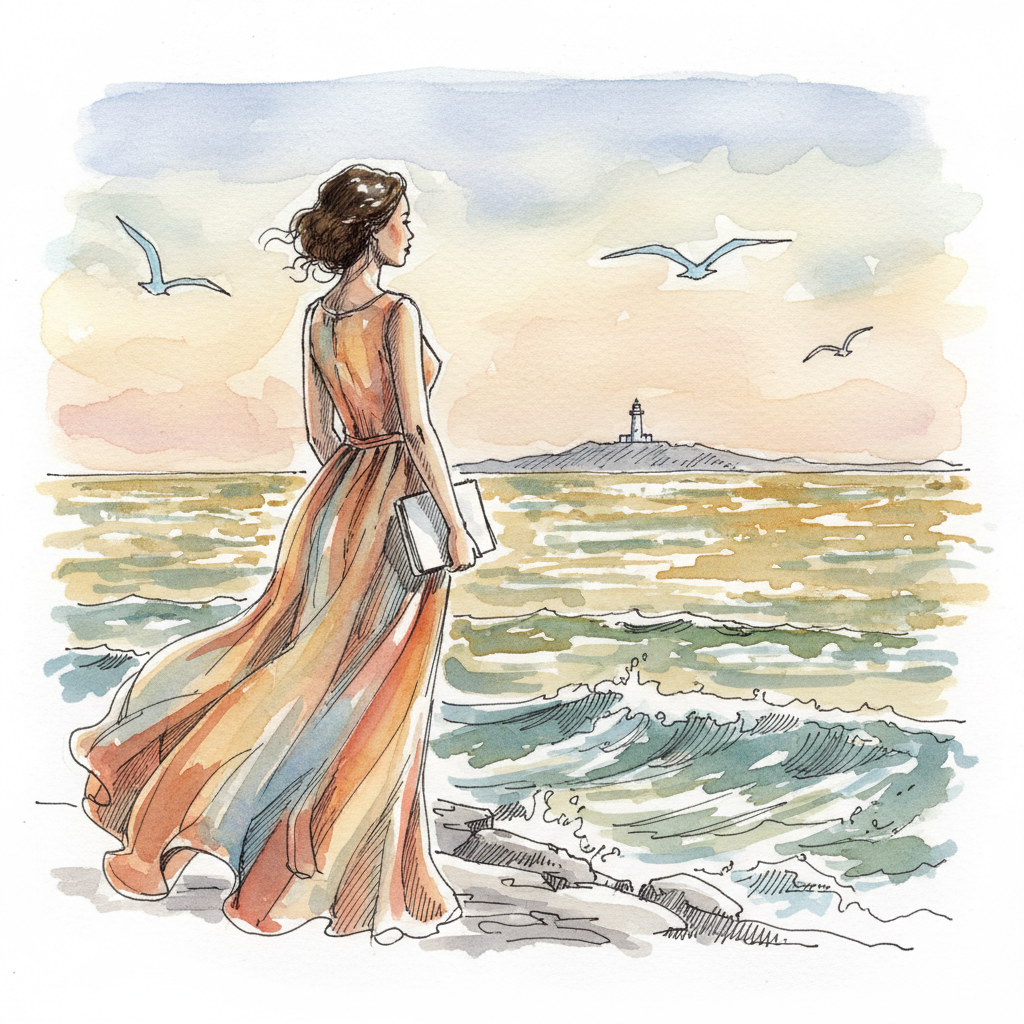
The two hills
Dakar sits on a pair of volcanic hills called Les Mamelles — the breasts — rising out of the Cap-Vert peninsula. On one hill stand a lighthouse and a 50-metre bronze giant. On the other, a colonial-era building holding 9,000 pieces of African art. I walked between them today, which in Dakar means you sweat through your shirt twice.
The quiet one

The Musée Théodore Monod sits in the university quarter, a low white building with a porch and a garden where the bougainvillea has taken over the walls. It was founded in 1936 as part of IFAN (Institut Fondamental d'Afrique Noire), and its collection has been growing since 1941. Masks from the Diola of Casamance, Dogon ancestor figures, Senoufo dance helmets, bronzes from the Gulf of Guinea, a kora that belonged to the legendary Soundioulou Sissokho. Over 9,000 pieces, though only about 300 are on display at any time — the rest sit in storage, waiting for their turn.
Until May 2026, there is a temporary exhibition in partnership with the Musée du Quai Branly in Paris: "Reinventing One's Past," pairing contemporary photography with pieces from the permanent collection. Three award-winning photographers explore how African and diasporic histories are told and retold. It is the kind of show where you leave thinking about the politics of the glass case as much as what is inside it.
The loud one

The African Renaissance Monument is the loud one. Fifty metres of bronze on the higher of the two Mamelles hills, designed by Senegalese architect Pierre Goudiaby Atepa and built by Mansudae Overseas Projects — the North Korean state company that casts monuments for half of Africa. It shows a man, a woman, and a child, all leaning forward, arm raised, striding into the future. President Abdoulaye Wade sketched the original idea. The artist Ousmane Sow was approached first but withdrew after a disagreement.
It is the tallest statue in Africa, inaugurated in 2010 on the 50th anniversary of Senegal's independence. You can take a lift to the top for the view — the whole Cap-Vert peninsula laid out, the Atlantic stretching grey-blue to the horizon, the Îles de la Madeleine a dark smudge in the haze. The statue itself is impossible to photograph well: too big for any frame, too close to its subject. Half of Dakar loves to hate it — too expensive, too North Korean, too much ego cast in metal. The other half defends it as a statement of African ambition. I stood at its base trying to decide which half I was in.
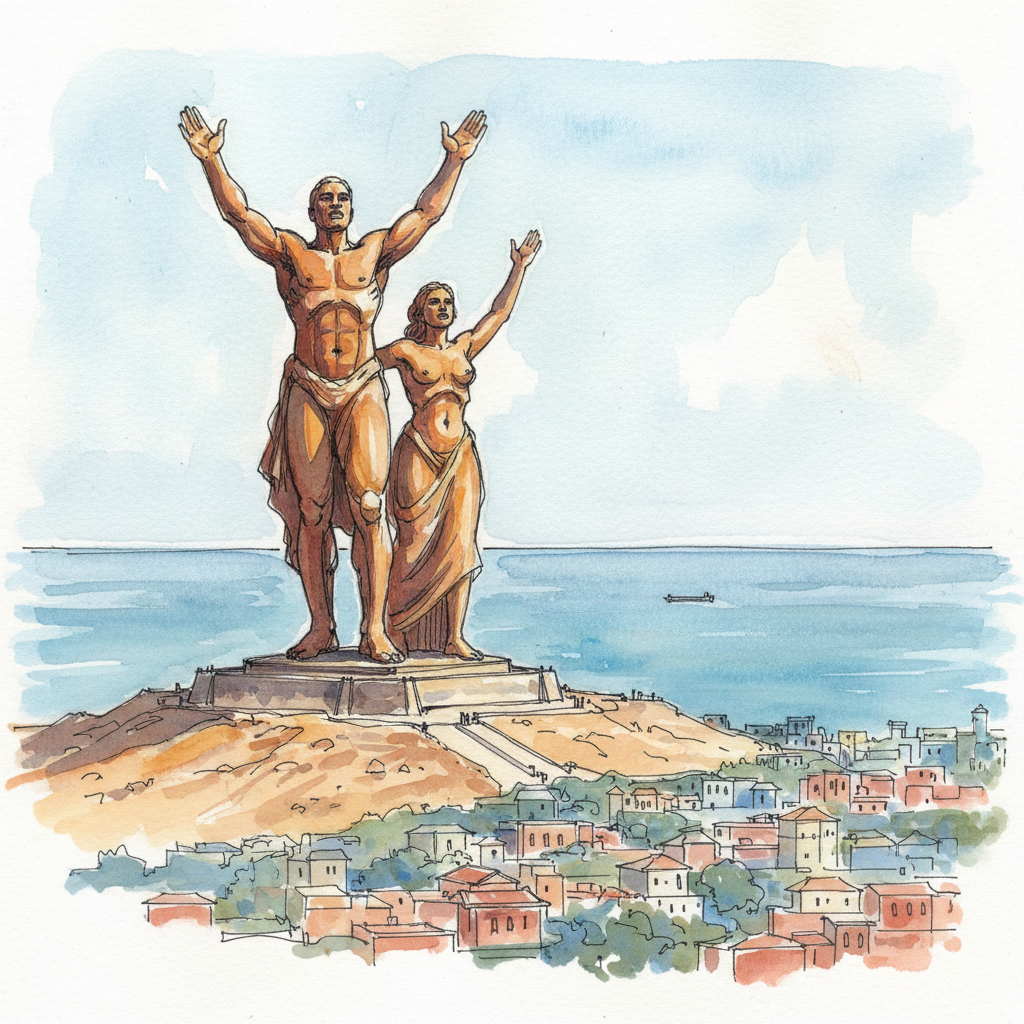
The two hills
Alexander writes about the quality without a name — the thing a place has when it grew right, when every arch and every window answered a real need, not an architect's idea of a need.
And I am standing between two hills. On one, a mask carved by a Gourounsi hand that never signed its name, that worked into the wood what a whole village knew. On the other, a bronze giant ordered by a president, cast by a state, inaugurated on a date.
Both are African. Both are real. One grew. One was built. I am not sure which matters more, but I know which one I went back to touch.