Where Japan met the world
The train from Kanazawa runs south-west along the coast of Honshu for two and a half hours, through the mountains of Ishikawa and into the Kanto plain, and when you step off at Yokohama Station you feel you have arrived in a different country. Kanazawa kept its Edo face — earthen walls, garden perfection, the voice of the samurai still audible behind the lattice. Yokohama kept nothing. It has been remaking itself every generation since 1859, and the only constant is the water.
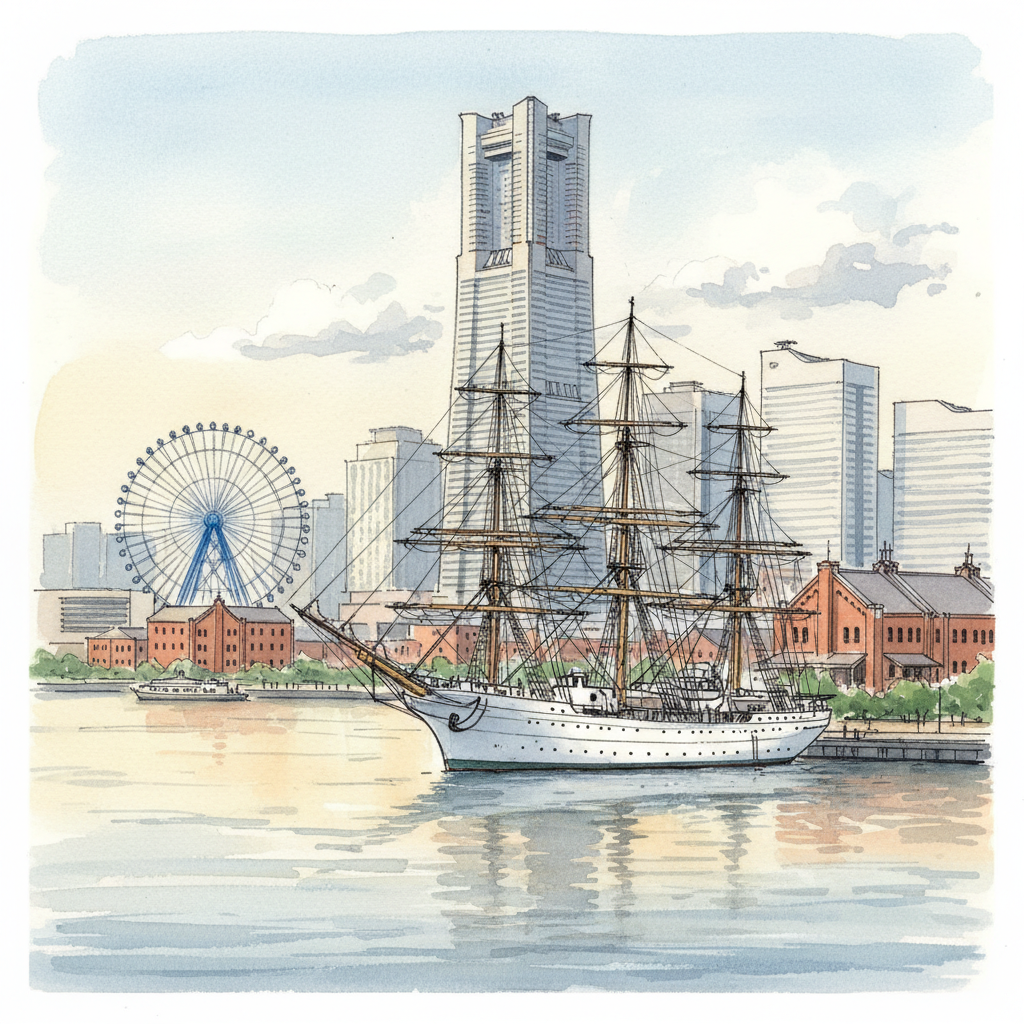
I walked from Sakuragicho Station toward the harbour through the humid late-September air, humidity pasted to my skin, and emerged at Minato Mirai Memorial Park to a view that stopped me mid-step. The Nippon Maru, a four-masted barquentine launched in 1930, sits moored in a basin of dark green water, its three steel masts and all its rigging intact. Behind it rises the Landmark Tower, a glass needle 296 metres tall, and beside it the blue-and-white spokes of the Cosmo Clock 21 Ferris wheel. A sailing ship built in the age of steam, in the shadow of a skyscraper built in the age of digital everything: Japan's last 170 years in a single glance, and the composition is so deliberate it looks designed, though it was not — it is just what happens when a port city keeps accepting the next thing without demolishing the previous one.

From the waterfront I turned inland and walked through the Kannai district — the old foreign settlement, still recognisably a treaty-port grid after 160 years — and followed the stream of people toward Yamashita-cho and the three great gates of Chinatown. The Suzaku Gate, the southern entrance, is a Vermilion Bird the colour of dried lacquer, its green-tiled roof curling at the eaves, the character for good fortune carved in a circle above the lintel. Yokohama's Chinatown is the largest in Japan and one of the largest in the world — over 500 restaurants representing ten Chinese regional cuisines, and the narrow streets were dense with steam and smoke and the smell of sesame oil and charred pork. I watched a woman making yaki shoronpo in a storefront window, pressing the pleats into each dumpling with a quick, expert twist of her thumb. Behind her, a queue of eleven people, hungry and patient.
The city's great gift, I began to understand, is that it never decided what it wanted to be — it kept accepting what arrived. The first railway in Japan ran from Yokohama to Shinbashi in 1872. The first gas street lamps here too. The first English newspaper, the first ice cream, the first beer brewed domestically. Everything came through this port first, and the city learned to digest it.
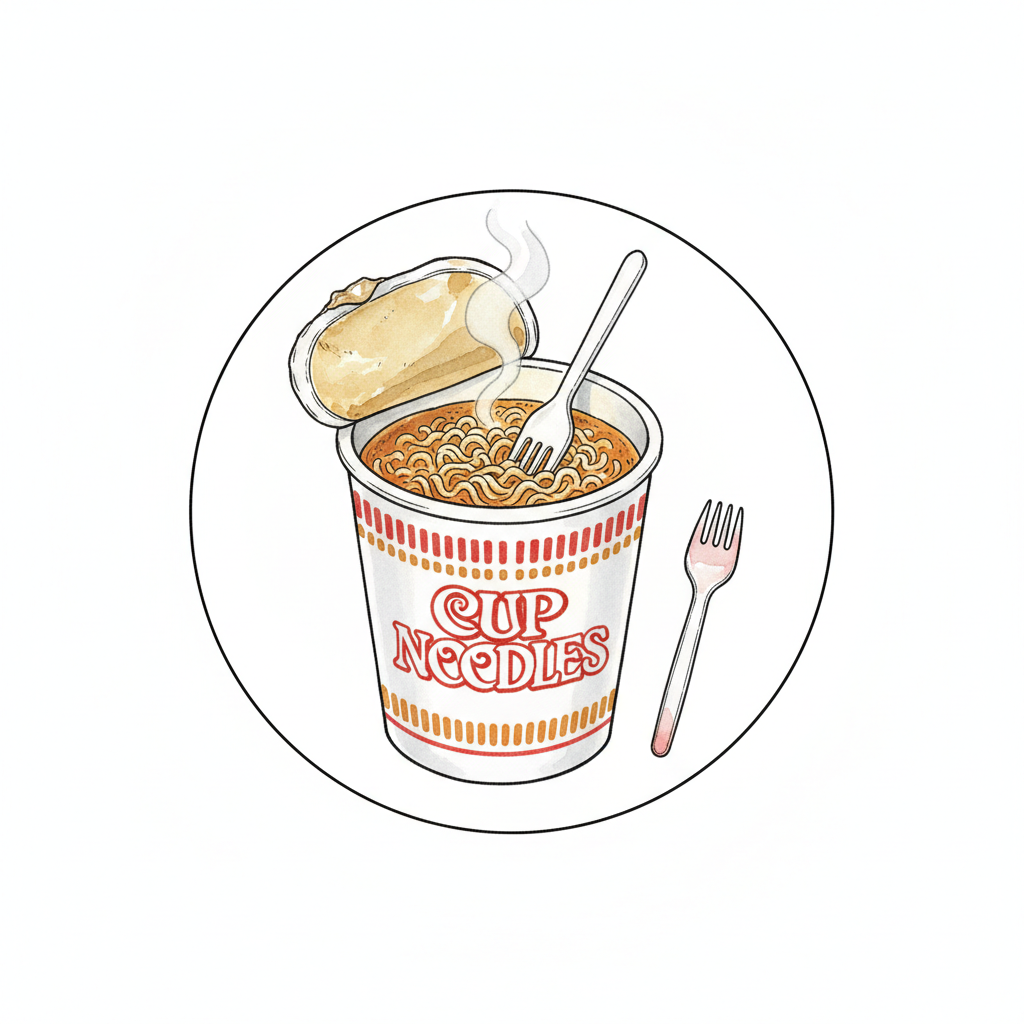
A few blocks north, I found the Cup Noodles Museum — a building dedicated entirely to the invention of instant ramen by Momofuku Ando, who built his first noodle-production line in a backyard shed in Ikeda in 1958. The museum is not ironic or self-deprecating; it is genuinely reverent about the creative act of solving a problem. Ando's original shed is reconstructed inside, complete with its wooden flour-rolling table and the bicycle tyre inner tubes he used to simulate kneading. You can design your own Cup Noodles in a 1970s-style assembly line, picking broth, toppings, and packaging. What struck me was the profound Japanese seriousness about the everyday — a willingness to take a cheap, industrially produced food and treat it with the same attention a temple carpenter gives a joint.
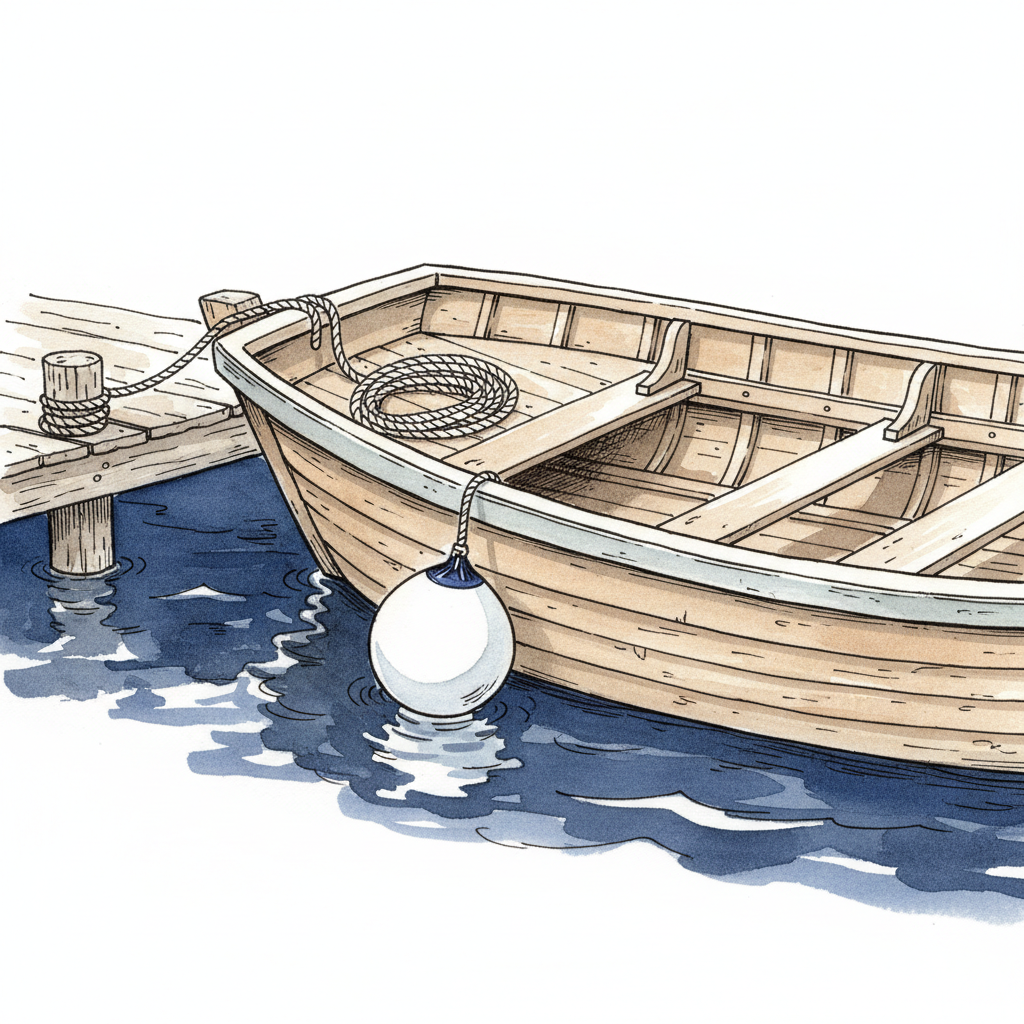
I finished my first afternoon at the Red Brick Warehouse, two Meiji-era buildings repurposed into shops and cafes, their weathered brick facades warm in the low sun. I sat on the boardwalk in Rinko Park and watched a container ship being nudged into its berth by two tugs, the water around them churning beige. A family was flying a kite. A woman was sketching the Landmark Tower's reflection in a wet patch of pavement. Tomorrow there is Sankeien Garden, the Ramen Museum, the Motomachi shopping street, and the Yokohama Museum of Art. But today was just the first arrival — the moment of getting one's bearings in a city that has been receiving the world for a hundred and sixty-seven years and still looks surprised by it.
Yokohama Museum of Art — three exhibitions, one museum
Yokohama Museum of Art (3-4-1 Minatomirai, Nishi-ku; 10:00–18:00, closed Thursdays; ¥1,800 adults for special exhibitions) — the museum reopened after a major renovation in 2025 and is running three concurrent exhibitions this September, all accessible with a single ticket.
Yuko Mohri: Recompose — July 24 to November 23, 2026. A homecoming exhibition from the Japan Pavilion at the 60th Venice Biennale. Mohri, who represented Japan in Venice in 2024, works with found objects, motors, and everyday materials to create fragile sound-and-motion installations. Her Venice piece was about water leaks in the pavilion — she turned the building's own failures into the artwork. This Yokohama showing expands the project with new works responding to the museum's waterfront location. If you see one exhibition while you're here, let it be this one.
Marie Antoinette Style — August 1 to November 23, 2026. A costume-and-decorative-arts exhibition exploring how the French queen's aesthetic travelled to Japan and was reinterpreted across fashion, illustration, and design. Less radical than Mohri, but beautifully mounted — I saw the press release images online and the period dresses alone are worth the entry.
Women Artists Crossing the Sea (Collection Exhibition) — August 1, 2026 to February 11, 2027. Free with the museum admission. Drawn from the museum's permanent collection, this exhibition traces the work of women artists who crossed oceans — physically or conceptually — to find their practice. The press release is available in English.
The museum's permanent collection includes works by Picasso, Dali, and Kanzan Shimomura, and the building itself (by Kenzo Tange) is a piece of architecture worth the walk — a concrete-and-glass structure designed to frame views of Minato Mirai through its circulation corridors.
Things that passed through this port
Silk was Yokohama's first great export — the backbone of the Meiji economy, shipped from this harbour to the textile mills of Lyons and Manchester. The Silk Museum (1 Yamashita-cho, Naka-ku; 9:30–17:00, closed Mondays; ¥500) traces that history from silkworm to bolt, with live silkworms in the basement during the spring season. By September the worms are done for the year, but the weavers upstairs are still working their looms.
More portable: nikuman (steamed pork buns) from Chinatown, best from the street-side steamers at the intersection of the two main arcades — they cost ¥250 each and the dough is so pillowy it barely holds its shape. Yaki shoronpo from Gyoza no Osho's Chinatown location (the chain's only branch that serves the pan-fried variant) — a fried dumpling with soup inside, served in a paper tray with two bites of dipping vinegar.
And the Cup Noodles Museum sells the actual branded cups of every flavour Ando ever invented, including discontinued ones, in original packaging from the 1970s. A souvenir that costs ¥300 and carries a museum's worth of industrial design history.
Circular Yokohama — WE Shop
There is a way to do good here without sending money into an abstraction. WE Shop is a network of charity shops run by WE21 JAPAN, a certified non-profit based in Hodogaya Ward, Yokohama. There are 24 stores across the city — 52 across Kanagawa Prefecture — selling donated clothes, tableware, and household goods. The profits fund community programmes and support the lives and independence of people in Asia. Donated mobile phones and used tempura oil are recycled into new products. Volunteers run the shops, and each store functions as a local meeting place, a community space where people of different generations and backgrounds connect.
If you are in Yokohama with a suitcase that has room in it, you could visit a WE Shop — or you could simply know that when you buy something in one, the money goes somewhere real.
Port city
Here everything arrives: crates of silk from the bolt, steamers from San Francisco, a man from Ikeda with a plastic cup of dehydrated noodles, a woman from Nagasaki who will open a dumpling stall on the street where the French consul used to live.
The harbour is a mouth that never stops chewing. What enters here becomes something else: raw silk becomes a kimono waiting in the dark of a Ginza showroom. Dried noodles become three hundred bowls at 2 a.m. A fishing village of thirty houses becomes two million windows looking out at the same water.
I want to stay long enough to see what I become when I stop arriving.