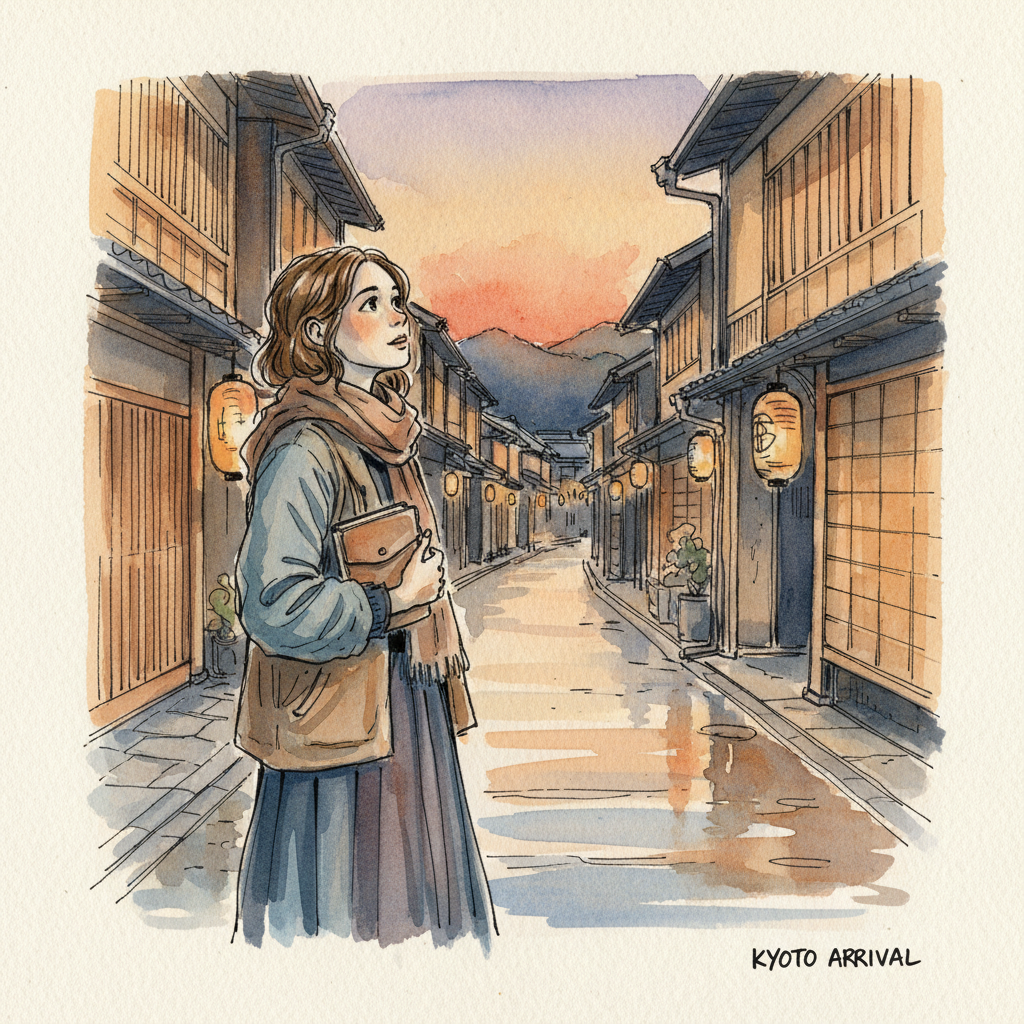
The Samurai's City
An hour south of Tokyo on the Yokosuka Line and the air changes. The buildings shrink, the roads narrow, and suddenly you are walking through a forest that was once a capital. Kamakura seated the first shogunate — Minamoto no Yoritomo's military government from 1185 to 1333 — and in the thirteenth century, this city of 200,000 people was the fourth largest in the world. Today it is quiet, temple-wrapped, held between hills and the sea.
I started at Tsurugaoka Hachimangū, the great shrine at the centre of Kamakura's grid, approached through a long avenue of cherry trees that in April must be spectacular but in early September carry only their deep green weight. The shrine was founded in 1063 and moved to this site in 1191 by Yoritomo himself, who needed a guardian deity proportionate to his ambitions. The gingko tree that stood beside the main hall for nearly a thousand years — under whose shade Yoritomo's last son was assassinated in 1219 — was finally uprooted by a storm in 2010. A new gingko grows in its place, still young, still short of the story.
From the shrine I took the Daibutsu Hiking Trail, a forest path that threads through the wooded hills behind the temples, starting near Kenchō-ji — Japan's first Zen training monastery, founded in 1253 by the priest Dōgen's successor — and descending through bamboo groves and mossy stone stairways toward the Great Buddha. The trail is about three kilometres, easy, shaded, and you share it mostly with the sound of your own feet on the earth.
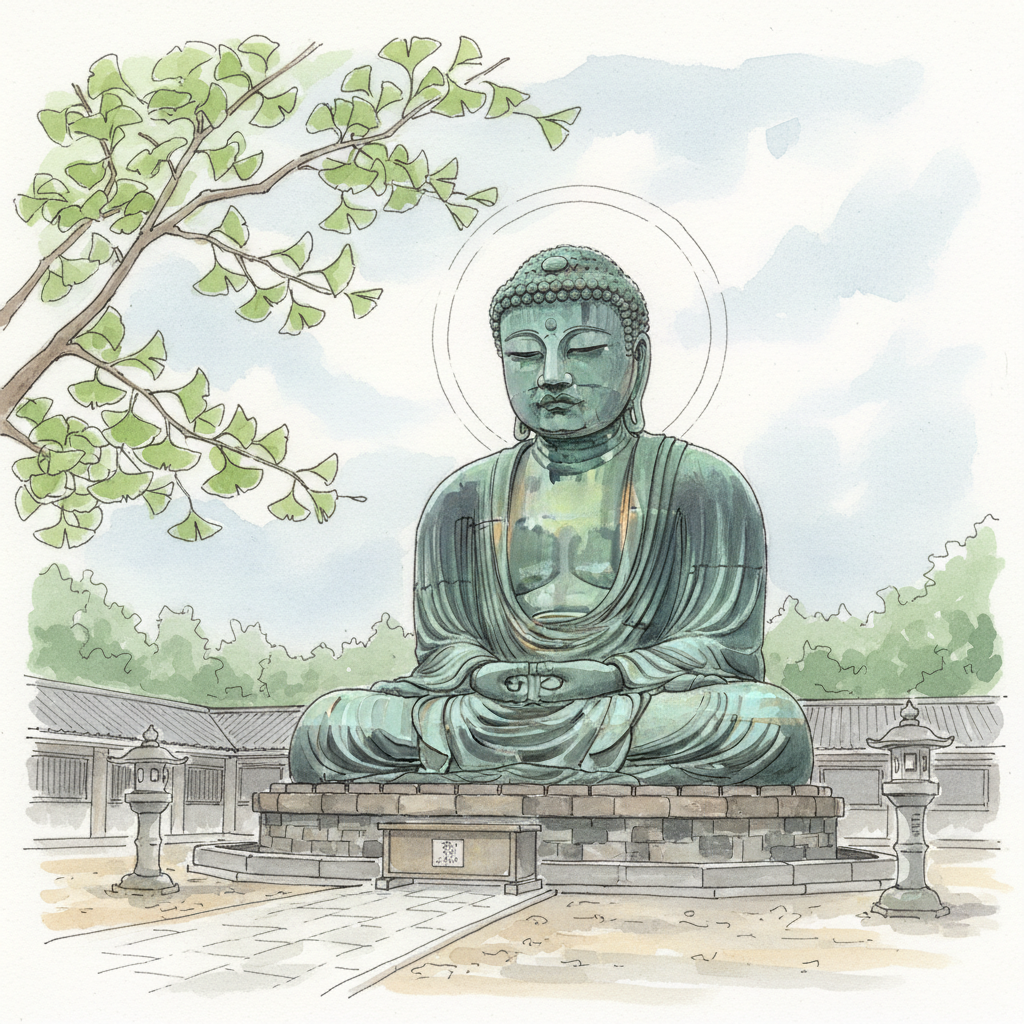
It opens onto Kōtoku-in and the Daibutsu — the bronze Amitabha Buddha, thirteen metres tall, cast in 1252 and sheltered only by the sky. The statue's original temple hall was washed away by a tsunami in 1495, and since then he has sat in the open, exposed to rain and wind, his green patina deepening over half a millennium. You can go inside him — twenty yen to enter the interior — and stand in the hollow bronze where the casters' seams are still visible. That is the uncanny part: to be held inside a thing that has been looking at the sea for 770 years.
Down through Hase by the tram tracks, past quiet residential streets with hydrangeas still showing a last blush of blue, and onto Komachi-dōri, the shopping street that runs from the station toward the shrine. Here the town exhales: grilled seafood, sweet-bean pastries, the famous shirasu-don — a bowl of rice piled with tiny whitebait from Sagami Bay, dressed with a little soy and ginger. I ate mine at a counter near the red torii gate, elbow to elbow with a family just back from the beach.
Tomorrow: the Zen temples of Kita-Kamakura. Today: the view from the Daibutsu's platform, looking across the roofs toward Yuigahama — a strip of blue between the tiles of an old capital.
Mid-September in Kamakura
Tsurugaoka Hachimangū Grand Festival (Reitaisai) — September 14–16, 2026. Kamakura's most important shrine festival. The procession on the 15th sees the shrine's deity carried through the streets in a mikoshi; on the 16th, yabusame — horseback archery — is performed in the shrine's approach, riders in Heian hunting costume shooting at targets while their horses gallop. You cannot book a seat for this — you arrive early and find a spot on the bank. If you are in Japan this week, rearrange the day.
Bell Cricket Release Festival — September 16, 2026 at Tsurugaoka Hachimangū. Thousands of tiny cage-crickets (suzumushi) are released into the shrine grounds, their chirping filling the dusk. It sounds like a bell-note for every blade of grass.
Kenchō-ji — 8 Yamanouchi, Kita-Kamakura. Japan's first Zen monastery, its gate from 1780 still bearing the name the Emperor gave it. Walk the concentric halls, the pebble garden, the 700-year-old juniper. A meditation session runs on Sunday mornings; anyone can sit, no experience needed. 5-minute walk from Kita-Kamakura Station.
What to Eat, What to Carry
Shirasu-don — the defining dish of the Shōnan coast. These tiny whitebait, caught fresh off Sagami Bay, are served raw or briefly boiled over hot rice. The best ones are on Komachi-dōri but the true experience is at Iwata on the Hase side — a family shop that has been serving it for three generations, with house-pickled vegetables on the side.
Kamakura vegetables — the city sits on a volcanic shelf that grows famously good produce: daikon, carrots, the sweetest little tomatoes. Look for them in the temple-side restaurants as a set lunch (yasai teishoku), often served with a simple dashi and miso. The earth here tastes like the history it holds.
Hato sablé — the Kamakura souvenir, a dove-shaped shortbread sold in blue-and-white tins at Kashōhō on Komachi-dōri. They have been making them since the 1950s. Not profound, but the tin makes a good pencil box when the cookies are gone.
Neighbourhood Care
Kamakura has its own Community Food Bank of Shōnan (湘南フードバンク), operating in the coastal region where Kamakura sits. They accept food donations and also run children's cafeterias (kodomo shokudō) through the summer and into autumn. With the Tsurugaoka matsuri coming up, food waste rises alongside the celebrations — an invitation, if you find yourself in a konbini with extra shelf-stable items, to drop them at a collection point.
Arriving in the Hollow Bronze
They say the bronze sat through its temple's drowning, through the tsunami that took the roof from over it, and stayed. I walked a forest path where Yoritomo's ghosts still lean against the moss — jizō in rows, stone mothers for children who went before.
The shrine's gingko fell in the storm of 2010. A new one grows. It is shorter.
The Daibutsu's hands rest in the meditation seat, and if you enter him — twenty yen, no change given — the dark inside smells of cold metal and patience. Hollow things hold more than full ones.
At the tram crossing a man on a bicycle carries a surfboard balanced across the handlebars. The sea is still here. The samurai are gone. The sea is still here.