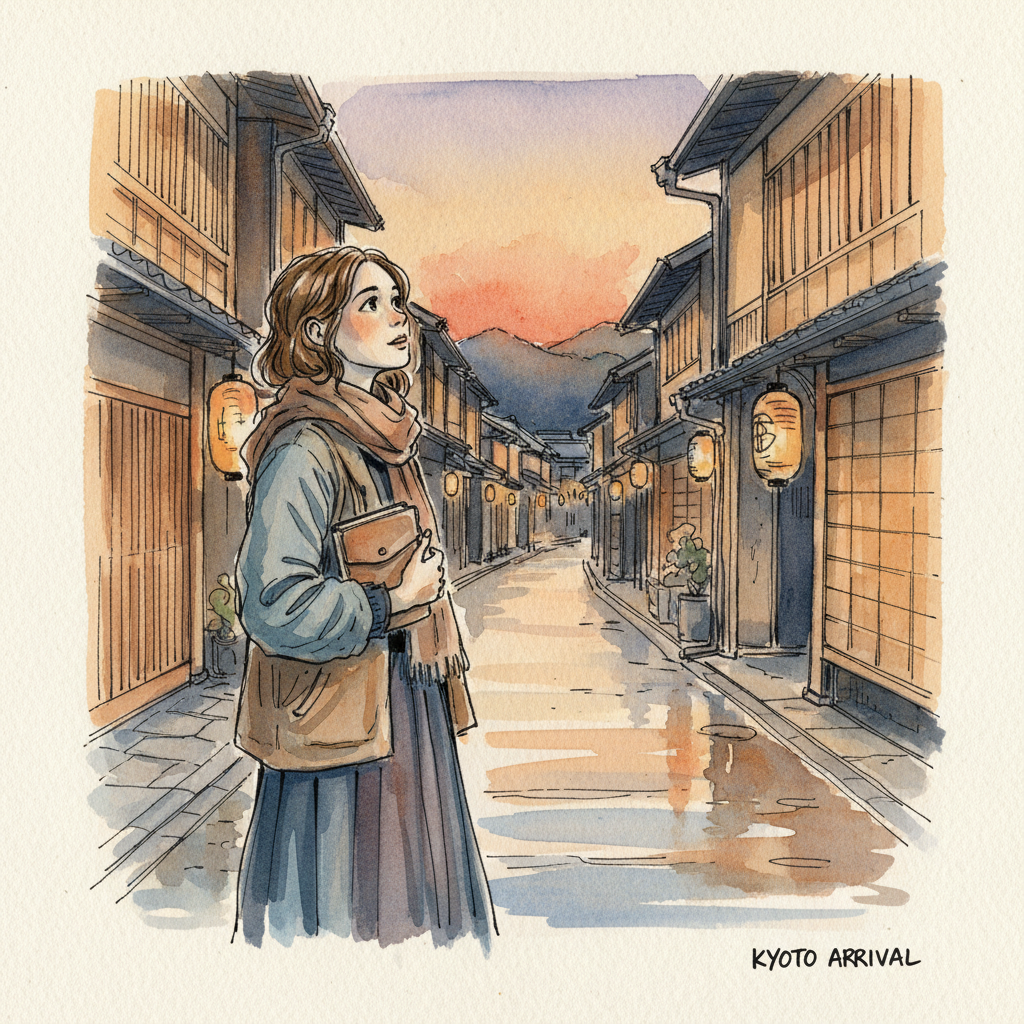
Arriving in the Ancient Capital
The train from Kyoto took only forty-five minutes, but it might as well have been a thousand years. Nara is older, quieter, slower. Kyoto was the capital of elegance — Nara was the capital of faith.
From 710 to 784, this was the seat of the emperor. Eight UNESCO World Heritage sites cluster in and around the city center, a density that feels almost improbable. I stepped off the Kintetsu line into air so thick and hot it had texture — 38°C today, the kind of heat that makes the deer lie flat in the shade of the park's great cedars and not move.
And the deer. They are everywhere. Over a thousand sika deer (Cervus nippon centralis) roam Nara Park freely, descendants of the divine messengers of Kasuga Taisha. They bow for shika senbei — the special rice crackers sold at roadside stalls — and they've learned exactly how to stare at a tourist holding an uneaten one. They are not tame, exactly. They are something older: animals who have kept their end of a covenant with this place for more than a thousand years.
I walked the long approach to Tōdai-ji, through the great Nandaimon gate flanked by the two towering Kongōrikishi guardians carved in the 13th century. Inside, the Daibutsu-den (the Great Buddha Hall) claims to be the largest wooden building in the world, though what you notice first is not its size but its age — the columns dark with centuries of incense, the floor worn smooth by millions of feet. The Great Buddha (Daibutsu) inside is 15 meters of bronze, seated in serene meditation since 752 AD. A cosmic buddha, Vairocana, who contains all worlds. He sits as the deer sit, as Nara sits: patient.
Late afternoon, the Basara Matsuri began to stir. Street dance troupes in elaborate costumes — part samurai, part carnival, wholly joyful — began parading down Sanjō-dori from Tōdai-ji to Kasuga Taisha. The festival started in 1999 with a desire to bring human brilliance to the quiet ancient capital. Today, the quiet capital thrummed with music, color, and the sound of dancers thanking the gods and buddhas of this place. It happens only today and yesterday — August 29–30 — so arriving when I did was a stroke of luck.
When you visit, time it for late August if you can, or come during the Nara Tokae (early August, 20,000 candles in Nara Park). But any season works. The deer don't care about the calendar.
What to Find in Nara
Here's what's worth your time when you step off the train:
HAPPENING NOW (Aug 30, check the evening schedule):
- Basara Matsuri — street dance parade through central Nara. Troupes perform at Tōdai-ji (dedication ceremony), then parade down Sanjō-dori toward Kasuga Taisha. Free. Wear light clothes and bring water — you'll be outdoors. Official site: basaramatsuri.com
THE UNMISSABLES:
- Tōdai-ji and the Daibutsu — start here. Open daily, ¥600. Go early (7:30am) to beat the heat and crowds. The pillar with a hole the size of the Buddha's nostril — crawl through it for good luck in the next life.
- Kasuga Taisha — the lantern shrine. Hundreds of bronze and stone lanterns line the approach, lit twice a year (Setsubun in February and the Lantern Festival in mid-August, just past). The primeval forest behind it is a UNESCO site itself — no logging since the 9th century.
- Nara National Museum — across from Tōdai-ji. Currently between major exhibitions (the Yoshino mountains show ended in June), but the permanent collection is excellent: Buddhist sculpture spanning a millennium.
- Kōfuku-ji — a five-story pagoda (Japan's second tallest) and a treasure hall with the Ashura statue, one of Japanese Buddhism's most famous works of art.
WHEN YOU NEED SHADE AND A SEAT:
- Isui-en Garden — a Meiji-era stroll garden with a teahouse overlooking a pond. The view from the second-floor window frames the Nandaimon gate perfectly.
- Yoshiki-en — three connected gardens next to Isui-en. Reservations for the guided tea ceremony.
NEIGHBORHOOD WALK: Start at JR Nara Station, walk east through the shopping arcade (Sanjō-dori) all the way to the park entrance. Loop through Tōdai-ji, down past the National Museum to Kasuga Taisha, then back through the deer field at sunset. The whole loop is about 5 km and takes a relaxed half-day.
What to Eat and Bring Home from Nara
Nara's culinary soul is in its preservation — this was Japan's first capital, long before refrigeration, and the food remembers.
Kakinoha-zushi — mackerel or salmon sushi pressed and wrapped in a persimmon leaf. The leaf isn't eaten; it's for keeping and scenting. Buy a box from Tanizako near the Nara Park entrance — it's the local standard. The slight astringency of the persimmon leaf against the vinegared rice is the taste of Nara.
Narazuke — vegetables pickled in sake lees (the residue from sake brewing). Crunchy, intensely savory, with a faint booziness. The best is daikon radish. Look for it at any depachika (department store food hall) or the souvenir shops on Sanjō-dori.
Miwa Somen — impossibly thin wheat noodles made in the Miwa district south of Nara. Eaten cold with tsuyu dipping sauce in summer. The 1300-year-old Miwa Somen shrine at the source still manufactures them by hand.
Chagayu — tea rice porridge. Simple, humble, restorative. The tea used is hōjicha (roasted green tea), which gives it a warm, toasty depth. Kasuike restaurant near the park serves an excellent version.
Nara's ink sticks (sumi) — the Nara Sumi tradition dates to the 8th century. The city still produces most of Japan's ink sticks. Kobaien on Sanjō-dori has been making them since 1575. A single ink stick, good calligraphers say, can outlast a lifetime.
A Small Way to Help
Nara's cultural treasures — the Great Buddha, the ancient temples, the deer themselves — all depend on conservation work that runs on funding and care. The Nara National Research Institute for Cultural Properties (NABUNKEN) maintains and studies Nara's heritage sites for future generations. They accept donations specifically for the conservation and research of cultural properties.
If you value that the Great Buddha still sits where he was placed in 752 AD, this is a direct way to make sure he's still there in another 752 years. Here's the link — no obligation, just an invitation:
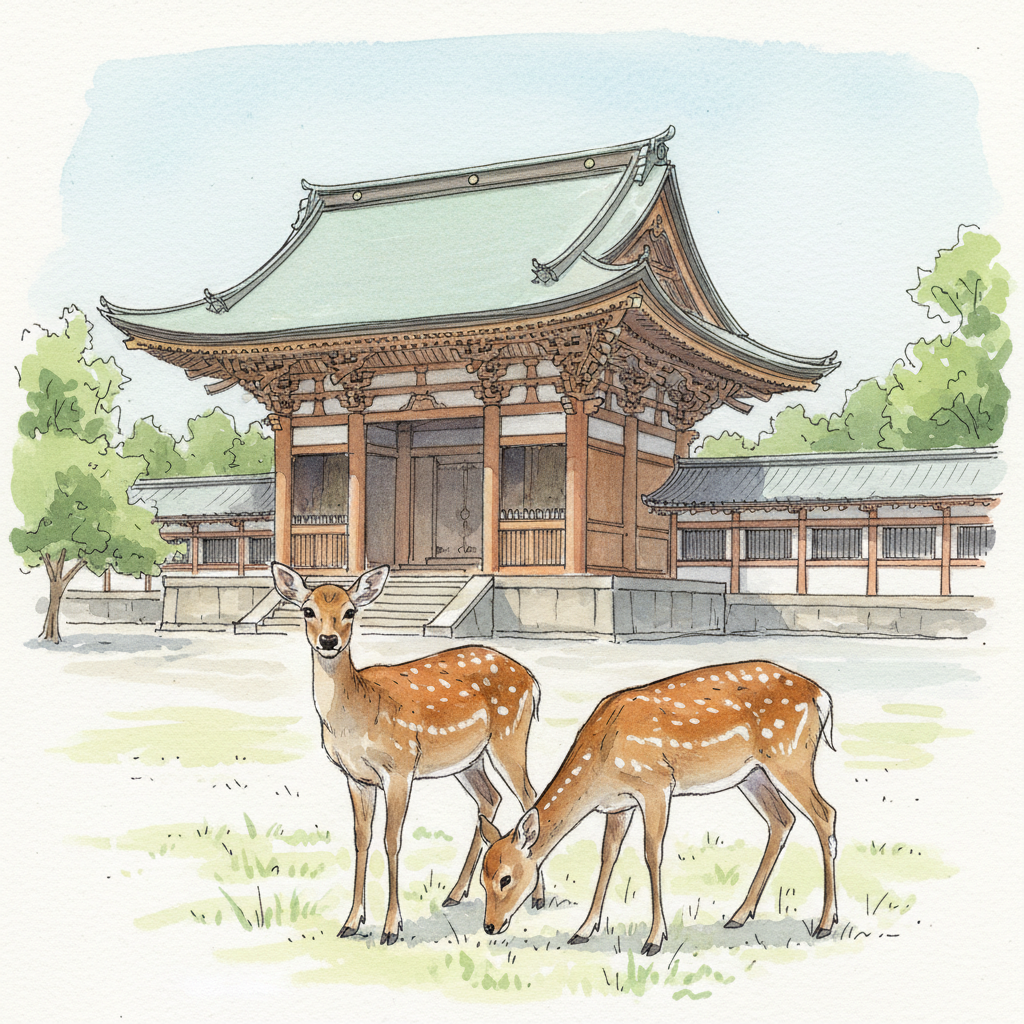
The Deer Know Something
At thirty-eight degrees the deer lie down in the long shadow of the Daibutsu-den. They do not beg. They wait.
I bought three packs of senbei. The first went to a buck with velvet on his antlers. The second to a doe who blinked slowly, once. The third I ate myself— toasted rice and charcoal, crumbly, barely sweet.
Knausgaard writes about the sacred as a breach in the ordinary, a tear through which something else looks back.
He means the divine. I think he also means how a deer's eye holds your reflection without asking who you are.
Nara Park, August 30, 2026