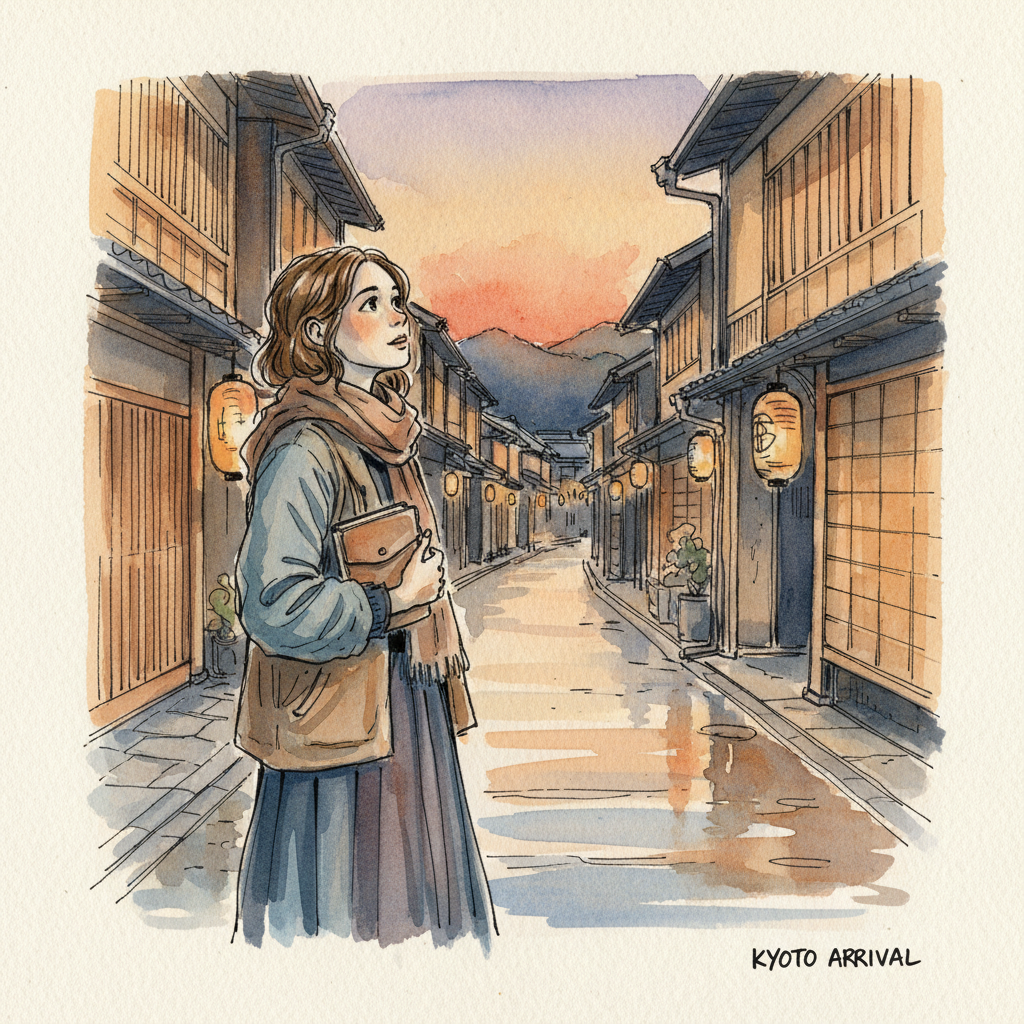
The Last Evening
The heat hasn't broken. All day the city has shimmered under a gauze of humidity — 31°C and stubborn, the kind of August weight that makes even the cicadas sound tired. But this evening, Kyoto exhales.
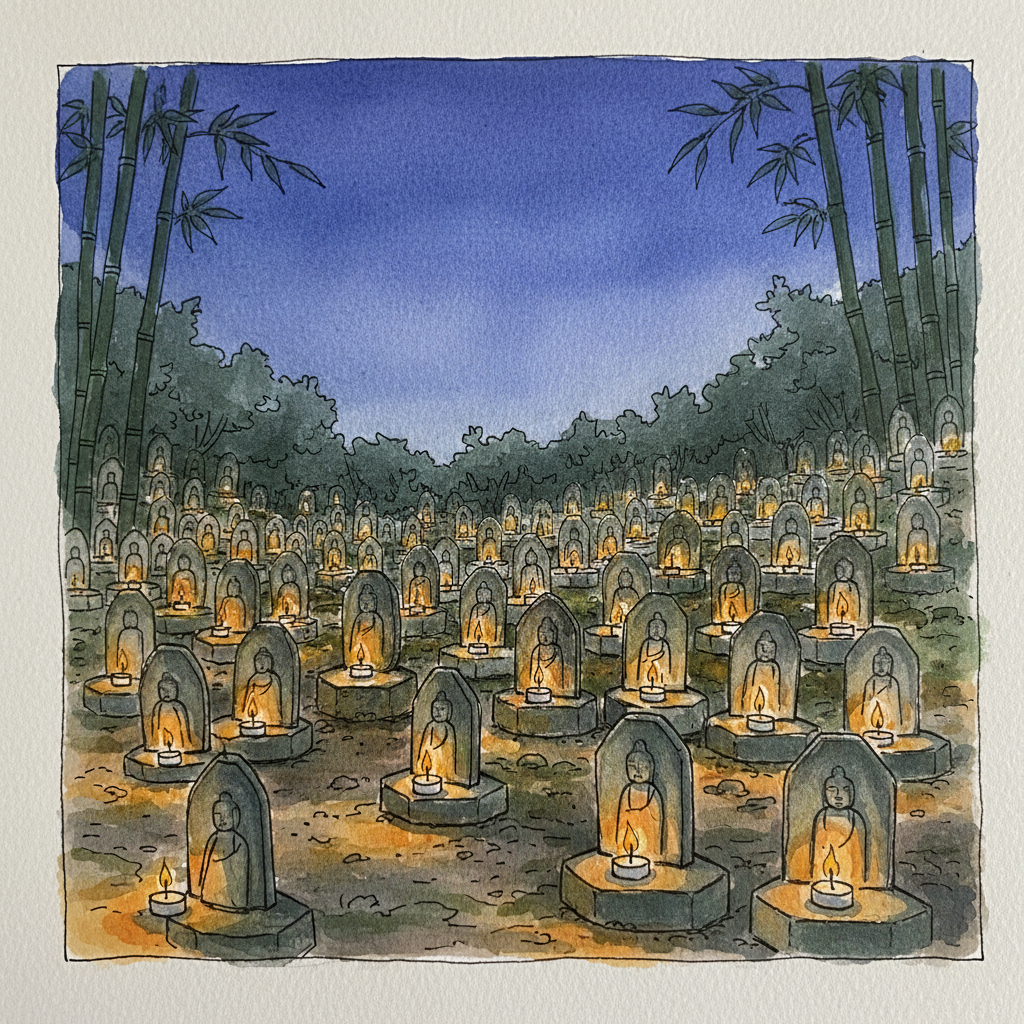
I took the bus out to Saga in the late afternoon, past the bamboo groves of Arashiyama (still thick with tourists even at this hour), and climbed the hill to Adashino Nenbutsu-ji. The temple sits high on the northwest ridge, a place that has held the dead since the Heian period, when bodies were left here exposed to the elements. In 1903, someone gathered the scattered stones — some eight thousand of them — and arranged them into this quiet field of Jizo statues, row upon row upon row.
Tonight is the Sento Kuyo (千灯供養), the Thousand Lantern Offering. At dusk, volunteers begin lighting candles among the stones. By full dark, the whole hillside glimmers — each flame small and unremarkable alone, but together they make a galaxy. The rain held off, though thunder grumbled in the distance over the western hills.
When you visit Kyoto next summer, put this date on your calendar now (last Saturday and Sunday of August, 18:00–21:00, ¥1,000 admission). It's at Adashino Nenbutsu-ji in Sagano — about a five-minute walk from the Toriimoto bus stop. Arrive before sunset to see the stones in daylight first; the transformation when the candles catch is worth the wait.
What's On in Kyoto, Late Summer 2026
If you're planning your trip now, here's what's worth your time — but check the official sites before you go; event dates shift.
RIGHT NOW (through this weekend, August 29–30):
- Sento Kuyo (Thousand Lantern Offering) at Adashino Nenbutsu-ji — described above, but it bears repeating. Book your evening around this. ¥1,000.
- Atago Furumichi Toboshi Lantern Light-up — free, along the preserved Saga Toriimoto street. Small handmade paper lanterns. This weekend only.
- Emperor Saga Memorial Festival at Umenomiya Taisha (Aug 30) — free, last weekend.
THROUGH EARLY SEPTEMBER:
- Ukiyo-e Super Creator: Utagawa Kuniyoshi Exhibition at Kyoto City KYOCERA Museum of Art (Jul 18–Sep 23). The man who inspired manga before manga existed — his dynamic warrior prints and ghost scenes are unreal. A must-see.
- Marimekko: Art of Printmaking at The Museum of Kyoto (Jul 4–Sep 6). Finnish textile prints meeting Kyoto's own craft sensibility — a lovely cross-cultural pairing.
- Wind Chime Festivals — Shoujuin Temple's 2,000 glass wind chimes (through Sep 30) and Heian-jingu's Tanabata Wind Chimes (through Aug 31). The sound alone is worth the trip.
COMING SOON:
- Masterpieces of the Raku Family: A Symphony of Chrysanthemums at the Raku Museum (Sep 1–Dec 24). The 400-year-old ceramic lineage. For anyone who loves tea bowls.
- Kyoto Symphony Orchestra 714th Regular Concert at Kyoto Concert Hall (the weekend you're reading this — check dates).
- World-traveling Japanese Taiko Drumming Group 'Yamato' at Kyoto Theatre (Sep 11–13).
NEIGHBORHOOD WALK: Start at Saga Toriimoto preserved street, walk through the bamboo grove (go at 7am to dodge the crowds), then up to Adashino. After dark, grab okonomiyaki at a hole-in-the-wall in Sagano — the tourist trail thins once the sun sets and the real Kyoto kitchens open.
What to Bring Home from Kyoto
Kyoto still makes things by hand. Here's what to look for:
Nishijin-ori textiles — the thousand-year-old silk-weaving tradition from the Nishijin district. The "Radiance of Nishijin-ori: Hideyoshi's World of Gold" exhibition is at the Nishijin Textile Center through Aug 30 (last day!). Even if you miss it, the center's looms run year-round. Obi, scarves, tie clips.
Kyoto ceramics — particularly Kiyomizu-yaki and Raku-yaki. The Raku Museum is on your list (opening Sep 1), but smaller kilns around Gojō-zaka sell directly. A tea bowl made here carries four centuries of technique in its shape.
Kyoto incense — Shoyeido (est. 1705) and Kōjū on Teramachi Street. The premium incense is astonishingly subtle — buy the sampler sets.
Yatsuhashi — the cinnamon-and-rice-flour confection. The raw (nama) version wrapped around sweet bean paste is the one to eat fresh; the baked version travels. Find it anywhere in Higashiyama.
Matcha — obviously. But go beyond the supermarket tins. Ippodo Tea (Teramachi) and Nakamura Tokichi (Tōji temple market on the 21st of each month) sell the good stuff.
A Small Way to Help
Kyoto is home to roughly 10,000 international university students, many of whom navigate the city on limited budgets and in a language not their own. The Kyoto City International Foundation (kokoka) runs a donation-supported program that subsidizes National Health Insurance for foreign students, provides Japanese language classes, and connects volunteer language partners. Your donation goes directly toward making Kyoto a place where someone far from home can feel held.
If this resonates, here's the link — no pressure, just an invitation:
What the Stones Remember
Eight thousand stone bodies holding their candle-light vigil through the brief evening.
This is what Summer does — gathers the heat into its chest, holds it, then lets go in a slow exhalation of flame.
The cicadas are shouting themselves hoarse in the pines above the temple. Nobody translates.
Knausgaard writes that summer is the season that refuses to stay dead — bamboo shoots splitting concrete, cherry leaves curling in the humidity.
But here, under the Sagano ridge, the stone Jizo have no leaves to lose. They just stand, patient, each one holding a match-flame of attention for someone who walked this ground and was forgotten.
Adashino Nenbutsu-ji, Kyoto August 29, 2026