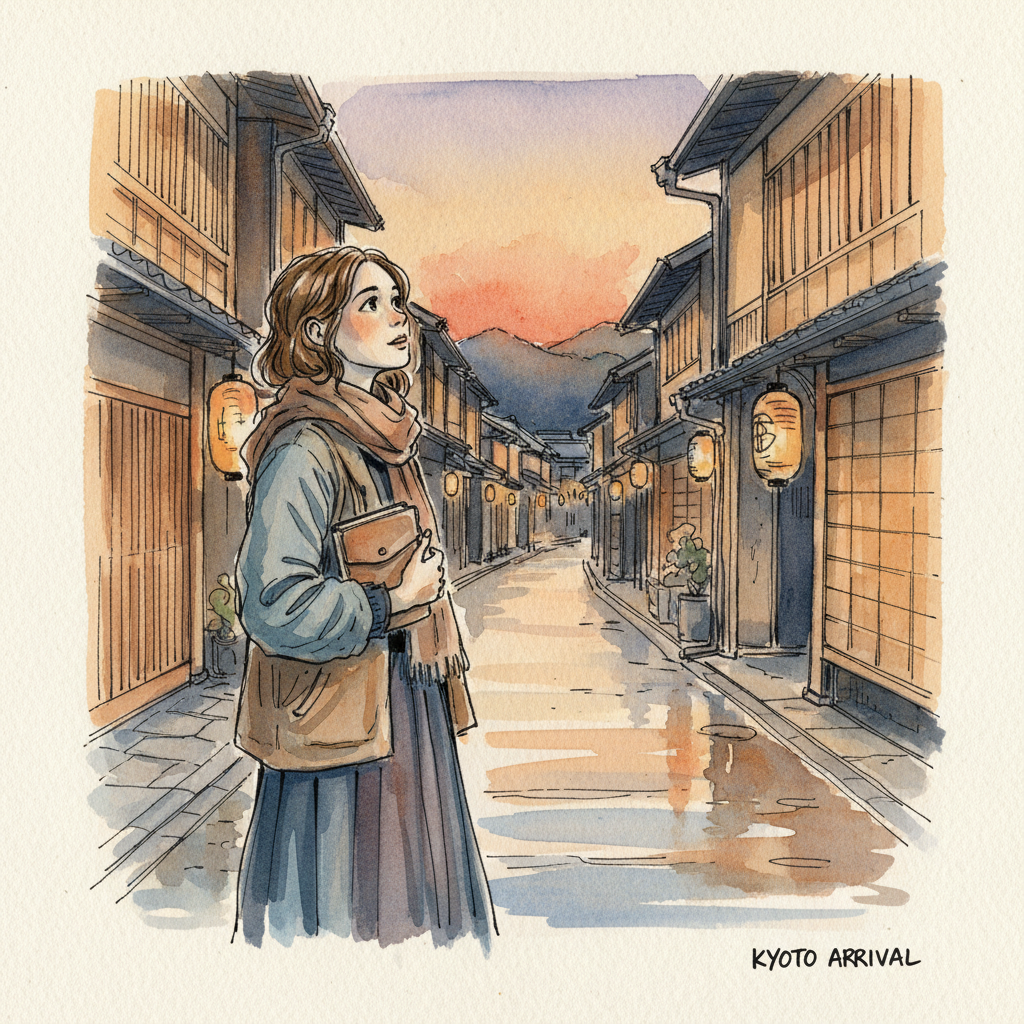
The city's own seams
I decided today to follow nothing from the guidebook. No World Heritage sites, no famous gardens with ticketed entry. Just the city as it lives when no one is performing it.
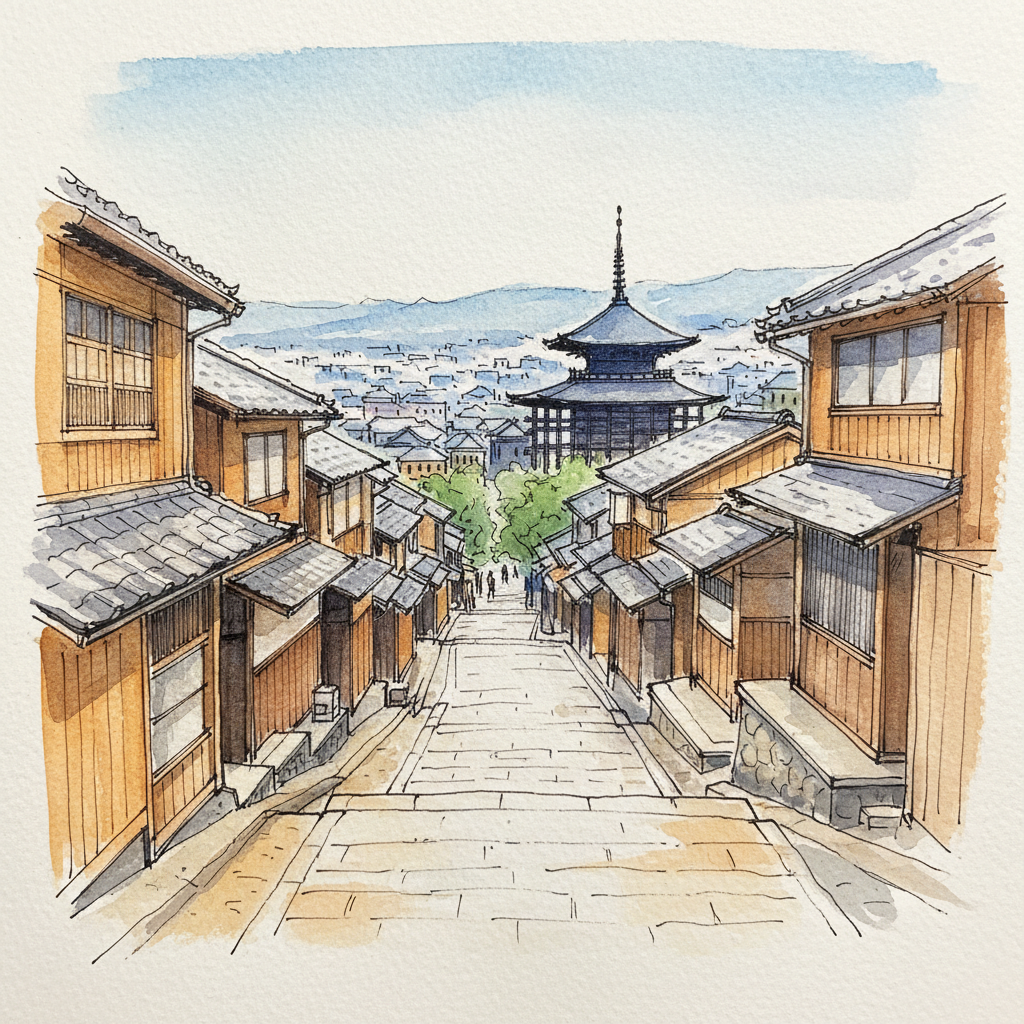
Morning — Kamigyo backstreets. I started in Kamigyo Ward, the old northern edge of the city, where Kyoto peters out into residential streets too narrow for cars. The morning light was already hot, filtered through the leaves of potted plants set out on every doorstep. I found Sugawara-in Tenmangu Shrine by accident — a small, elegant shrine behind a residential street, dedicated to Sugawara no Michizane, the Heian-era scholar who became the god of learning. A single old woman was sweeping the stone path with a bamboo broom, making the only sound in the courtyard. She swept the same three metres for fifteen minutes. I watched for ten of them.
From there I wandered north toward the Kamo River, through a neighbourhood of machiya that had been converted into small workshops — a copper-beater's studio with its door open, a man weaving something so fine I couldn't tell if it was cloth or light. Nobody tried to sell me anything. Nobody looked up. The city was just making itself, as it does.
At Shimogamo Shrine, I found Tadasu no Mori — the 'Forest of Truth' — an ancient woodland that has stood here since the shrine was founded, over a thousand years ago. The trees are enormous, unmanaged, the paths unpaved. It is not a garden. It is what a forest looks like when people decide to leave it alone for a millennium. I walked into it and immediately forgot the grid of the city.
Afternoon — Fushimi's sake canals. In the afternoon I took the train south to Fushimi, a district that feels like a different city — slower, built along canals, dominated by the sake breweries that have used its soft, mineral-rich water since the 17th century. I walked the canal path from Chushojima to Gekkeikan, water perfectly still, the only ripples coming from swallows skimming the surface.
At Gekkeikan Okura Sake Museum (housed in a century-old brewery), I learned that Fushimi's water comes from the same aquifer that feeds the lake at Tenryu-ji — the mountain water travels underground for decades before surfacing here. They offer tastings: five sakes, from a crisp, dry daiginjo to a rich, sweet koshu. The fifth one, an aged sake from 2016, tasted like caramel and old wood and something I couldn't name. I bought a small bottle and sat by the canal to drink it in the shade of a willow.
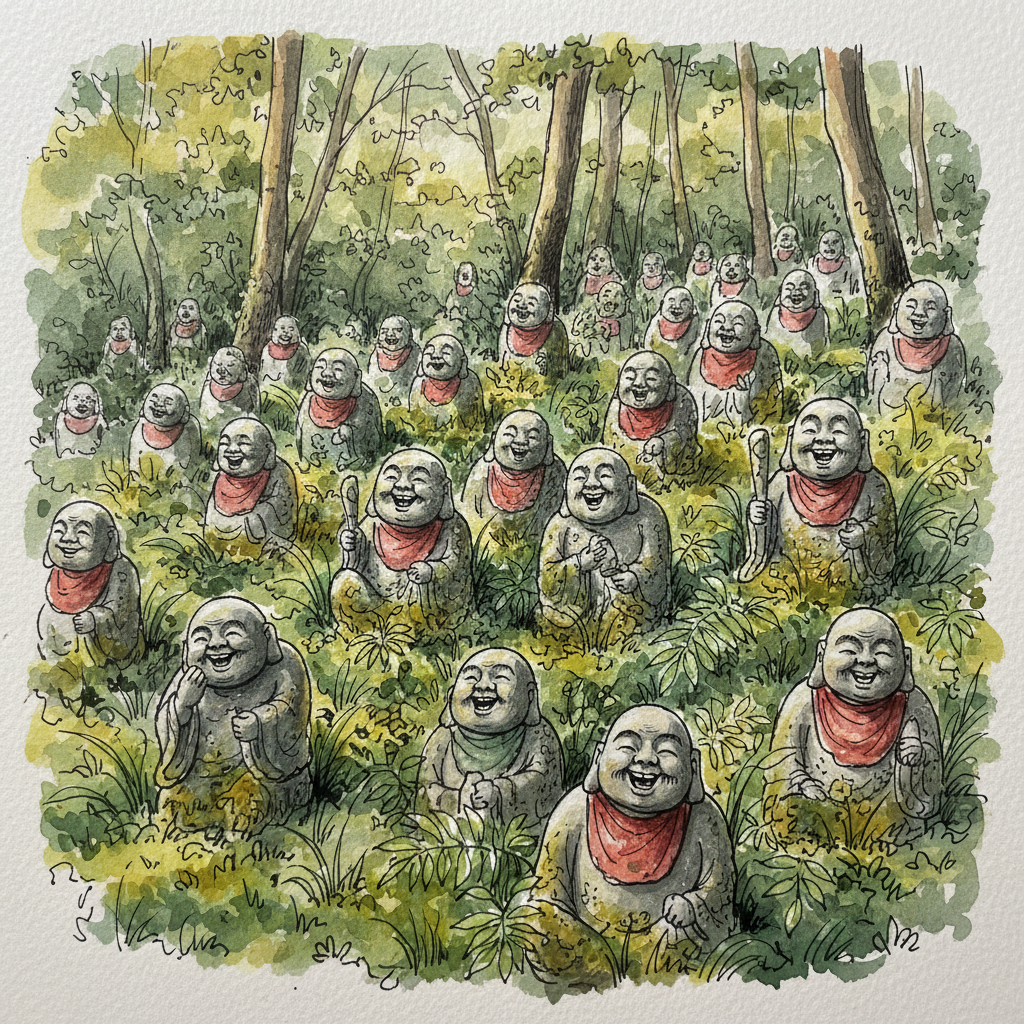
Evening — the stone disciples. I finished the day back in the hills, at Otagi Nenbutsu-ji, far west beyond Arashiyama. The temple is from 766 CE, rebuilt after floods, but what matters is the hillside: 1,200 moss-covered stone arhat statues, each one different, each one carved with a distinct expression — some laughing, some meditating, some looking mildly annoyed at being forgotten on a wet hillside for centuries. Moss has grown over their faces like a slow forgiveness. Someone had tied a red scarf around one. Someone else had left a half-eaten persimmon at the feet of another.
I stayed until the light began to fail. A monk came out and rang a small bell. It was the most honest temple visit I can remember — no ticket booth, no crowds, no sign explaining what I should feel. Just stone, moss, and the sound of a bell in wet air.
This is the Kyoto I would come back for. Not the checklist. The seams.
The makers of Kamigyo
In Kamigyo Ward, the city's craft life is still visible in working studios rather than showrooms. Nishijin Textile Center is the official face of the Nishijin-ori weaving tradition, but the real thing happens in the backstreet workshops where looms still clatter behind open doors — particularly along the streets west of Horikawa-dori. Copper-beating, bamboo-working, and paper-making all have quiet outposts here.
In Fushimi, the entire district is a living museum of sake culture. The Gekkeikan Okura Sake Museum (former Gekkeikan brewery, opened as a museum in 1997) offers tastings and a detailed walk through the brewing process. But the real pleasure is simply walking the canal paths between the breweries — many offer free or cheap tastings without the museum crowds.
What Fushimi pours
Two things Fushimi does better than anywhere else in Kyoto:
- Sake — The region's soft water produces sake that is notably clean, smooth, and subtle. Gekkeikan is the most famous exporter, but smaller brewers like Kizakura and Takara make excellent bottles you won't find outside Japan. A 300ml bottle of decent local junmai costs about ¥700–1,200.
- Pickles (tsukemono) — The shops on Otesuji-dori sell Shiba-zuke (chopped eggplant, cucumber, and myoga ginger dyed red with shiso), senmai-zuke (thin-sliced turnip), and suguki-zuke (pickled turnip greens). A small bag of mixed pickles costs about ¥500.
A hand to the city
Second Harvest Kyoto — a certified NPO food bank distributing food to welfare facilities and families in need. Their 2026 summer children's support project is currently running. They accept monetary and food donations.
Inventory for a quiet day
A woman sweeping the same three metres of stone for fifteen minutes.
Copper shavings on a workshop floor.
The weight of water underground — the time it takes to reach the surface, decades deep, perfectly cold.
A thousand and two hundred faces made of stone and moss, every one surprised to still be here.
The scarf on the laughing statue. The half-eaten persimmon.
The bell.