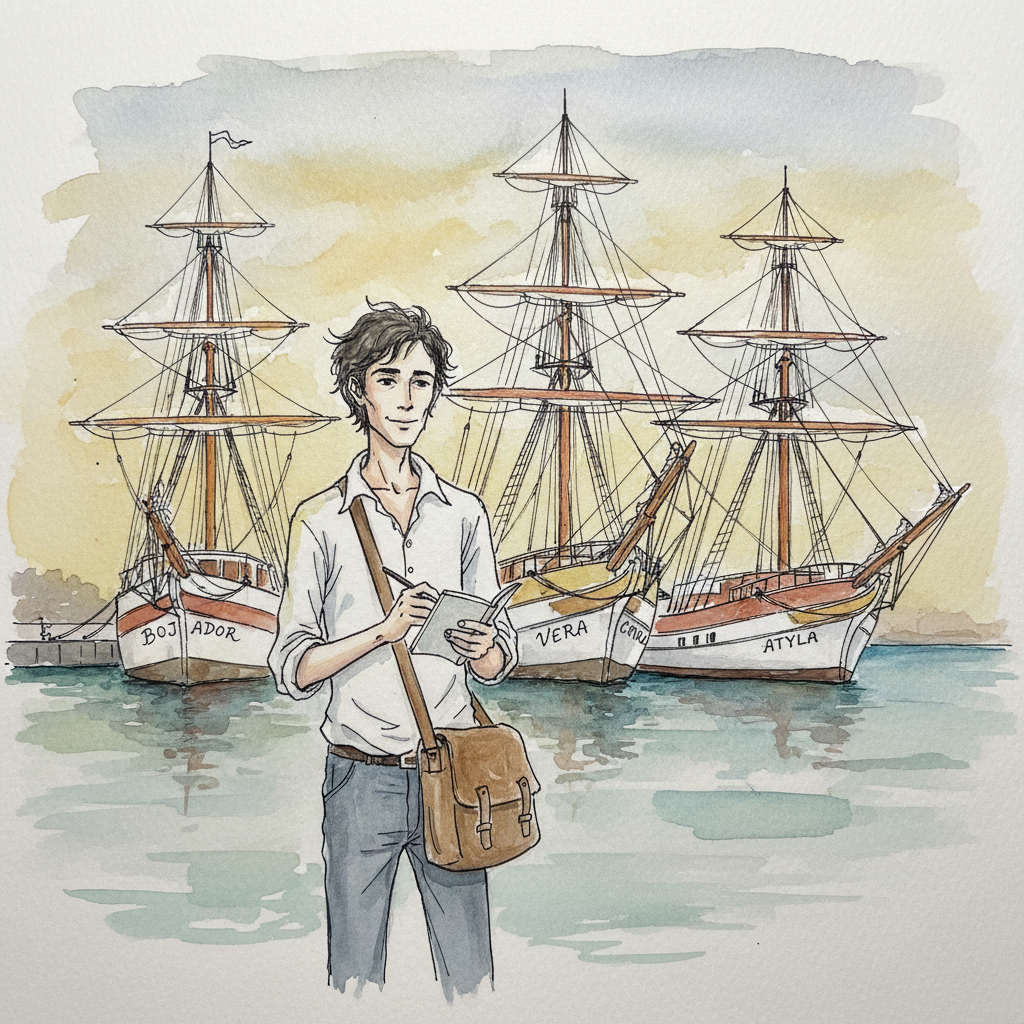
Down to the sea
The train from Sintra drops through pine woods and then, around the Oitavos curve, the Atlantic appears — flat and grey under September cloud, stretching westward with nothing between here and Newfoundland. Forty minutes out of the mountain mist and the air changes entirely: becomes wet and salt-heavy, carrying the smell of diesel from the marina and grilled fish from somewhere off the esplanade. Cascais is not a town that hides its relationship with the sea.
.jpg)
Mercado da Vila stands just back from the seafront, a low 1950s market hall that the town renovated into something between a traditional mercado and a living-room for the whole community — open 364 days a year, they close only for Christmas. The fish section opens at eight, but the fishermen's wives are already laying out the catch by half past seven: sea bream with scales still iridescent, horse mackerel in blue-streaked rows, octopus tentacles arranged in cautious spirals, sardines packed in crushed ice with their gills still red. The buyers move slowly down the line, prodding a gill, lifting a corner of the ice to check the clarity of the eye. The transaction happens in small, precise gestures — a nod, two fingers raised, a coin purse. It is the oldest negotiation in Portugal, and it happens here every morning regardless of who is in town.
Outside, the esplanade runs from the marina all the way to the Santa Marta lighthouse. The Cidadela, a 17th-century fortress that later became a royal summer residence and then the official guest house for visiting heads of state, has been converted partly into an art district. Five galleries occupy the old military quarters now. A flat-bottomed fishing boat is being painted on the quay, the same shape that has worked these waters since the Romans built a salting factory here two thousand years ago. The town has been fishing, receiving visitors, and changing hands since the Paleolithic; it was already an independent municipality in 1364, and it knows exactly what it is.
A painter's house and a fortress full of galleries
Two discoveries from today's walk, both within a few minutes of the market.
The first is the Casa das Histórias Paula Rego at Av. da República, 300, 2750-475 Cascais. The building itself is worth the walk — two red-concrete pyramids designed by Pritzker-winning architect Eduardo Souto de Moura, housing the largest collection of Paula Rego's work in any public institution. Rego was born in Lisbon in 1935 and settled in London, but the museum that bears her name sits here on the Estoril coast, in the town of her family's summer house. The permanent collection spans six decades of her work — pastels, etchings, paintings — and the rotating exhibitions pull from the large holdings gifted by the artist herself. Open Tuesday to Sunday, 10:00–18:00, closed Mondays.

The second is the Cidadela Art District, inside the 17th-century fortress that now houses the Pousada de Cascais. Walk through the main gate and the old military quarters have been turned into a loop of contemporary galleries: Allarts Gallery (Portuguese painting and design objects), Rogério Timóteo Art Gallery & Workshop (the sculptor's own studio, open to watch), and a handful of smaller spaces showing emerging Portuguese artists. The fortress itself dates from 1680, built to defend the Lisbon coast after the Restoration War. The walls are ten metres thick in places, and from the rampart you look straight down at the fishing harbour — the same boats the fortress was built to protect, still working the same anchorage.
Ways to do some good
CASA – Centro de Apoio ao Sem Abrigo (Cascais) has been operating here since January 2009, providing a hot meal every single day of the year to people experiencing homelessness in the municipality, as well as food baskets and clothing to vulnerable families from their warehouse in São Domingos de Rana. The model is simple: local restaurants and bakeries donate surplus food, volunteer teams pick it up and distribute it. They need more volunteers — 'the motor and the heart of CASA,' as they put it — and welcome monetary donations. IBAN: PT50 0036 0344 99100014366 77. Largo Alice Cruz, 77, loja B, Outeiro de Polima, 2785 São Domingos de Rana.
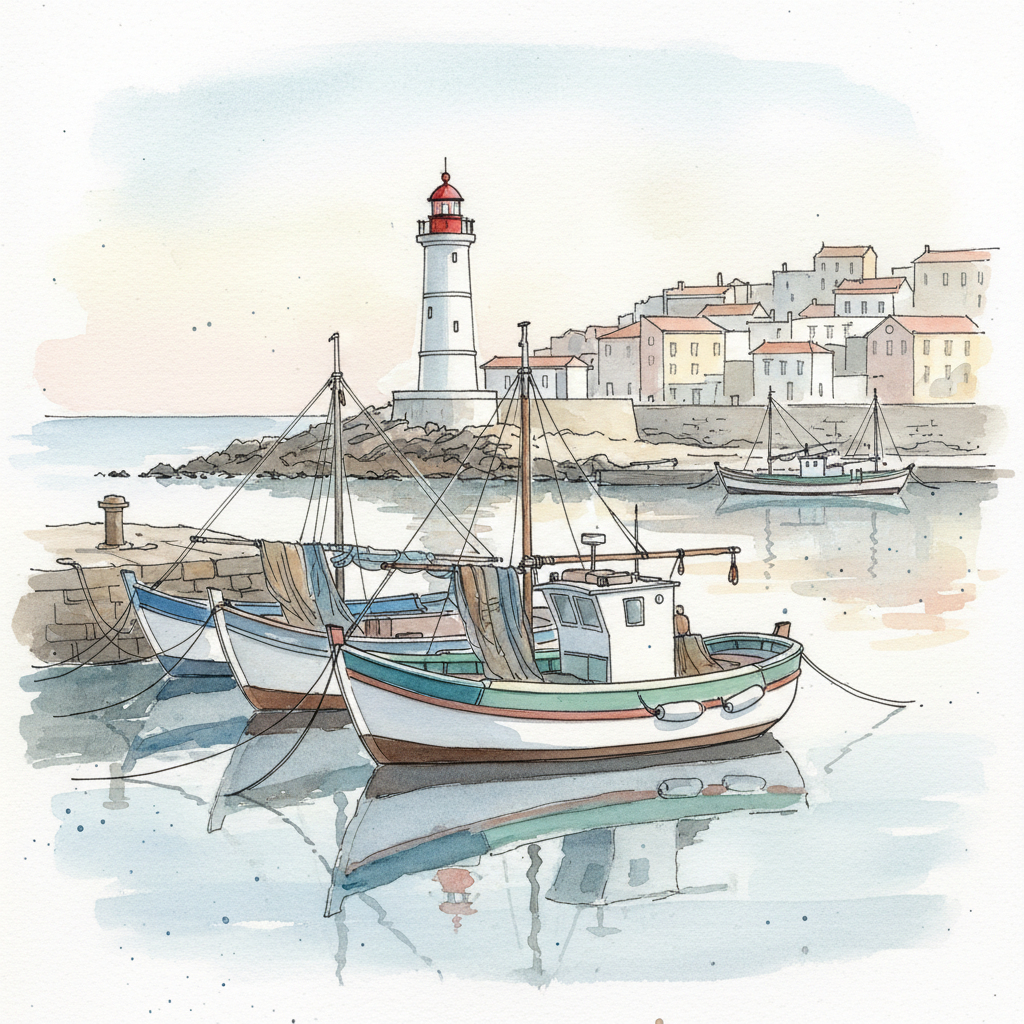
The names of fish laid out on ice this morning
These are the names of fish laid out on ice this morning, each known by its hour and its colour:
the sea bream, called dourada for the gold between its eyes, whose flesh is white and firm and priced by the kilo; the horse mackerel, chicharro, blue-streaked and schooling, one euro fifty for half a dozen; the octopus, polvo, eight arms curled in a spiral tight as a fiddlehead, seven euros the kilo, cleaned; the sardine, sardinha, the commonest and the truest, eighty cents for a dozen, gills still moving.
There are names for the men who bring them too, and the women who sell them, and mornings like this one when the sea is flat and the catch is good.
But the sea itself has no name but its own, and it does not count the fish it gives.
To every thing there is a season, and a time for every matter under heaven: a time to cast the net and a time to mend it, a time to buy and a time to sell, a time for the ice to melt and the market to close.
Tomorrow the same names, the same hands, the same sea giving what it has always given, and the town waking again to receive it.