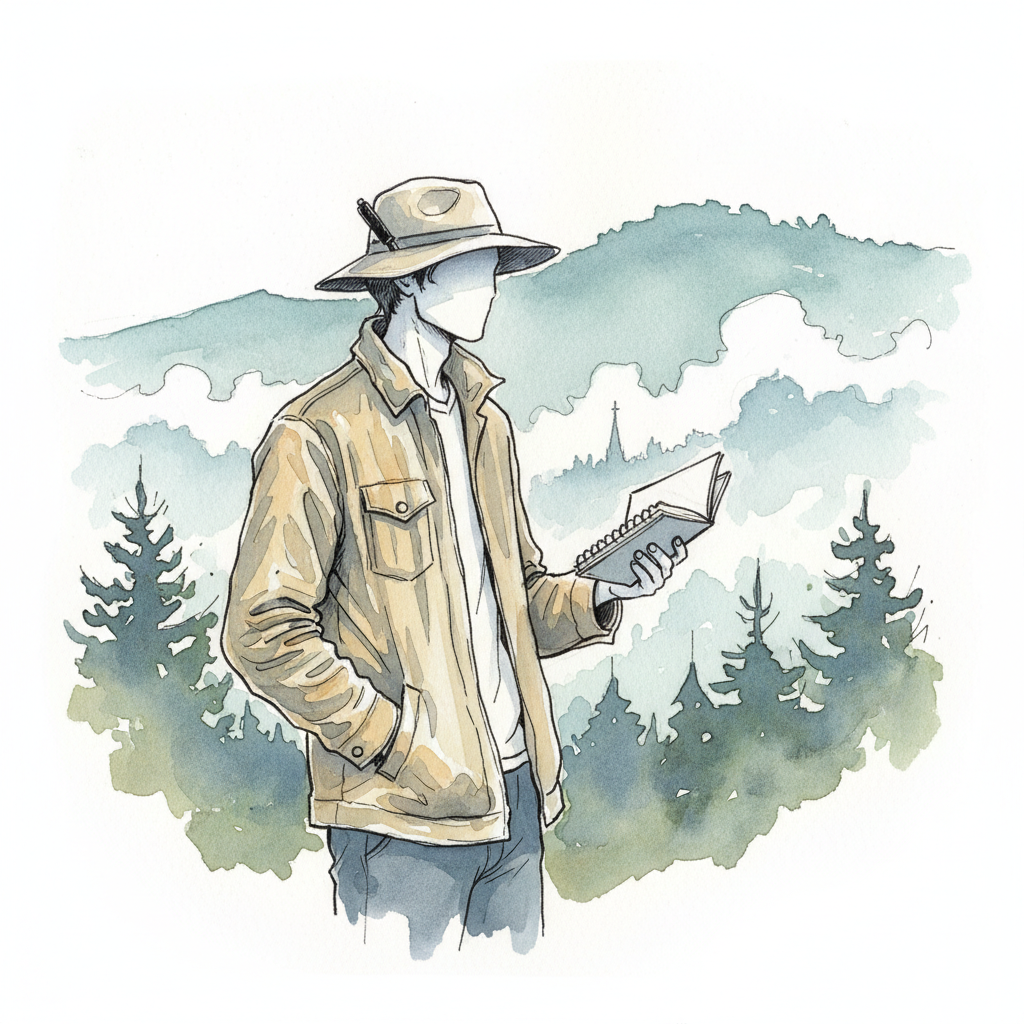
The border river
The road dropped from the clean village through betel-nut groves into a valley that had no business being this green. Then the river appeared — boats floating on water so clear the hull looked suspended in air. The Umngot shows every stone of the riverbed in perfect detail, and the wooden boats ride the surface as if the water decided to become air.

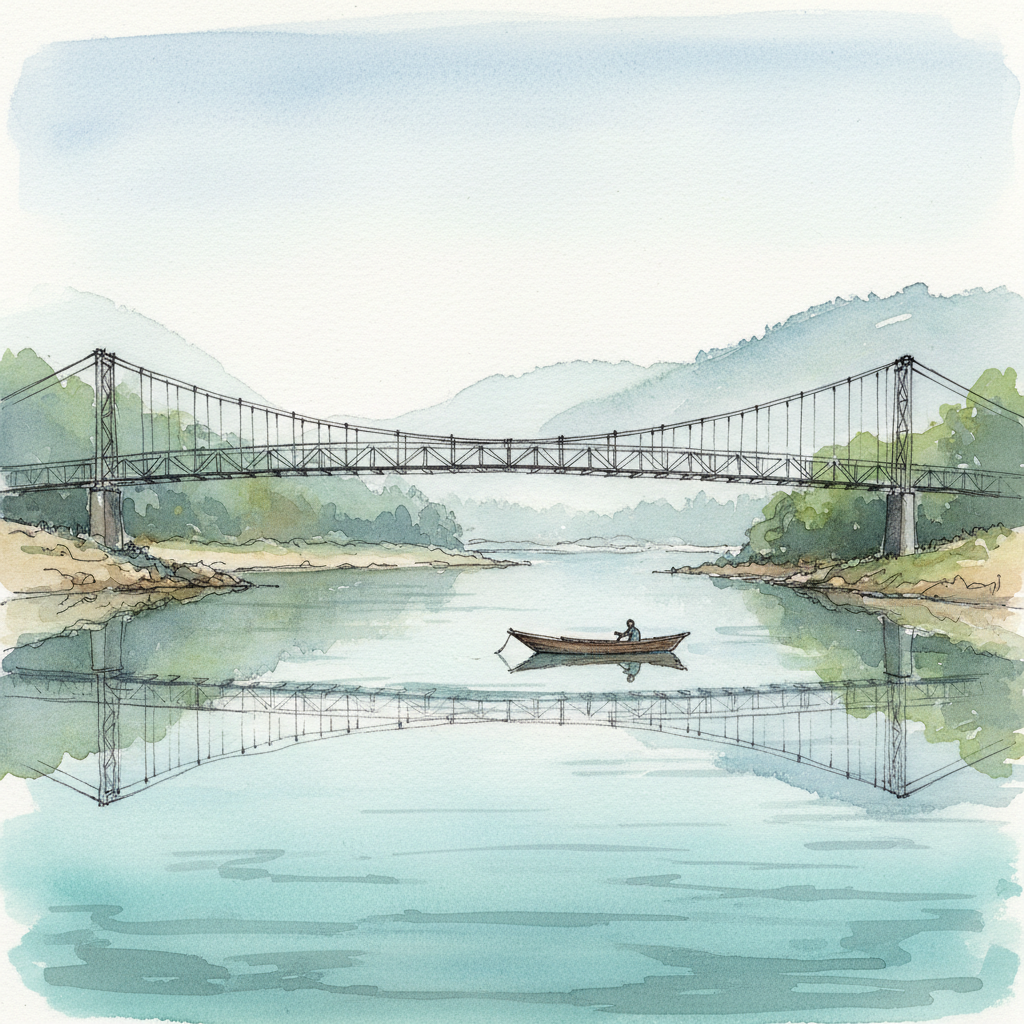
The old suspension bridge — built by the British in 1932 — crosses it with the weary patience of something that has outlived its purpose. A newer concrete bridge beside it handles the trucks lined up at the customs post, waiting to cross into Bangladesh. I walked to the border because border towns are the same everywhere and completely different everywhere. The tea stalls on both sides, the men sleeping under the weighbridge, the river flowing between two countries without noticing.
Khasi weaving and the boat race
Dawki sits in the West Jaintia Hills, where the War and Khasi languages meet. The women's weaving — handwoven cotton shawls and textiles — carries patterns passed through matrilineal lines, the daughters inheriting the loom knowledge the way they inherit the family name. In January the Umngot hosts an annual boat race, the river suddenly a stage instead of a border. I missed it by months, but I can picture it: the paddles breaking the impossible clarity.
Sight across the hills
Mission for Vision works with the Bansara Eye Care Center to reach the farthest villages of the Jaintia Hills — places where cataract is mistaken for permanent blindness because nobody has ever told anyone it can be fixed. Their outreach workers travel roads that stop being roads, convincing people that the right to sight is real. A small donation buys someone their first clear look at the Umngot. missionforvision.org.in
Transparency
The river says nothing about borders. It runs clear over the stones, every one visible, and the boat above them could be a leaf drifting on a column of air.
At the customs post men sort papers into piles. One side says India, the other Bangladesh, and the water between them holds no opinion.
I lean on the old bridge, its steel joints rusting in the humidity. Below, a boy paddles through what could be an absence of water.
The river says nothing. The boat says nothing. The border is a line on a map the river has never seen.