A village of two speeds
Saturday in Mawlynnong is a different creature. Tourist vans nose through the narrow lane, families fan out with selfie sticks, and the souvenir stalls do brisk business in bamboo trinkets and bottles of local honey. Up to a thousand visitors pass through this village of six hundred — a ratio that tilts the whole place toward performance.
But tomorrow the black metal gates at the entrance will be locked. Since January the Dorbar — the village council — has barred day-trippers on Sundays, a quiet revolution that made international news. The income goes away for one day, and in its place comes something Precious Khongdup, a committee member, called 'real village life'.
I arrived on Friday, so I get to see both. Today the show; tomorrow the village it was before the accolade changed everything.
The morning sweep

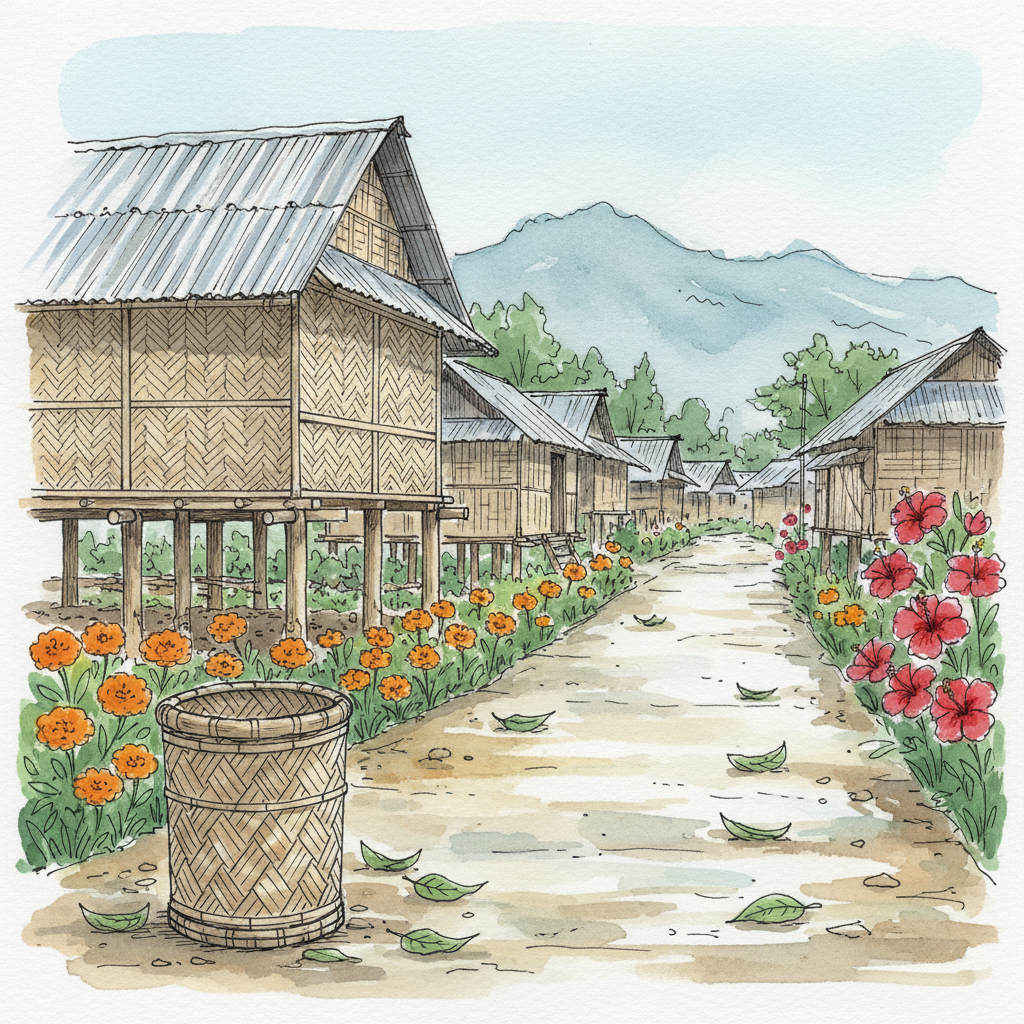
Before the first van arrives, the village has already been at work. Children take to the streets before school, sweeping dead leaves into bamboo dustbins — the woven khoh baskets that stand at every corner. No plastic bags anywhere. No smoking. The waste goes into a composting pit and comes back as manure for the betel-nut groves. This is not a campaign; it is the texture of every morning, seven days a week, tourist or no tourist. The bins will be full again by tomorrow afternoon, but tomorrow nobody will sweep them for an audience.
The gate they close
One day a week the village takes its name back from the magazines. The bamboo bins wait empty under the marigolds. A church bell, not a van horn, calls the hour. The road that brought a thousand strangers ends at a locked gate, and the betel-nut groves breathe out. Inside the quiet, a woman sweeps her mother's doorstep without being watched. The youngest daughter inherits the dust and the house it settles on, and this is the real inheritance: a day that belongs to nobody's postcard.
— after Knausgaard's Summer, for whom the ordinary always outweighs the spectacle