The lane that does not need a sign
.jpg)
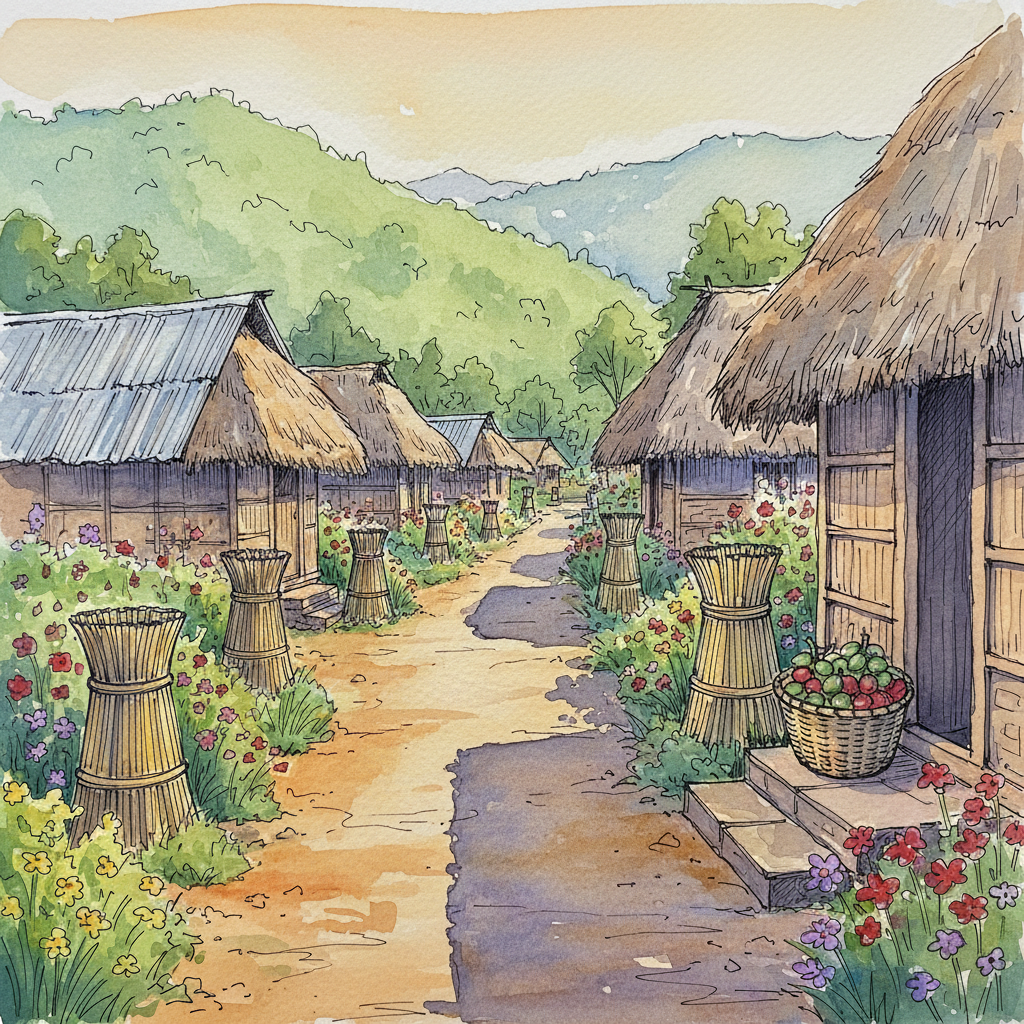
The road curves through pines and then the village opens: flower-lined lanes so clean you could eat off them. Mawlynnong's children sweep every morning before school — the streets, the verges, the spaces between thatched houses. The bamboo dustbins are emptied into a pit, turned to manure, nothing wasted. This year the village committee locked the gates on Sundays. Six hundred residents decided they needed one day a week to just be a village, not a destination. On a Friday in late September it is impossibly orderly and impossibly alive.
Matrilineal dust and Sunday prayers
The Khasi people of Mawlynnong follow a matrilineal system — property passes from mother to youngest daughter, who keeps the maternal surname. Church of the Epiphany stands at the village centre, a stone building with a tin roof, attended each Sunday by a community that voted in 2026 to keep tourists out that morning. The village committee enforces the cleanliness code: no smoking, no polythene, rainwater harvesting for every household. What passes for a tourism economy runs through family-run guesthouses and woven-cane stalls by the car park.
The betel nut and the bamboo bin
Betel nut is the main crop here, grown on the slopes and harvested by Khasi farmers. Locals sell woven bamboo and cane baskets, dustbins, and trays at the village gate — practical craft that predates the tourist vans by generations. In summer the pineapples and lychees are good, but September is betel-nut season and the roads smell faintly of tannin.
Keeping children safe in the hills
Faith Foundation, based in Shillong and run by women of the Indigenous Khasi tribe, has delivered life-skills and child-safety programmes across the East Khasi Hills since 2013. Their workshops reach villages like Mawlynnong where tourism brings strangers through every week. Donations support their school outreach in the district.
The Sweeping of the Earth
At dawn the girl with the bamboo broom sweeps the lane from her doorstep to the church gate. The dead leaves, the petals, the dust from yesterday's tyres — she guides them into the woven bin her uncle made. She is nine. She will do this every morning until she leaves for school. The broom's arc is old, older than her, older than the title that made this village famous. It is how you keep something clean: not by banning dirt but by showing up every day to move it out of the way. The wet leaves slide across the swept earth and rest, and she moves on to the next metre of path.