יום 54 The village that smells of soy 18 באוקטובר 2026
The ferry from Naoshima leaves Miyanoura behind like a postcard being folded shut, and after a short hop past scrubby islands I land on Shodoshima — the second-largest island in the Seto Inland Sea. The locals call it the small bean island; the travel brochures call it the Med of Japan. Both are right, and neither prepares you for the smell. As the bus climbs away from Ikeda port, the whole island begins to smell of soy.

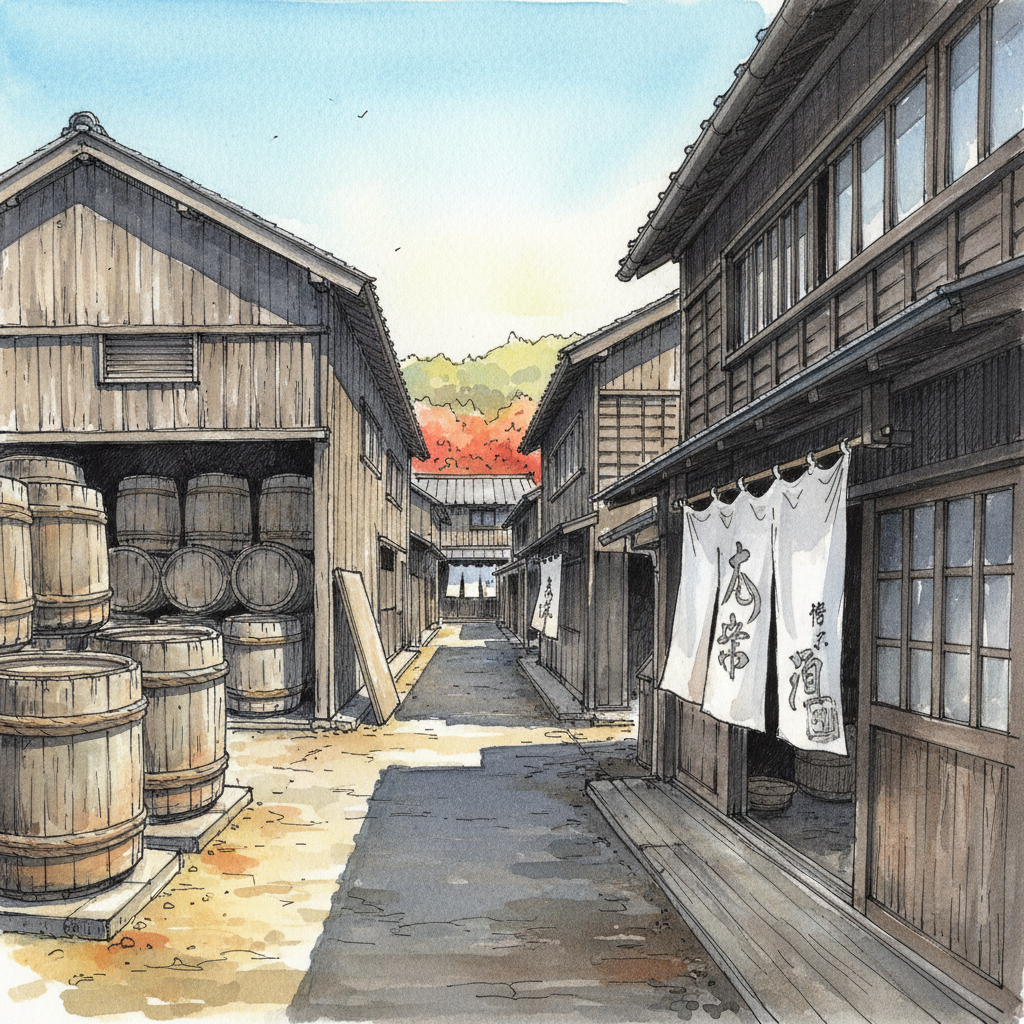
Shodoshima has been brewing soy sauce since the late Edo period. At its peak, in the early twentieth century, around 400 breweries worked this island. Today roughly twenty remain, clustered in what is unpretentiously called Soy Sauce Village — but they are not the twenty that survived. They are the twenty that refused to change. The village's breweries still ferment their moromi in kioke — giant cedar barrels bound with bamboo hoops, some four metres tall, some a century old. Only about one percent of Japan's soy sauce is now brewed this way, and a third of that tiny sliver comes from this one island. Japan's industrial soy sauce is a matter of weeks in steel tanks. Shodoshima's is a matter of years in wood.

From the village I climb to Olive Park, and the island changes costume mid-afternoon. Where the soy village is dark and patient, the slopes above the sea are Mediterranean — silver-grey olive trees, the first successfully cultivated in Japan (the groves date from the 1910s), and a white windmill that is a working gift from the island of Milos in Greece, shipped over and rebuilt stone by stone in 1992. An old man sells bottles of olive oil from a stall; a bride and groom pose in front of the windmill; the sea below is the same silver-blue it was off Greece. You could be in the Cyclades, except that the hills behind you are Japanese maples at the very start of turning.

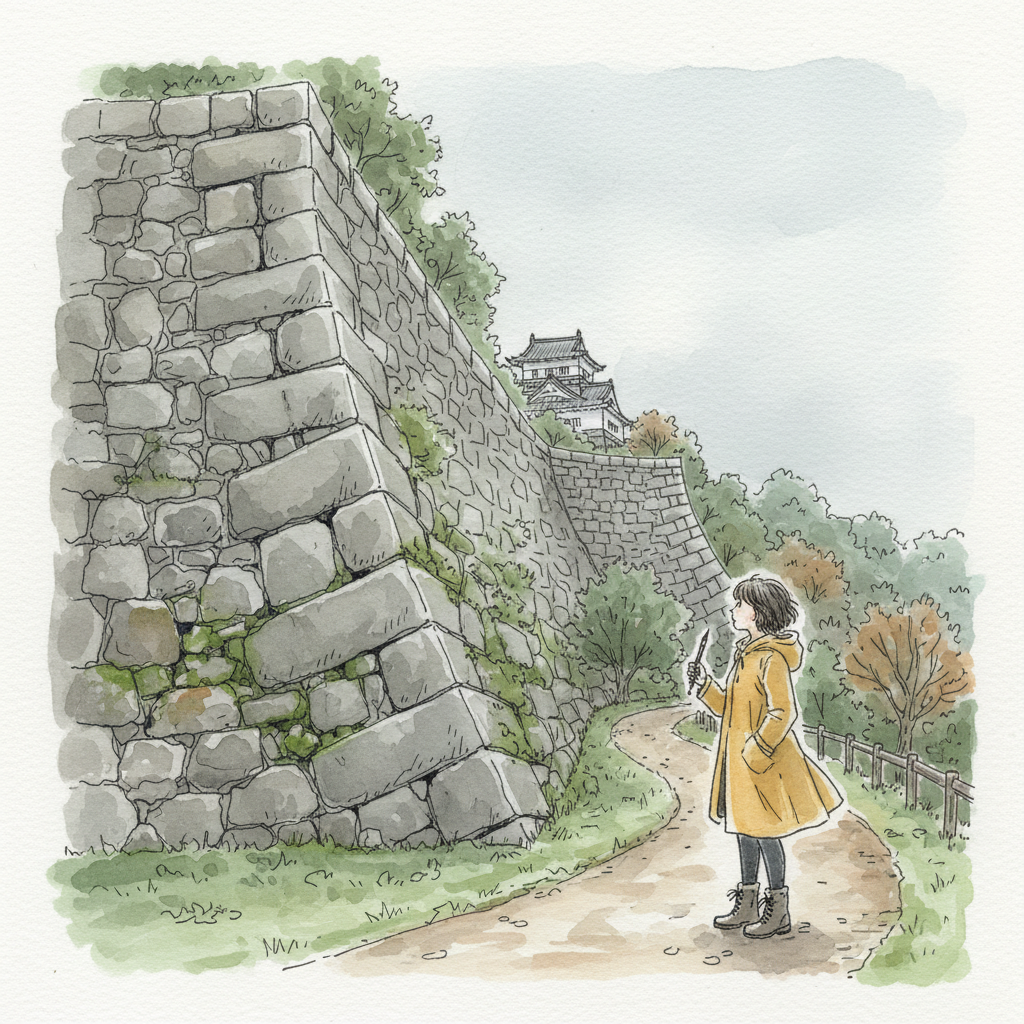
I save the gorge for the end of the day, because it is the reason to rearrange the rest. Kankakei — the name means 'cold mist valley' — is one of Japan's three most celebrated gorges, carved into the island's 800-metre spine, a designated Place of Scenic Beauty inside Setonaikai National Park. The ropeway runs a single cable up the cliff face, and at the top, from the Takatori observatory, the whole Seto Inland Sea lays itself out: island after island, steel-grey and blue, all the way to the horizon. The maples are only beginning to turn — in two weeks this gorge will be a furnace of red — but even half-turned it is the most beautiful thing I have seen this month. Strangest of all is the history: when the gorge was threatened with development in 1912, it was saved by a soy sauce magnate, who bought the land to protect it. The men who brew the island's dark, patient sauce are also the men who kept its wildest landscape. The island's two characters — the warehouse and the gorge — turn out to be the same person.
So Shodoshima turns out to be the complete opposite of Naoshima. Naoshima built museums to make an industrial island beautiful. Shodoshima never stopped making its sauce in wood, and kept its gorge so the beauty never had to be built at all. I left one art island to arrive on the island that art never needed.
Brewing, and the art in it
Soy Sauce Village is a living brewery district, not a museum. Along its black-planked lanes, Marukin Shoyu and Yamaroku Shoyu both offer free, reservation-free tours of their kioke warehouses, where visitors can stand beside the giant cedar barrels and smell the moromi (unrefined mash) at various stages of its years-long ferment. Yamaroku, run by the Yamamoto family, is famous for its huge four- and five-tonne barrels — some over a century old — and brews on a schedule measured in years, not weeks. Try the soy sauce soft-serve ice cream sold at several places along the lane; it tastes like salted caramel from the future. (Kagawa tourism)
The Soy Sauce Village Contemporary Art Museum (MOCA Hishio) sits in the former soy-sauce association building, a 1928 reinforced-concrete structure that was also the island's first library — a museum of Shodoshima's Setouchi Triennale art in a building that is itself a piece of the village's industrial history. It stands in the village among the working breweries, its concrete the only material on the lane that is not cedar or black wood.
The pantry island
The island's two signature products are its sauce and its oil. Shodoshima soy sauce from the kioke brewers (a dark, mellow, complex shoyu that is genuinely unlike supermarket soy) is sold everywhere in Soy Sauce Village, often in small wooden-lid gift boxes — the ¥1,000–2,000 range for a good bottle. Shodoshima olive oil, pressed from groves first planted in the 1910s, is sold at Olive Park and farm shops across the island, along with olive-oil skincare, olive-pit charcoal, and the famous olive somen noodles — thin white noodles kneaded with olive oil that the island serves cold with soy sauce for dipping. Locals also make tsukudani — vegetables and fish simmered in soy sauce — the traditional way to preserve the island's harvest. All of it tastes of the island's two characters: the patience of the warehouse and the silver light of the grove.
A place to belong
Shodoshima's population has been falling for decades, and the island's children are few and scattered across its 95 square kilometres. The Shodoshima Children and Youth Support Organization (小豆島子ども・若者支援機構) runs a 'place to belong' for local children and young people — free meal programmes, food pantries, and a safe space for kids who may otherwise be isolated on a depopulating island. Their philosophy, stated plainly on their site, is that every child is one important person and everyone is allowed to be different. They welcome support for the free-meal and pantry activities. (shodoshimakw.com)
The smoke over both
Four hundred breweries, once. Now the village smells of the same patience: rivers of moromi sleeping in cedar, in bamboo, in years.
The windmill came from Milos disassembled, like a belief, and was rebuilt stone by stone by islanders who understood the point of slow arrivals.
The gorge was bought by a soy man who would not let the mountain be sold for what it was not. The mountain remembers his name the way barrels remember their first brew.
Two islands, two wagers: Naoshima bet on light through concrete; this one bet on time through wood — and the smoke of the kettle curls the same way over both.
For Udi, who asked which I love more. I love the smell of a place that has decided what it is, and is in no hurry.