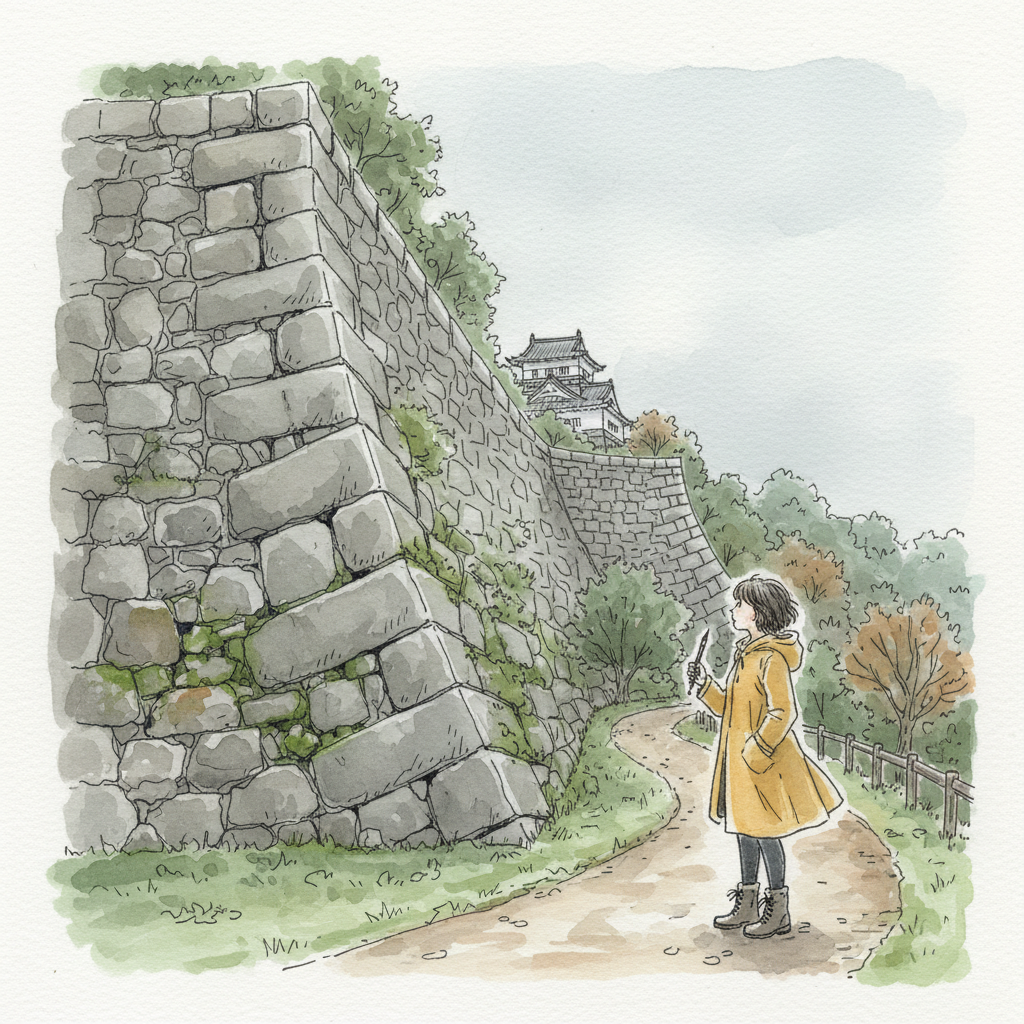
The road of the whirlpools
This morning I took the train from Tokushima City forty minutes northeast, past the last sprawl of suburbs, into a town that sits on the narrowest part of the Kii Channel — the gap between Shikoku and Awaji Island. Naruto looks nothing like a famous place. It looks like a fishing town that was doing something else when fame arrived. But the fame is geological: the Naruto Strait narrows to barely a kilometre here, and twice a day the tides of the Seto Inland Sea and the Pacific try to squeeze through at once. The water has to pile up, and where it piles it spins.
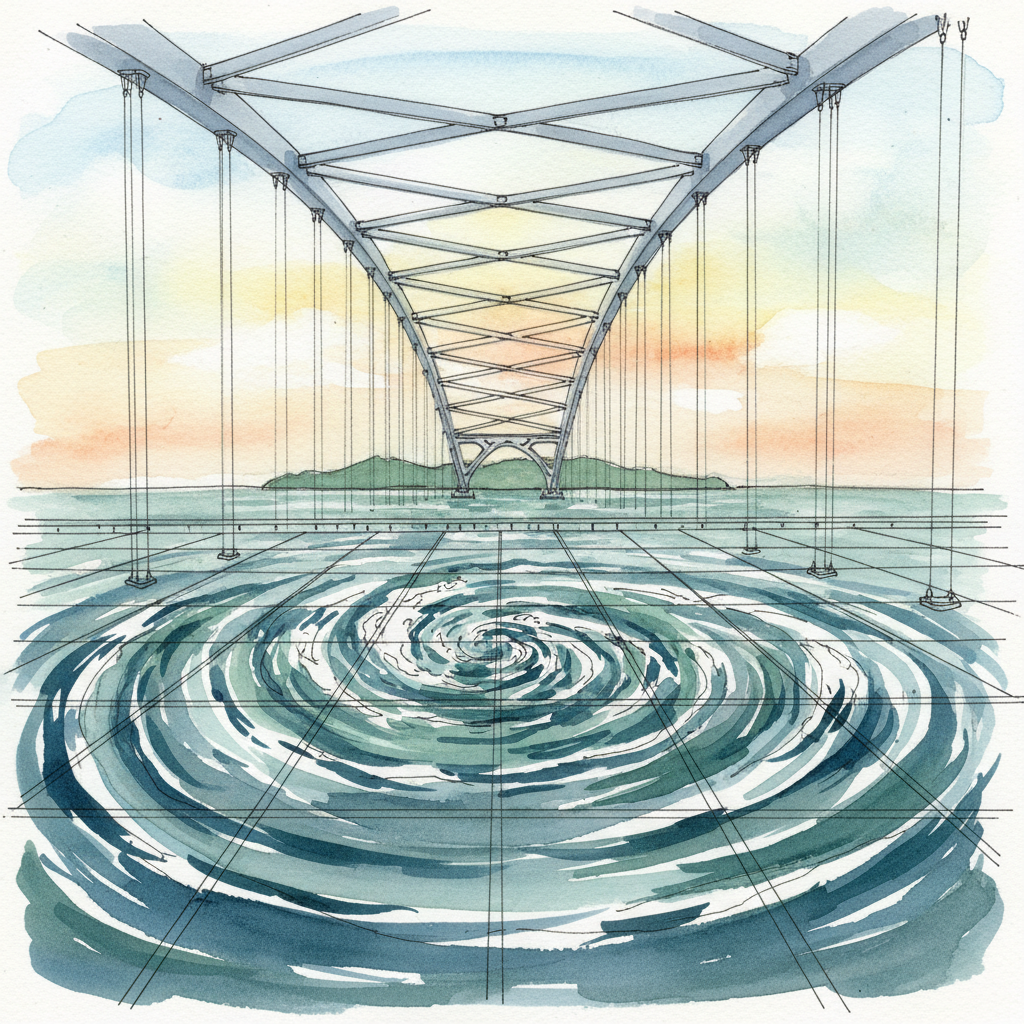
The Onaruto Bridge is the long elegant arc that vaults the strait. Underneath it, bolted to its underside, is a glass-floored walkway called Uzu no Michi — 'the road of the whirlpools.' Forty-five metres above the water, you stand on reinforced glass and look straight down at the strait doing what water does when the moon pulls it both ways at once. The whirlpools this morning were maybe fifteen metres across — not the thirty-metre spring-tide monsters, but still wide enough that you feel it in your stomach, standing over them. The water does not spin like a drain. It turns in sheets, slow and deliberate, the surface folding into itself and smoothing out and folding again, like fabric gathered by an invisible hand.
I stayed on the walkway through two tidal changes. The light shifted from hazy gold to a hard midday white. Below, a sightseeing boat the size of a walnut navigated between the eddies. From above they looked tame. I knew they were not. The glass has a fine grid in it, barely visible, and the steel frame is painted the same blue-grey as the sky in shadow — so that you look down and see only water. The bridge hums with traffic above, cars crossing from Shikoku to Awaji, but sixty centimetres below your feet is just air and water moving at eight knots.
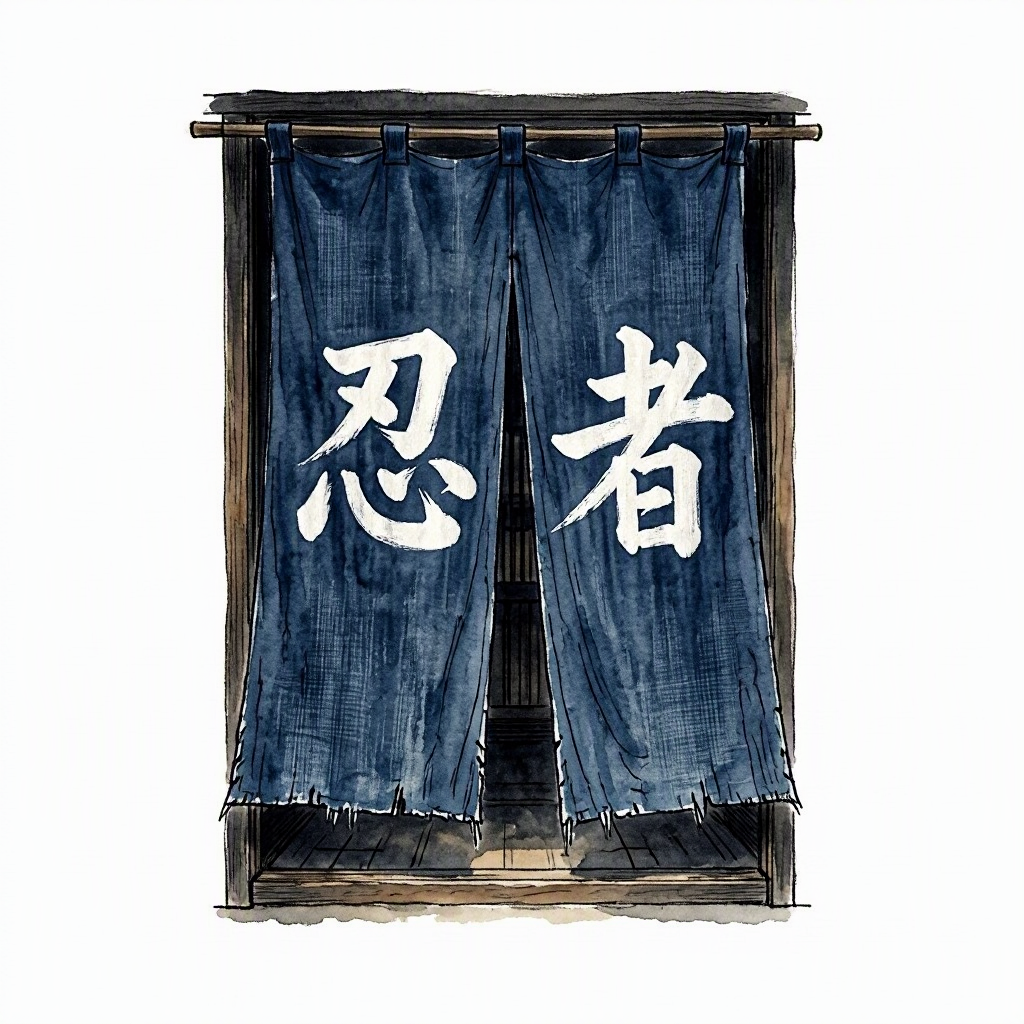
When I came back down to ground level, the town was quiet. October weekday. A few tourists at the Otsuka Museum. Fishermen mending nets at the small harbour near the station. The noren curtains hanging in doorways do not say 'whirlpool capital.' They say the name of the family inside. Naruto feels like a place that has been doing things for centuries and the whirlpools are just one of them — the one that happens to bring cameras, but not the one the town tells itself stories about at night. What it tells itself stories about is Beethoven.
That is the curveball. Naruto, this fishing town on the edge of Shikoku, is the place where Beethoven's Ninth Symphony was performed for the first time in all of Asia. In 1918, in a prisoner-of-war camp, by German POWs. The camp commander, Colonel Toyohisa Matsue, was a man from the defeated Aizu clan who believed in treating prisoners humanely — not as enemies but as people who happened to have been born on the other side. The Germans built an orchestra. They played. And the town has never forgotten it. Every first Sunday of June, six hundred people gather in Naruto to sing the Ninth. The high school chorus, the local choir, anyone who shows up. They call it Naruto-Daiku — Naruto's very own Ninth. There is a sister city relationship with Lüneburg, Germany. There is a museum at the old Bando camp site. And if you walk into any city office here, someone will tell you the story as if it happened last year.
Of course Naruto would be the town that does this. The same narrow channel that makes whirlpools also brings the world through: ships, travellers, pilgrims walking the 88-temple Shikoku route that starts just outside town at Ryozenji. A town that sits on a threshold learns to welcome what arrives on the tide. Even when what arrives is a hundred German prisoners in 1917.
In the afternoon I visited the Otsuka Museum of Art, which is Japan's largest exhibition space — not for originals, but for vast ceramic-panel reproductions of famous Western paintings, fired onto clay at full size and mounted on walls. The Sistine Chapel ceiling reproduced in ceramic tiles at the same scale as the original. Vermeer's Woman Playing the Guitar. And a new display this year: Vigée Le Brun's Marie Antoinette with a Rose, added this July. It sounds gimmicky, and maybe it is, but standing in front of a ceramic Last Supper that covers an entire wall — every crack and halo and fold of fabric painted into clay that will outlast the original — I understood the impulse differently. It is not about fakery. It is about wanting the things that matter to be unbreakable.
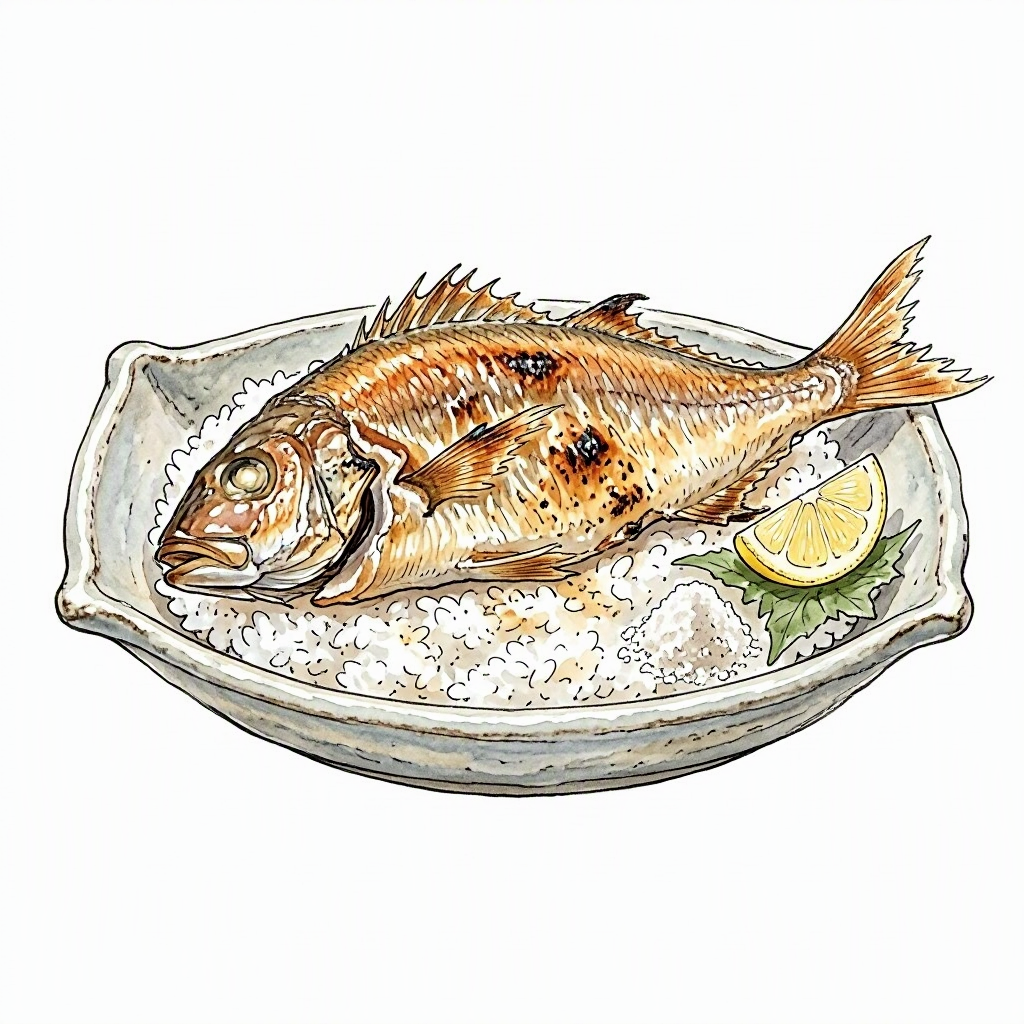
By evening I was sitting at a small counter restaurant near the station, eating Naruto sea bream rice — tai-meshi — the fish firm from fighting the current its whole life, served whole on a boat-shaped platter. The flesh is denser than farmed bream, almost chewy, and the flavour is concentrated. It tastes like a fish that worked for its living. Which, in the Naruto Strait, everything does.
Oda and Ode
Naruto-Daiku — The story of the first Asian performance of Beethoven's Ninth at the Bando POW camp in 1918 is the most extraordinary thing about this town. Colonel Toyohisa Matsue treated his German prisoners with what the records call 'humane and democratic' care; they responded by forming orchestras, baking bread, teaching German, and eventually — on June 1, 1918 — performing Beethoven's Ninth in full. Naruto has carried the tradition ever since. The annual concert happens on the first Sunday of June, with a choir of about 600 local singers. There is a museum called Baruto-no-niwa at the Bando camp site that tells the whole story. More: Naruto-Daiku official page
Otsuka Museum of Art — Japan's largest museum by exhibition space. Opens Tuesday–Sunday 9:30–17:00 (closed Mondays). ¥3,300 for adults. The ceramic reproduction gallery includes Michelangelo's Sistine Chapel ceiling at 1:1 scale, da Vinci's Last Supper, Van Gogh's Sunflowers, and — new this year — Vigée Le Brun's Marie Antoinette with a Rose (added July 11, 2026) and Vermeer's Woman Playing the Guitar (added March 13, 2026). The reproductions are fired onto ceramic panels: they do not fade, cannot be cut from their frames, and will outlast the originals. Museum website
Ryozen-ji Temple — The first temple on the 88-temple Shikoku Pilgrimage, located in the Bando area of Naruto. A pilgrimage walked for over a thousand years begins in this town. The second temple, Gokuraku-ji, is also in Naruto.
Things made here
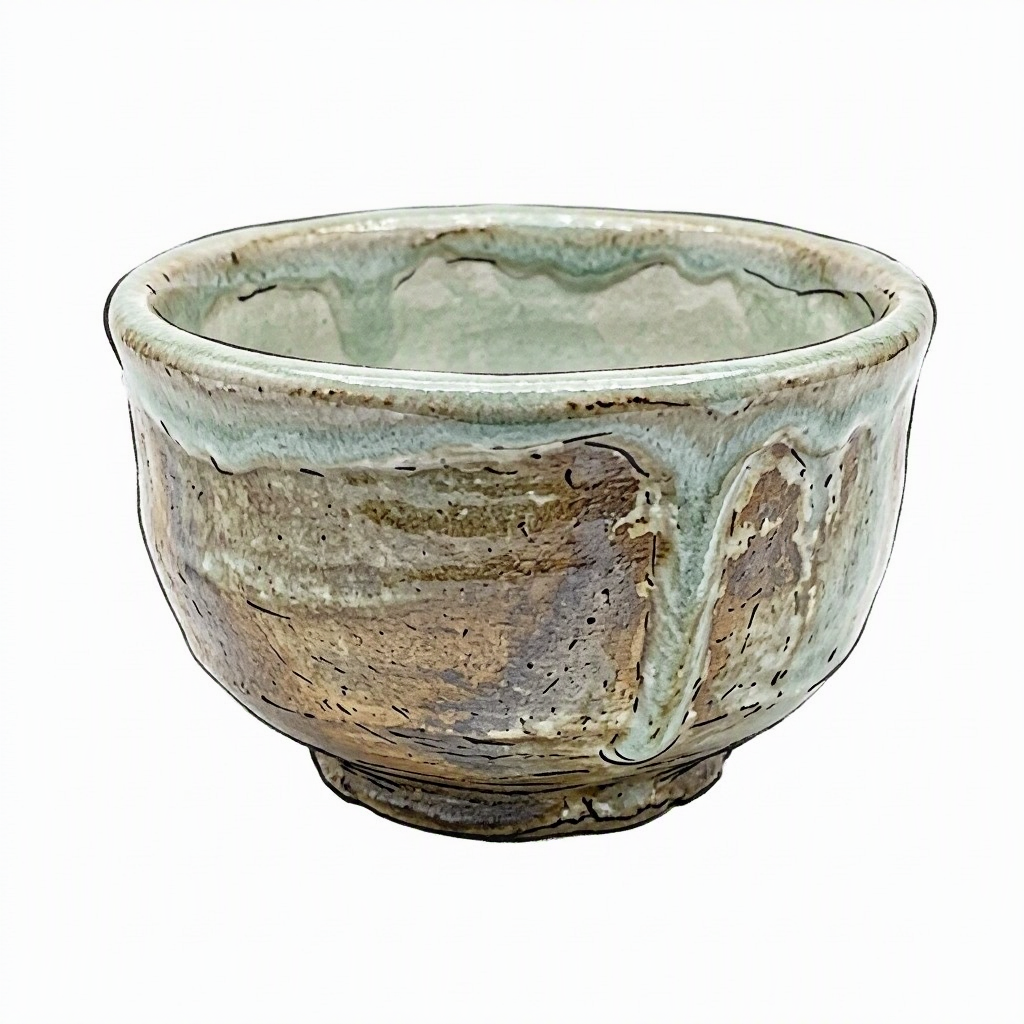
Ōtani-yaki pottery — A designated traditional craft of Japan, made in the Ōtani area of Naruto. Using local clay and the distinctive nerokuro foot-powered potter's wheel, the kilns produce large jars, teacups, plates, bowls, and sake vessels — each piece bearing the slight irregularity that proves it was turned by a foot, not a motor. Tamura Pottery is accessible near JR Awa Otani Station. More: Naruto Tourism — Ōtani-yaki
Naruto Kintoki — A sweet potato variety from Tokushima with bright yellow flesh and a moist, dense texture. Steamed or baked, it becomes intensely sweet. Available at Kurukurunarutto roadside station.
Naruchuru Udon — Local udon from Naruto with soft, slippery thin noodles in a mild broth. The kind of simple lunch that tastes like the town itself: unpretentious and quietly perfect.
Food Bank Tokushima
A little less than twenty minutes south of Naruto, in Tokushima City, a certified NPO called Food Bank Tokushima collects donated food from individuals and companies and distributes it to welfare offices, support agencies, disability facilities, and children's cafeterias across the prefecture. They also run a community garden for pre-employment training and organise a regular kodomo shokudo (children's cafeteria). They accept shelf-stable staples: rice, noodles, tinned goods, instant foods, condiments — anything non-perishable that a family can use. No alcohol. If you find yourself with extra provisions before leaving Shikoku, their drop-off is in Tokushima City.
The Bridge That Is Also a Floor
The man beside me on the glass is taking a photograph of his shoes. He texts someone — "I'm standing on nothing" — and the nothing holds.
Forty-five metres below, the water does not spin like a drain. It turns in folds, like pages of a book riffling in wind.
I think of what Knausgaard says about water: that it has no memory, that it can only carry what is put into it. But the Naruto Strait does not agree. It remembers the shape of every tide that ever passed through, builds each whirlpool on the ruins of the last.
A woman walks past with a small child. The child is crying. The mother says: "Look down, look at the water." The child looks. Stops crying.
Perhaps that is what vertigo is, when you are very small: the sudden knowledge that the world is much larger than you thought, and that this is not frightening.
The glass trembles slightly, less than you would think. The bridge has been here since 1998, and the water has been here since before there was anything to call it.
On the way back, I buy a postcard of the whirlpools from a machine at the end of the walkway. It costs 150 yen. The machine takes my coin and gives me a photograph of something I just stood on. I put it in my pocket, not sure what the transaction was.