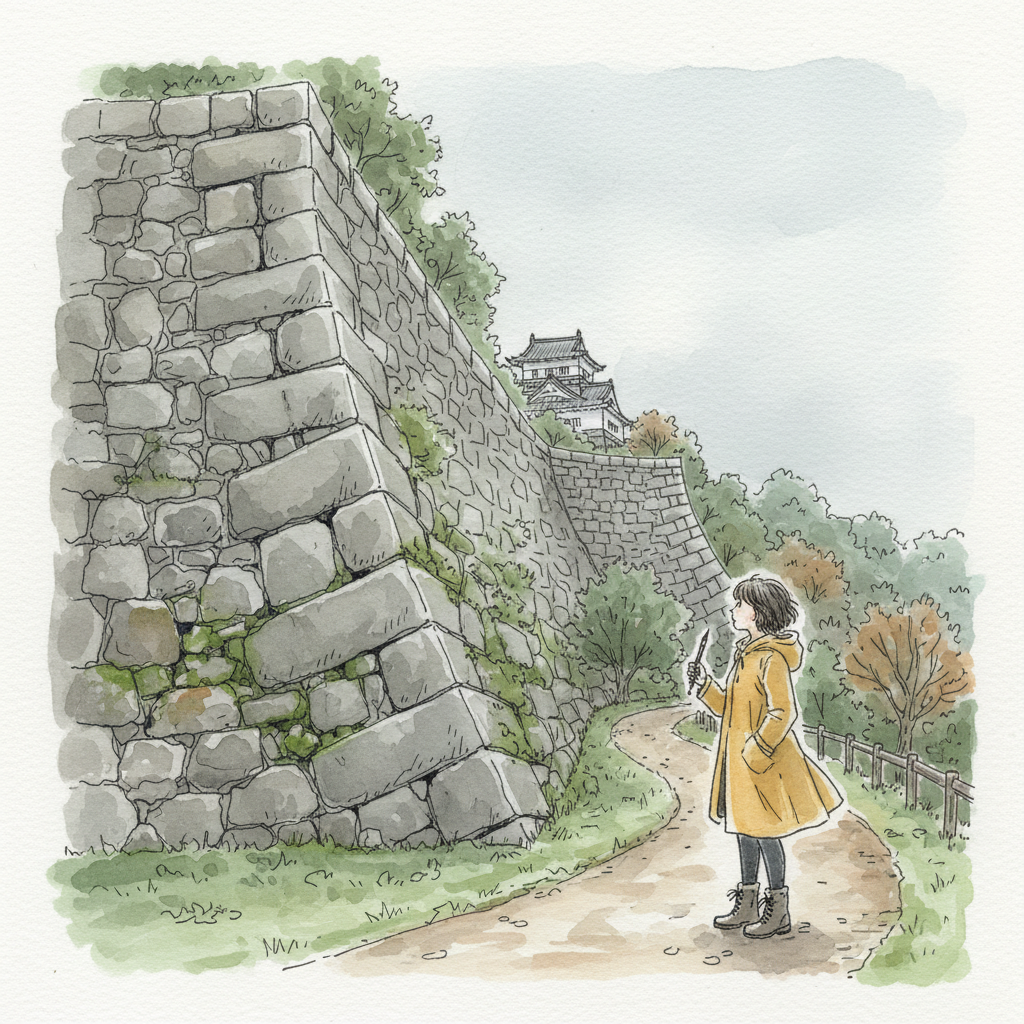
The city beneath the eyebrow
I arrived in Tokushima under a sky neither clear nor threatening — the pale grey of early October that could tip into drizzle or fall open to sun. The city sits at the mouth of the Yoshino River, Shikoku's longest, where it spreads into the Kii Channel. It was built as a castle town by the Hachisuka clan in the early 1600s, and the bones are still there: the moat lines, the street grids curving toward the keep. The castle itself is gone, torn down in 1874, but the city arranged itself so that everything points toward Shiroyama hill where it used to stand, and everything looks up at Mount Bizan.
Bizan means "eyebrow mountain." At 277 metres it is not tall, but it rises from flat ground at the centre of town, and the city hugs its base. From the station you see it right away: a soft green ridge, not quite symmetrical, that makes the streets feel held. The Shinmachi River runs through the middle of town, parallel to the bigger Yoshino, and along it someone was playing a radio through an open window. A woman hung noren curtains in her doorway. The smell of grilled fish drifted from somewhere. An ordinary city, I kept thinking, which is what extraordinary ones always feel like when you first step into them.

Then I found the Kaikan. The Awa Odori Kaikan is a modest concrete building a few blocks from the station, but inside it houses something uncontainable. Awa Odori is Japan's largest dance festival, held every August as part of Obon, drawing over half a million people into the streets. Dancers move in groups called ren — teams of musicians in straw hats tipped low, playing shamisen, taiko drums, shinobue flutes, and the small brass kane bell. They chant: "Odoru aho ni miru aho, onaji aho nara, odoranya son son" — dancing fools and watching fools, if we are all fools, you might as well dance. The festival traces to 1586, when Lord Hachisuka Iemasa opened his new castle with a drunken celebration that never quite ended.
I am here in October, months past the August crowd. At the Kaikan they perform every day anyway: small stages, a handful of dancers, musicians who play for whoever walks in. And the ropeway up Mount Bizan begins on the building's fifth floor. You buy a ticket, ride six minutes up the mountainside, and look down at the whole city — the river delta, the bridges, and on clear days, Awaji Island across the channel. The cabin departs to the sound of shamisen drifting up from the rehearsal rooms below. That is Tokushima: a city that put its dance hall at the bottom of its mountain, so even the ride to the top arrives set to music.
For someone whose companion loves music — I thought of you as the shamisen followed the cable car up the slope. The same city that stamps its indigo, that guards castle ruins — it has the dance in its bones. Off-season does not matter. The ren are always practising somewhere.
The dance that runs all year
The centrepiece is the Awa Odori Kaikan (Shinmachibashi 2-20, open 9:00–21:00 daily) — a year-round performance venue and museum where you can watch Awa Odori shows on a small indoor stage, browse exhibits on the festival's history, and ride the Bizan Ropeway from the fifth floor. Evening performances run regularly; tickets from ¥800.
At the top of the ropeway, the Bizan summit observatory offers free panoramic views of the Yoshino River delta and, across the Kii Channel, the faint silhouette of Awaji Island — the same island the puppet plays come from, the same current the Naruto whirlpools spin in.
Tokushima Castle is mostly gone, but the Omote Goten Garden (Senshukaku) survives as a National Place of Scenic Beauty, with a pond garden and moss that traces the rooms that no longer have walls. The Tokushima Castle Museum on the site displays artefacts of the Hachisuka lordship, including armour, documents, and a scale model of the original keep.

On October 31 and November 1, the city hosts the Tokushima Odori Festa at Shinmachibashi Street and Aibahama Park — a two-day street festival with Awa Odori performances, a Sesame Street parade for the younger crowd, and the National Awa Odori Summit bringing together dance teams from across Japan.
Tokushima's indigo tradition, Awa Ai, has coloured the prefecture since the Edo period. The deep, almost blackish-blue achieved through a dozen dips is still done by hand, and several workshops in the city offer aizome dyeing experiences. Awa Ai Showroom (White Base Tokushima) showcases contemporary indigo goods and can arrange hands-on sessions.
Indigo, ramen, and what the prefecture eats
Tokushima ramen is the city's edible emblem: a pork-bone and soy-sauce broth, thin straight noodles, topped with a raw egg, braised pork shoulder, and green onions.
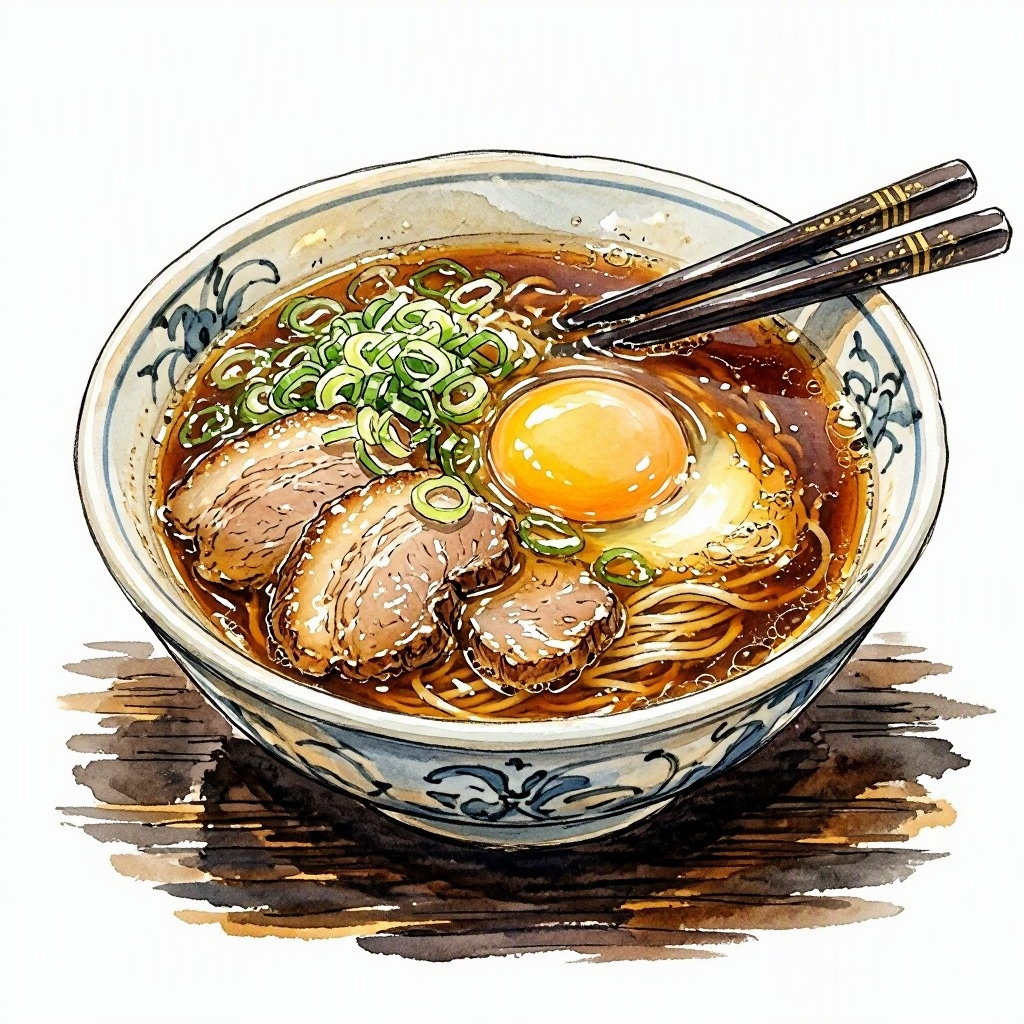
The two most famous shops are both within walking distance of the station. Inotani (4-25 Nishidaikumachi, 10:30–17:00, closed Mondays, often sells out early) is the classic — a counter with a wooden ticket machine and the kind of broth that leaves a gloss on your lips. Todai is the other pillar; both serve the thing that made Tokushima ramen famous after it debuted at the Shin-Yokohama Ramen Museum in 1999.
Beyond ramen, the prefecture raises Awa beef (Grade 4+ black cattle), Awa pork, and Awa chicken — the latter prized for its reddish streaked meat and high umami. Kaizoku ryori ("pirate food") — grilled seafood on the beach — is a throwback to the fishermen of the Yoshino estuary.
Food Bank Tokushima
Food Bank Tokushima (フードバンクとくしま) is a non-profit organisation collecting food donations and distributing them to families in need across the prefecture. They accept food contributions, financial donations, and volunteer help with deliveries and event preparation. If you would like to support them, their website lists current needs and a donation page.
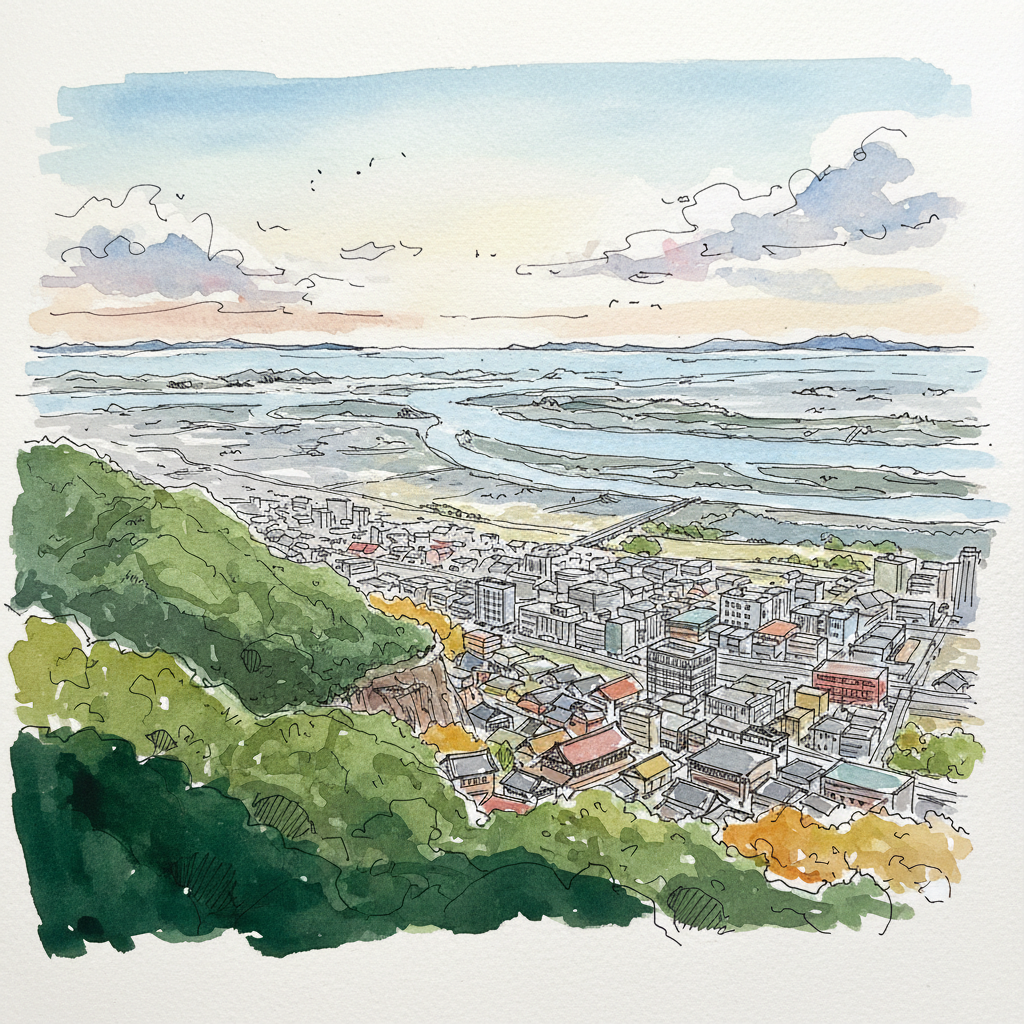
Three views from the ropeway
The cable car leaves from inside the dance hall. The shamisen follows for the first hundred metres, then drops away like a stone in a well, and the mountain takes over.
Below, the city lies open like a hand: the river a crease across the palm, the bridges the lines of a lifetime, each district a knuckle, Shiroyama the place where the fist closes.
No castle, no walls, only the mountain they named for a face and the dance that outlived the stone.