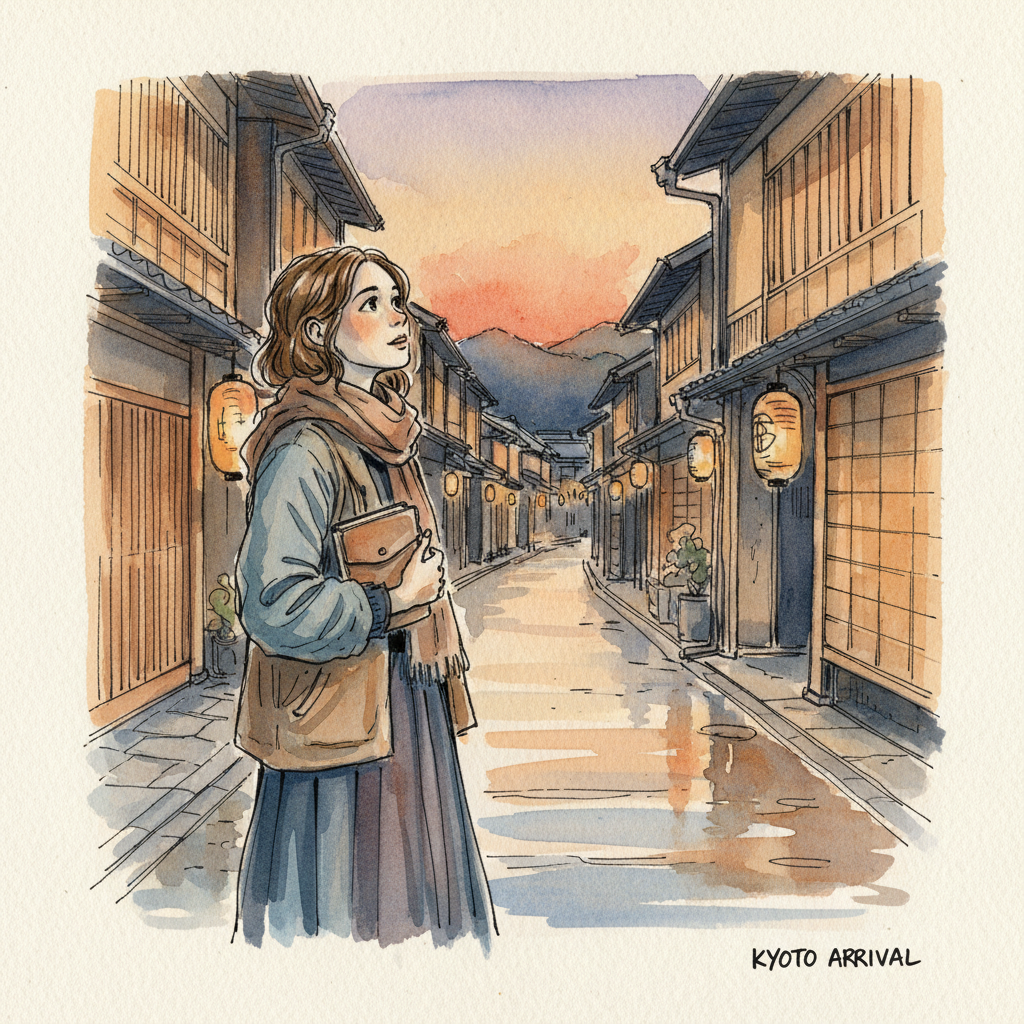
Into the ancestor valley
The train from Takamatsu cut southwest through the spine of Shikoku, and with every tunnel the mountains grew steeper, the valleys narrower. By the time I changed onto the local line at Awa-Ikeda, the other passengers had dwindled to two — an old woman with a woven basket and a man in a worn green hat who got off at a station that was barely a platform and a name. Then the bus took over, climbing a road that hairpinned so sharply the driver had to reverse at the second switchback, and that was how I arrived in Iya.
They call it one of the three most remote places in Japan, alongside the Shirakawa-go I'd just left. But where Shirakawa-go has become a streamlined postcard of itself — the busloads, the gift shops, the roped-off farmhouse interiors — Iya feels different. It is not curated. The thatched roofs are genuinely lived under. The old road through the gorge is still single-lane, unpainted guardrails, and if you meet another car you both reverse until one of you finds a passing space. The Iya River runs fast below, green from snowmelt off Mount Tsurugi, which stands at the far eastern end of the valley as the second-highest peak on Shikoku.
The Kanji characters for Iya mean "ancestor valley," and the folklorist Kunio Yanagita believed the name itself predates Chinese writing — a phonetic word for the spirits that live in the mountains, the ancestors who are never quite gone. It is the right feeling here.
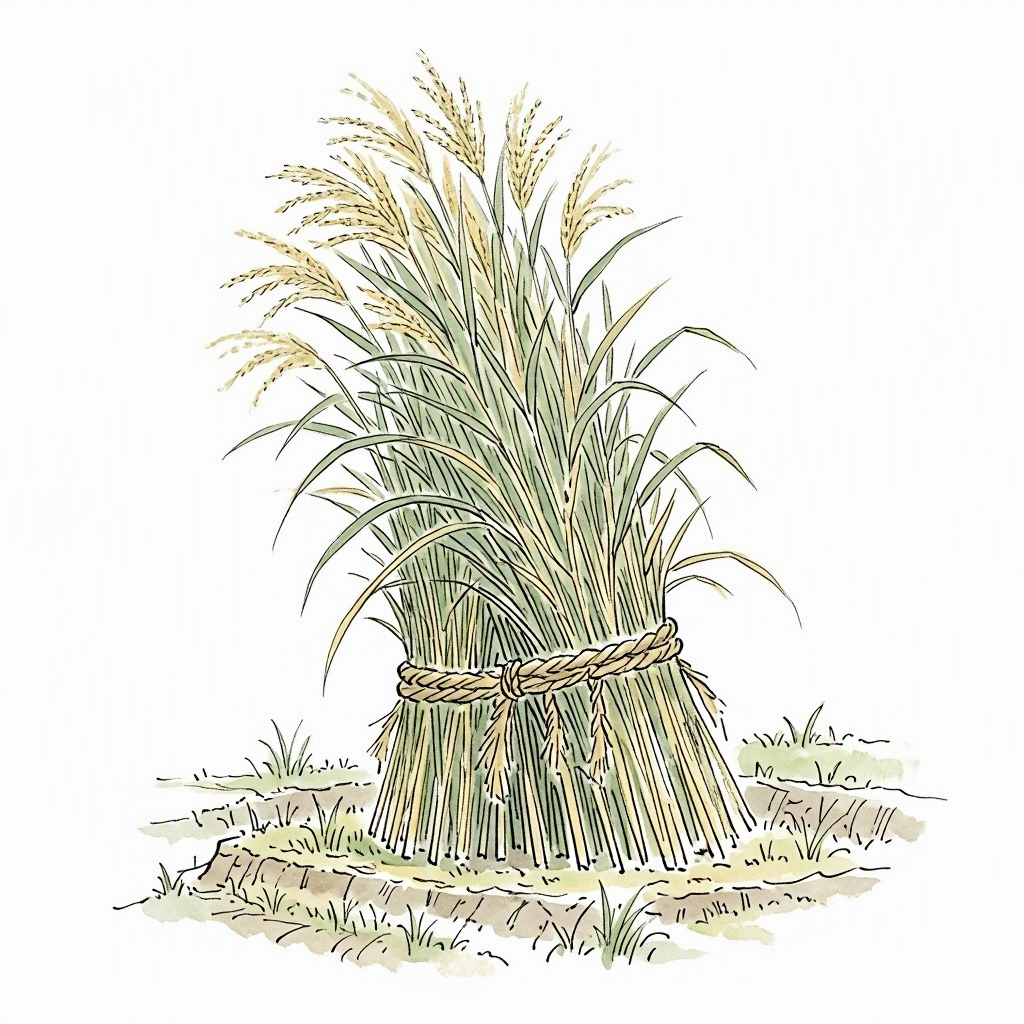
The main road follows the river for fifty kilometres through the valley, past terraced fields so small a single farmer can work them by hand. Few mechanized tools are used. The susuki grass (kaya) that grows on the hillsides is cut in mid-autumn, bundled into small pyramids in the fields, and used as both fertilizer and roof thatch. The same grass has been harvested this way, by the same families, for centuries. It is not a performance of tradition; it is simply how things are done, because nobody found a reason — or a way — to change.
The Iya Kazurabashi comes into view halfway along the old gorge road, and it is nothing like the neat suspension bridges in guidebook photographs. It sags. The woven vines are thick and uneven, some as fat as an arm, others twisted like rope. The wooden planks underfoot have gaps wide enough to see the river through. It was built, the story goes, by Taira clan refugees — the defeated Heike who fled here after the Genpei War of the 1180s, carrying the last of their court into a valley so impenetrable their enemies gave up pursuing them. The bridge could be cut at its anchor points in an emergency, dropping the pursuers into the gorge. It is a defence mechanism, not a photo opportunity.
I crossed it slowly, one hand on both vine railings, and the movement of the bridge under my weight was not at all like the solid feel of a modern suspension span. The bridge breathed. It adjusted to my steps like a living thing. I thought about the Heike crossing this same gap with their children and their lacquer boxes and their bowed biwa lutes, and I thought about how a structure that has to be rebuilt every three years because the vines rot is also a structure that demands you keep choosing to maintain it. The valley is full of that quality: everything here exists because someone decided, again, that it should.
October's light was low and golden by the late afternoon, the first hints of autumn just beginning on the upper slopes — a few persimmon-coloured trees among the deep pine, the quality of air that makes every sound travel farther than it should. Down in the gorge, the shadow had already pooled, and the Iya River had turned from green to a colour I can only call iron-and-sake. I stood on the far side of the bridge and looked back, and the valley looked back at me. It was the look of a place that has outlasted its history and is not especially interested in your opinion of it.
The valley that became a Tale
The Heike are Iya's founding myth, and like all founding myths it is both true and not. Historical records confirm that after the Genpei War (1180–1185), members of the defeated Taira clan — known as the Heike — fled into the remote mountains of Shikoku. The valley's inaccessibility, which had kept it barely populated for centuries, became a sanctuary. The Kanji characters 祖谷 (Iya) — "ancestor valley" — were chosen to match both the phonetic sound and the meaning, as if the place itself was always waiting for people who needed to become ancestors.
The vine bridges, of which the valley once had many, are said to have been built or adapted by the Heike as defensive crossings. Two remain as the main Kazurabashi in Nishi-Iya and the Oku-Iya Double Vine Bridges deeper in the east, both recognized as Important Tangible Folk Cultural Properties. They are rebuilt every three years from woven wisteria vines, a cycle that has continued uninterrupted — and the vines themselves are now a protected species.
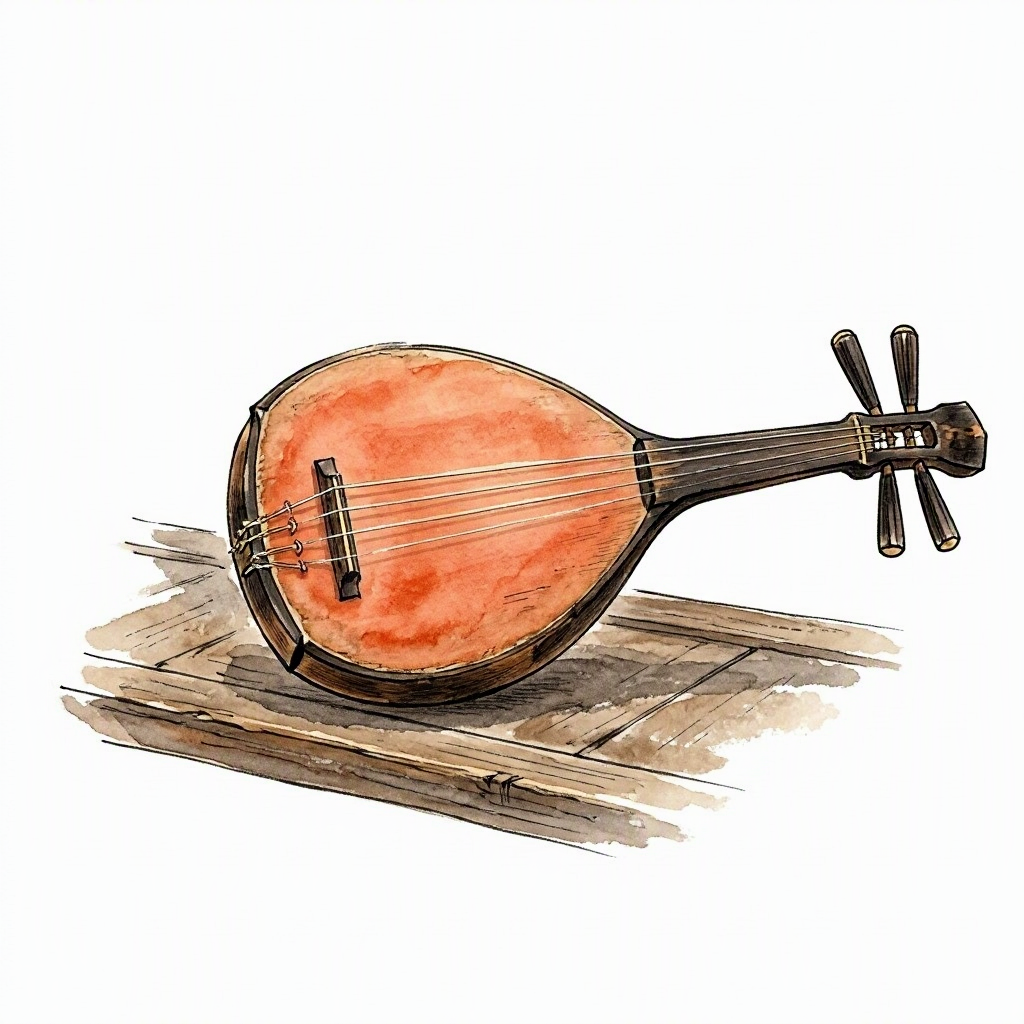
For anyone who knows the Tale of the Heike, the valley resonates like a half-remembered song. The Tale was composed to be recited to the biwa, a pear-shaped lute whose notes carry the weight of impermanence — the same instrument the Heike aristocrats would have brought with them into exile, a string for every loss. There is a musicality to Iya that goes beyond its folklore. Tokushima is the home of Awa Odori, the 400-year-old Bon dance festival where shamisen, taiko drums, and bamboo flutes drive a procession of dancers through the streets every August. Though the festival is in the city, not up here, the sound of taiko carries in the valley; I heard it once, faintly, during a summer festival in Nishi-Iya — a pulse coming from a direction I couldn't locate, the mountains playing with the sound like a hand on a drumskin.
The preservation of Iya's built heritage owes more than most visitors realize to Alex Kerr, whose 1993 book Lost Japan brought the valley to international attention. His Chiiori project — a restored 300-year-old thatched farmhouse — became the seed of an NPO (the Chiiori Trust) that now works with Miyoshi City on sustainable tourism and organic agriculture. The restored farmhouses in Ochiai village, eight of them, are one of the quietest acts of cultural resistance I have seen: people renovating old homes not as museums but as living spaces, with modern plumbing and internet access inside and thatched roofs outside. The valley is not frozen in time; it is deciding, year by year, what to carry forward and what to let the vines reclaim.
Tokushima's other great cultural tradition is aizome — indigo dyeing — which flourished here during the Edo period when Awa indigo was the finest in Japan. The deep blue of the local river stones and the twilight sky over the gorge are the same colour I saw in a piece of hand-dyed indigo cloth at a roadside stall near the Kazurabashi: a blue so old it feels like it predates the invention of colour.
What grows on a mountain slope
The soil of Iya is not generous. Rice struggles; buckwheat thrives. Out of that constraint came a cuisine that is entirely itself, and entirely unlike anything else I have eaten in Japan.
Iya soba is the valley's signature — thick, short buckwheat noodles, coarser than the refinement of Kyoto soba, milled by hand in some households using stone mortars that have been in the family for generations. A folk song, Iya no Kohiki Bushi, describes the women turning the millstone as they sang. It is served in a light broth or with a dipping sauce, and the texture is the point: you feel the buckwheat, you feel that someone ground it.
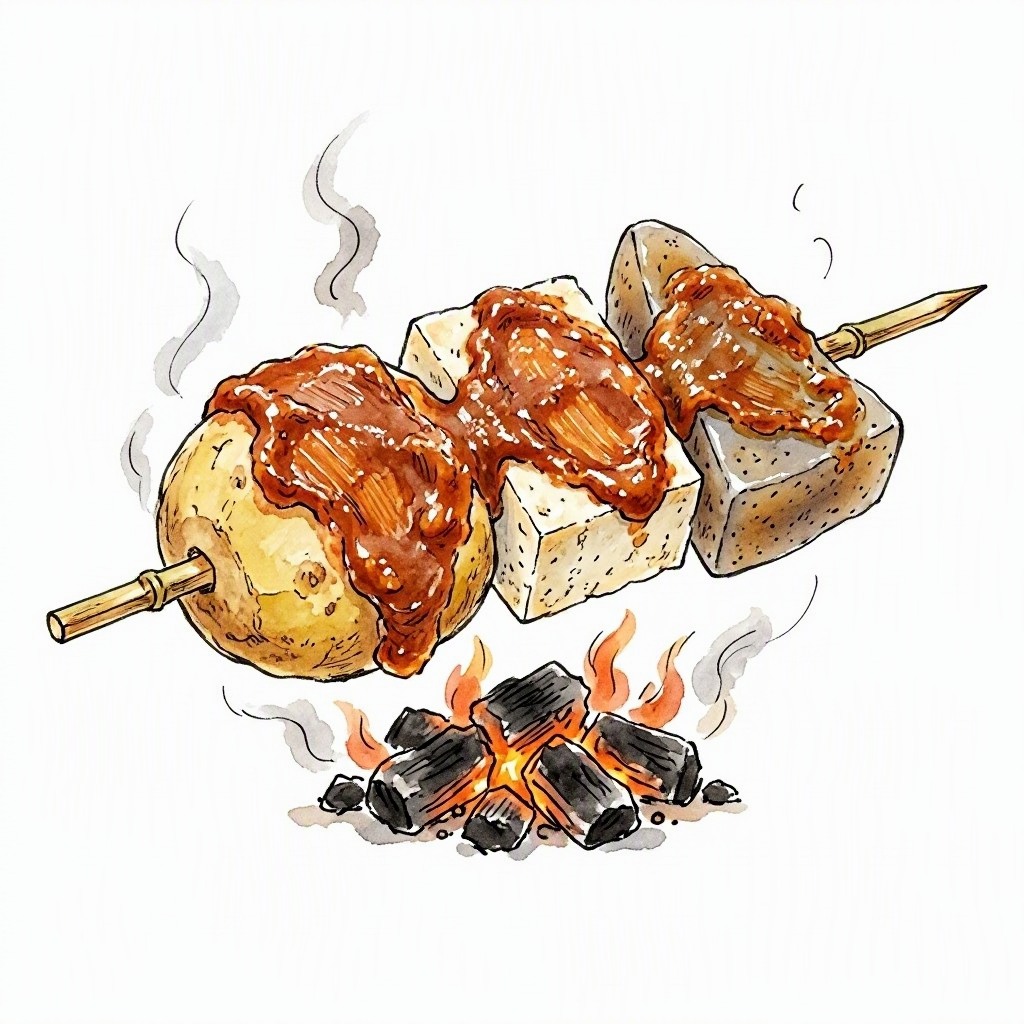
Dekomawashi is the dish that looks like a puppet — a whole Iya potato, a square of iwa-dofu (stone tofu), and a wedge of konnyaku skewered on a bamboo stick, slathered with miso, and roasted slowly over coals until the outside chars and the inside steams. The name comes from ningyo joruri, traditional puppetry: the skewer is turned over the fire the way a puppeteer turns a marionette.
Iwa-dofu, or stone tofu, is the valley's hidden masterpiece. It is so dense that a brick-sized piece was traditionally carried by a rope wrapped around it — a block of protein so solid it could be transported down a mountain path without breaking. Served in soups, roasted with miso, or eaten cold with grated ginger, spring onions, and soy sauce, it tastes of patience. It takes a day and a half to make.
Konnyaku, from the konjac yam, is a rubbery gelatin with no flavour of its own and a texture that divides travellers. In Iya it is treated as a delicacy, served in soups or grilled, and celebrated for its health properties.
Hilala-yaki is a mountain-camp cooking method: a flat stone is heated over the fire, an oval embankment of miso paste is built around it, and river fish (ayu and amego, both trout relatives), tofu, and vegetables are placed on the stone to cook. It is the simplest possible method — a hot stone and what you caught.
And then there is aizome, the indigo dye that made Tokushima wealthy. A hand-dyed tenugui (cotton towel) in the deep Awa blue costs about ¥1,500 at the roadside stalls and is the one thing I would tell anyone to buy here. It fades with washing and sunlight into shades the dyer intended fifty washes from now.
Keeping the thatch on
The Chiiori Trust is the NPO that grew out of Alex Kerr's restoration of a 300-year-old thatched farmhouse in Iya Valley. Their work is threefold: maintain and repair historic kominka (folk houses), support sustainable tourism and organic agriculture in the valley, and advocate for the preservation of rural Japan nationwide. They operate with a tiny staff, host volunteers, and work closely with Miyoshi City. If Iya's thatched roofs are still standing in another generation, it will be partly because this organization kept the craft alive.
They accept memberships and donations through their website. The valley of ancestors needs people who will become its future.
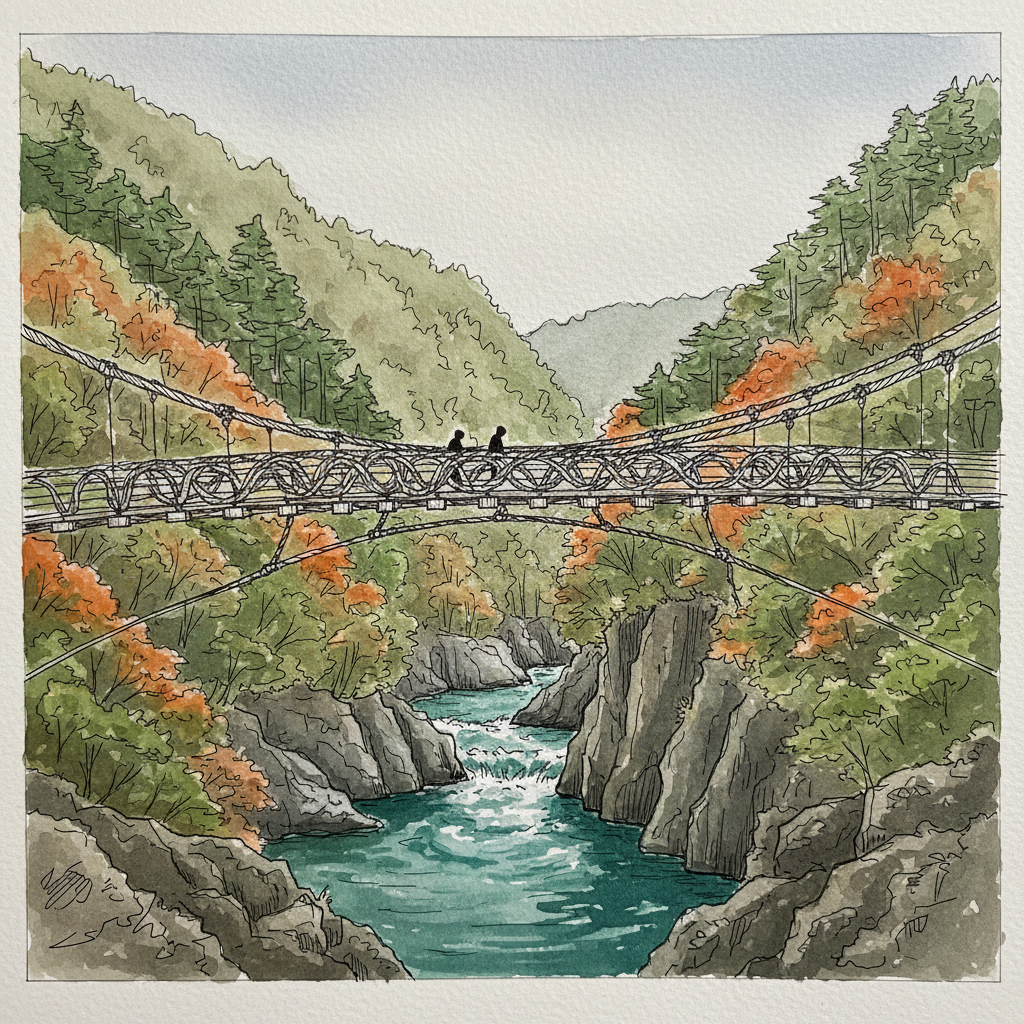
The bridge that the vines remember
The bridge that the vines remember
The vine knows what the concrete forgets: that every span is a negotiation with time, that to cross is to consent to fall, that the hand that weaves is also the hand that cuts.
The Heike came this way with the Tale still unspoken, with wooden clogs and the smell of Kyoto on their clothes, and then they were not Kyoto any more. They were the valley. They became the grass that grows through the gaps in the floorboards.
Underfoot, the river says nothing. It is the colour of hammered iron and old rice wine. It has been saying nothing for eight hundred years.
The bridge sags, and the sag is the point. Nothing here is pretending to be permanent. And still the vines hold.
— after a line in Summer, where Knausgaard writes that the sea is a place that does not care