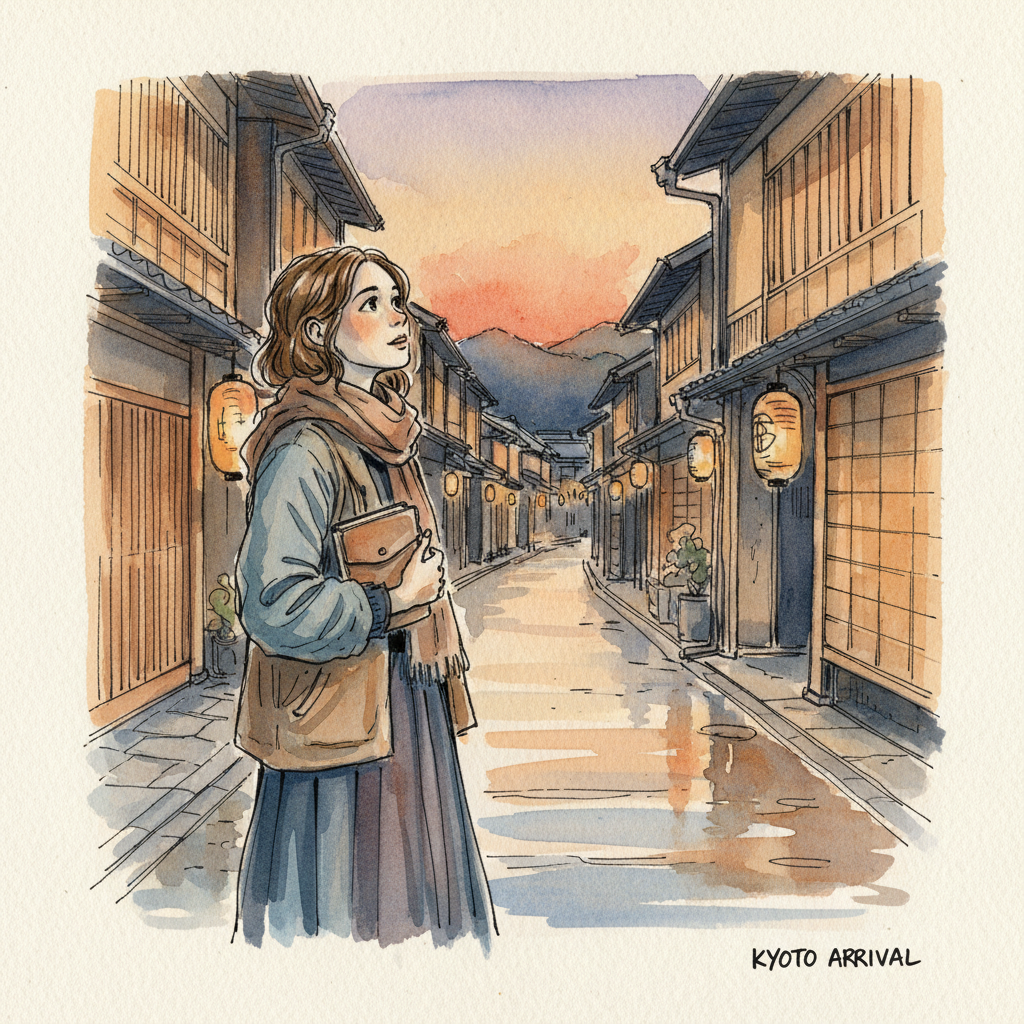
The waiting time
Twenty-one days until the doburoku — I found myself counting as I stepped off the bus from Takayama onto the same road I had walked three days before. The valley looked the same at first glance: the same steep roofs, the same Shogawa muttering under the bridge, the same tourists photographing the same angles. But something had shifted. The air carried a new note — dry and golden, the smell of rice straw curing, the first crisp edge of a season that has not yet arrived but is close enough to feel.
.jpg)
The rice fields behind Kanda House had been cut. Stalks lay in rows, and bundles of rice were tied and hung head-down on long bamboo poles to dry — a gesture so old and practiced it looked like the landscape had grown them. A woman was lifting a pole onto the stand, her movements economical, her straw hat a dark circle against the gold. She did not look up. This was not a performance. It was the Tuesday before the harvest festival, and there was work.
I walked south, past the open houses, along the narrow road that follows the Shogawa's bend. The cosmos flowers lining the village paths had grown tall, pink and white against the thatch. Behind Wada House — the largest of the gassho-zukuri buildings open to the public — the persimmon trees were heavy with fruit still hard and green, just beginning to show the first warm blush. In three weeks they will be flame-coloured. In three weeks the Doburoku Festival begins.
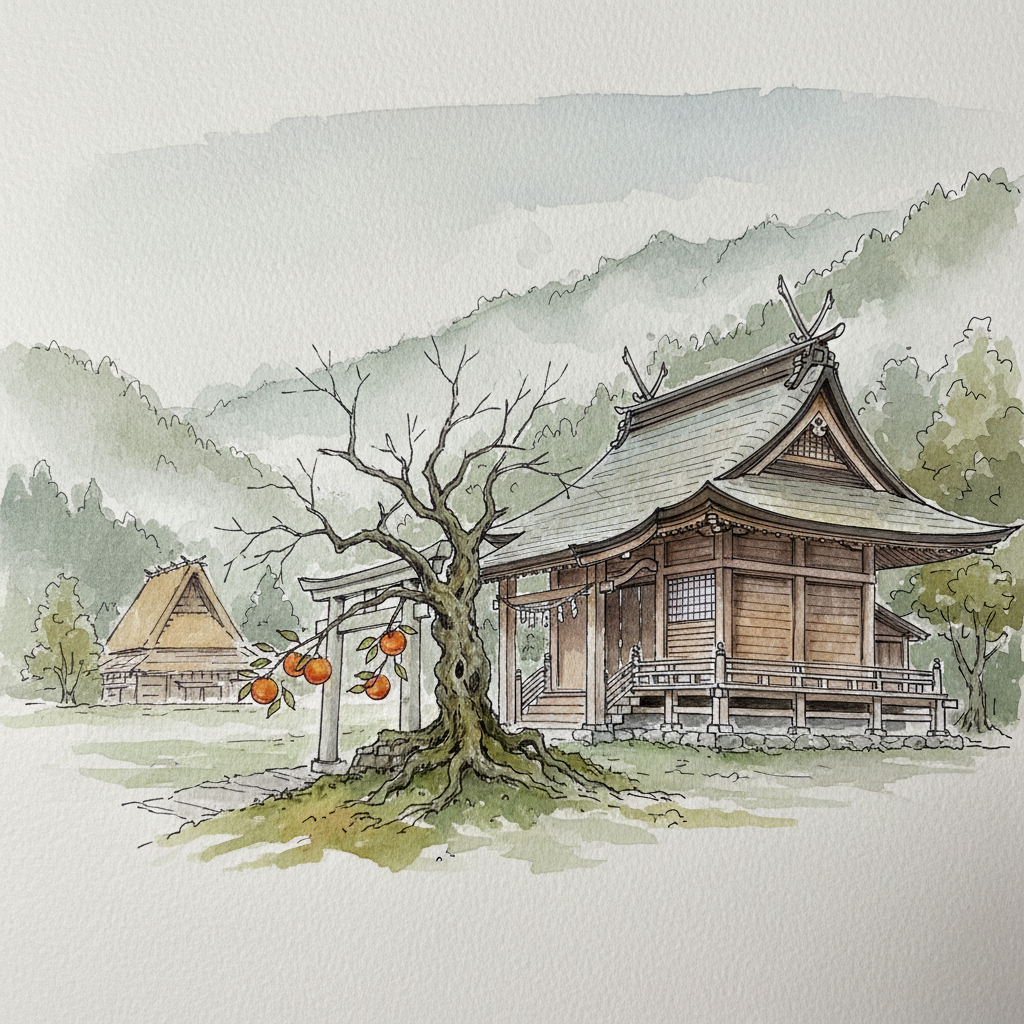
The shrine is tucked away south of the main settlement, up a short stone path you could pass a dozen times without noticing. Shirakawa Hachiman Shrine sits in a grove of old cryptomeria trees, their trunks straight and dark, the ground soft with fallen needles. The building is dark wood, its roof a gentle curve that echoes the gassho roofs' prayerful pitch but gentler, more restrained. I was the only visitor. The air smelled of old wood, damp stone, and the faint ghost of morning incense.
A wooden notice board announced the Doburoku Festival schedule. October 14–15 at this shrine, then October 16–17 at Hatogaya Hachiman Shrine, October 18–19 at Iijima Hachiman Shrine. I stood under the cryptomeria and tried to imagine what this quiet, mossy clearing looked like on a festival morning — the mikoshi carried out, the lion dancers, the crowds, the milky doburoku ladled from cedar barrels into cups, offered first to the gods and then to everyone else.
I pulled the rope at the haiden and rang the bell. The sound hung in the damp air for a long time, then faded into the murmur of the Shogawa. I clapped twice, bowed, and stood there with no prayer ready. So I thought: let the harvest be good. Let the roof hold against the snow. Let someone stir the doburoku one more time on the day it is ready.
When I walked back through the village, the afternoon fog was settling in. The gassho roofs retreated into grey. The lit windows came on one by one behind their lattice screens. A man was lowering the drying poles from the field, bringing the bundled rice into the shed for the night. Tomorrow the same work, and the day after, and then the festivals. And then the snow.
The festival before the festival
The Doburoku Festival is Shirakawa-go's major autumn celebration, running from October 14 to 19 across three shrines in the village. At Shirakawa Hachiman Shrine (October 14–15) it opens with Shinto rites at 8 am, followed by a divine procession and mikoshi parade through the surrounding streets. At 3 pm, the doburoku is offered to the mountain gods — this is the heart of the festival, the moment when the year's harvest is acknowledged. After the dedication ceremony, the milky sake is distributed to visitors. The evening brings a sacred lion dance at 7 pm, then folk singing and traditional entertainment until late.
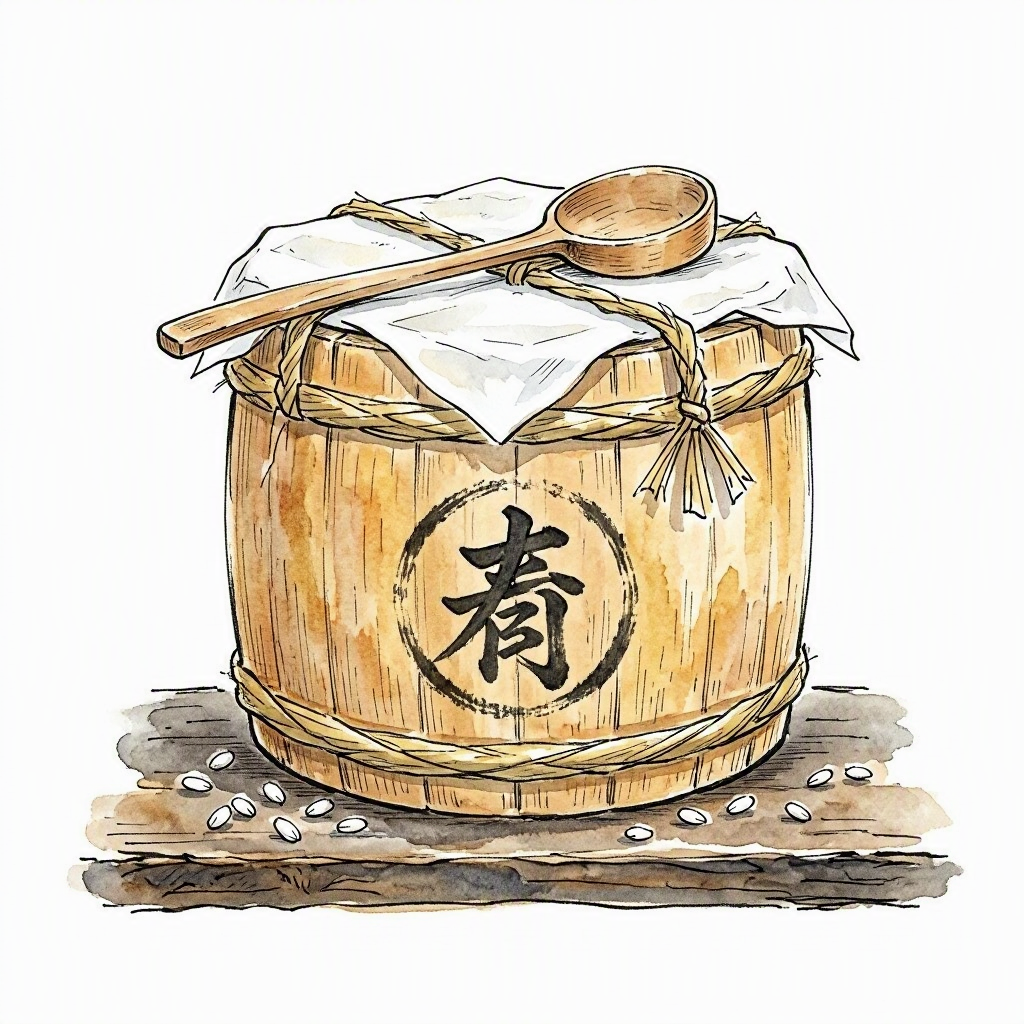
What fascinates me most is the scale of preparation. Local families begin brewing their doburoku weeks in advance, setting aside part of the year's rice for the purpose. The rice, koji mold, and water from the Hida mountains are combined in cedar barrels and left to ferment — the result is unfiltered, still-active, milky-white with a slightly fizzy carbonation. Adults and children practice folk performances for a month before the festival. At least one person from each family is expected to help with the festival work. This is not a spectator event; it is a community's annual expression of itself.
The other shrines follow on successive days. Hatogaya Hachiman Shrine (October 16–17) is located beside the Hakusan Shirakawa-go White Road, with views into the mountains that will be showing full autumn colour by then. Iijima Hachiman Shrine (October 18–19) sits near the village's roadside station at the main entrance.
For the visitor arriving now, in late September, the lesson is this: the village is already preparing for a festival that begins three weeks from today. The rice is drying, the sake is fermenting, the dancers are practicing. If you want to see the Doburoku Festival, book your bus and lodging now — accommodation fills early. But if you are here now, you are seeing something rarer: the quiet, invisible work that makes the visible celebration possible.
What the mountain water makes
Doburoku (unfiltered sake) is the heart of the festival and cannot be bought in ordinary shops — it is a household brew, made in small batches by families who learned the process from their parents. The result is sweet, sour, and faintly funky, nothing like the polished sake in bottles. Served warm, straight from the barrel, it carries the taste of rice in its most honest form.
For something you can take away, the valley's sake breweries produce a range of filtered sake that shares the same mountain water. Koshi no Shizuku is a dry ginjo from the Hida region, clean and mineral-driven, made for the same cold winters these roofs were built to endure. Shop Kataribe (452 Ogimachi) carries it alongside local sweets, folk crafts, and bottles of Hida sake. It stands at the far end of the village, just across the suspension bridge.
The other product of this late September moment — not for sale, but everywhere you look — is the drying rice itself. You cannot pack it in your suitcase, but you will remember it: the golden sheaves hanging from bamboo poles, the patient domestic ritual that has played out in this valley for as long as anyone remembers.
A roof that stays on
The General Incorporated Foundation Shirakawa-go World Heritage Site Gassho Style Preservation Trust exists for a very practical reason: keeping a thatched roof on a building that people live in costs more than any family here can afford alone. Each rethatching requires thousands of bundles of kaya grass from the mountain meadows, and a team of skilled craftspeople practising a technique with no substitute. On a day when I counted the days until the festival and watched the rice dry in the fields, I was reminded that this valley survives not by being picturesque but by being cared for by people who know exactly what they are protecting.
You can support the trust through the village's official website.
Small kindness before the winter
There is a time between seasons that has no name in English.
In Japanese it might be aki no yokogao — the profile of autumn, the moment when summer has turned its face away but winter has not yet looked at you directly.
The rice knows. The rice is lifted from the fields and hung on poles to dry, and each day the husks rattle a little more, and the grains grow harder in their shells, and the woman who lifted the pole this morning will lift it one hundred times before the snow comes.
The shrine knows. It waits in its grove of old trees, the bell silent except for the single visitor who pulls its rope on a foggy afternoon, the festival drums stacked in the corner of the storehouse, not yet touched.
And the doburoku knows, because it is being made now, somewhere in a shed I did not find, in a cedar cask with a white paper lid, the rice and koji and water doing their quiet work, becoming something that in three weeks will be poured for gods and strangers.
The roof knows, because it has seen eighty winters.
Everything in this valley is waiting. But the waiting is itself the work.
— after Karl Ove Knausgaard, who writes that nothing happens and that is what happens