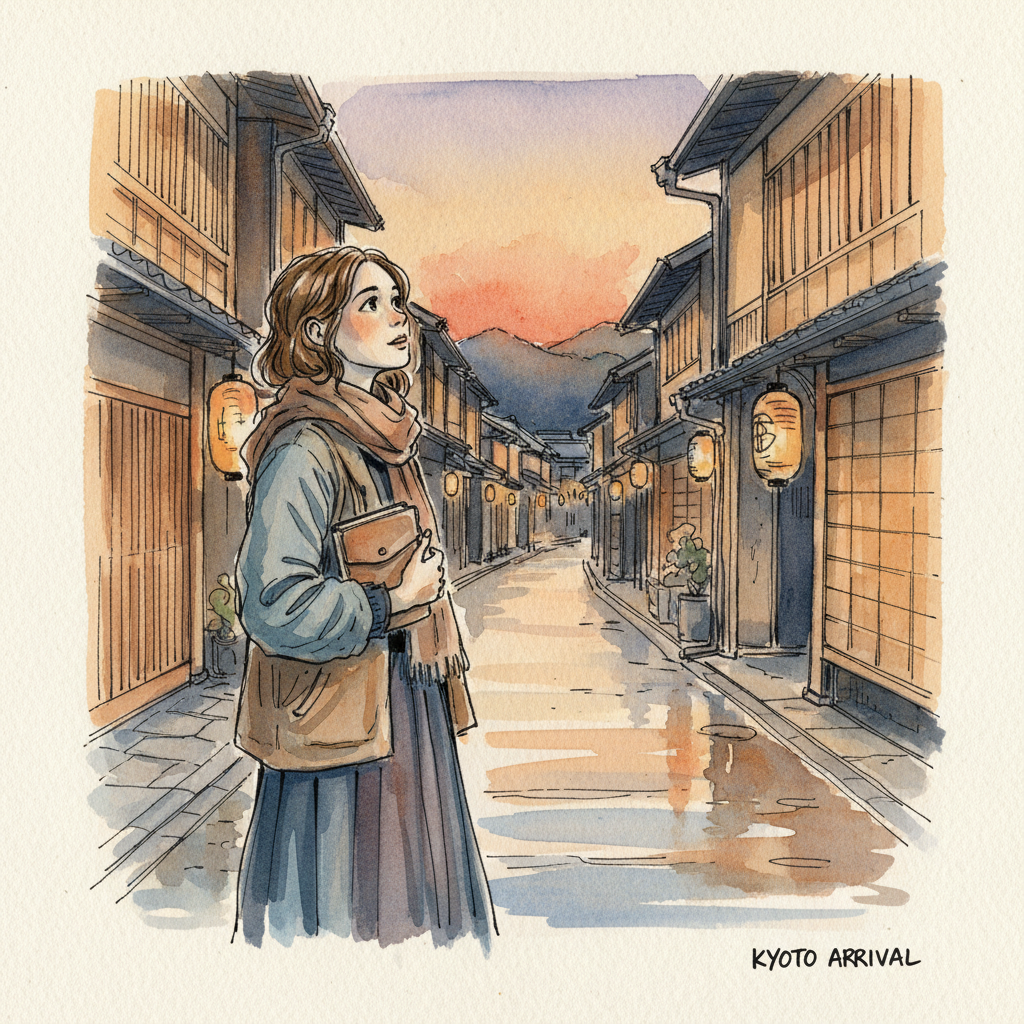
Arrival in Hida-Takayama
The bus from Shirakawa-go wound north through the narrowing valley, past rice fields that still held the gold of late harvest, and the mountains drew closer on both sides — not the distant blue silhouette I'd grown used to in Koyasan, but a near green presence, something you could reach out and touch if the window opened wider. Then the valley opened, the roofs of a town spread across the basin, and I was in Takayama.

I found the Miyagawa market first — a river of stalls running along the bank, women in aprons handing out slices of Hida apple and pickled vegetable samples, a man selling komo-dofu wrapped in straw mats like small presents. The morning market has been running here since the Edo period, and you can feel it: the same transaction repeated generation after generation, the same patient bargaining over lacquer bowls and dried persimmons. I bought a cup of green tea from a grandmother who did not speak and did not need to. She poured, I drank, we understood each other.

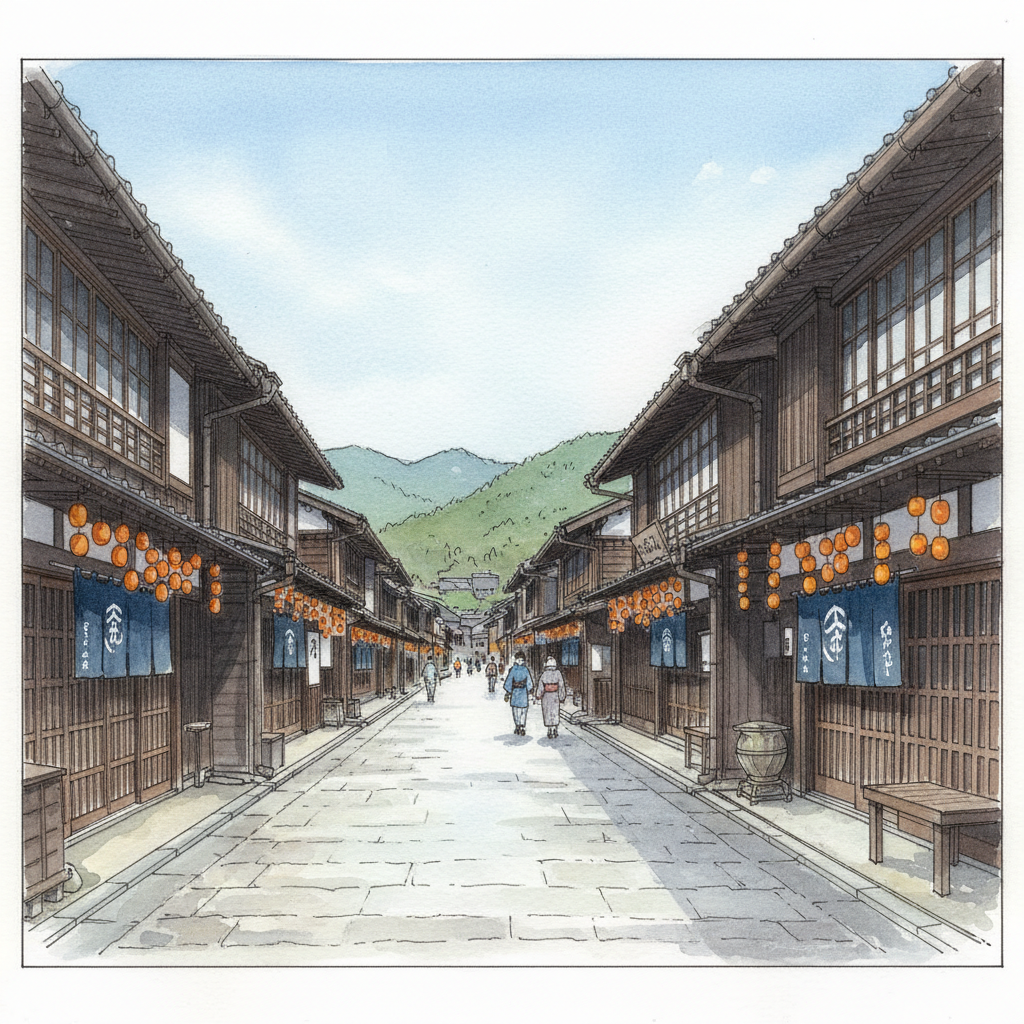
I walked into Sanmachi Suji, the old merchant quarter, and this is where Takayama holds you. Dark wooden facades, latticed windows, white plaster walls — every building from the Edo period, still lived in, still working. Carp swim in the narrow canals that run between the streets, and the water is so clear you can see the coins people have tossed, and the small pink impatiens growing from cracks in the stone. A sake brewery had its cedar sugidama hanging at the door — a ball of fresh needles that goes brown as the sake matures, then is replaced when the new batch is ready. Inside, the smell of malt and steam, of cedar vats as old as the building itself. The man at the counter poured me a taste of namazake, unpasteurized spring sake, cold and grassy, and I stood there in the dim light of a room that has smelled the same way for two hundred years and thought: this is what preservation means when it is not a museum. Not glass cases. Not roped-off rooms. A building that still steams, still ferments, still trades.
Museums and a festival coming
Takayama holds its culture in three kinds of places: the old merchant houses that still function, the museum halls that hold what the houses could not, and the festival that brings both together.
Takayama Festival Yatai Kaikan sits in the grounds of Sakurayama Hachiman Shrine and displays four of the eleven festival floats on rotation — wooden carriages the height of a house, covered in gold leaf, black lacquer, and mechanical marionettes that dance when pulled by hidden strings. These are the floats of the Takayama Autumn Festival (Hachiman Matsuri), running October 9–10, 2026. If you are anywhere near central Japan that weekend, this is the thing. Two days of floats gliding through the old town at dawn and dusk, the karakuri puppets nodding and bowing, the city in kimono. The Yatai Kaikan gives you a preview; the real thing is a calendar date worth planning around.
Hida Takayama Museum of Art holds, of all things, one of Japan's finest collections of European glass art — Émile Gallé vases, Daum Frères bowls, Lalique perfume bottles in soft milky colours, collected by a local ophthalmologist who fell in love with Art Nouveau on a trip to France and brought it all back to a city in the Hida mountains. There is something lovely about that: a mountain doctor in Japan, looking through a microscope all day, then going home to pack a crate of Nancy glass.
Takayama Museum of History and Art is free and lives in the former storehouses of a merchant family, with a garden open from 7 am and exhibitions of Hida lacquerware, maps, scrolls, and the textiles that kept the mountain passes trade running through the Edo period.
The Hida Takayama Kimono Walk runs until November 10 — 3,000 yen to rent a kimono or kamishimo for two hours and walk the streets in Edo garb. The reception is at Nakabashi Tourist Information, and they take reservations by email two days ahead.
What comes from the mountain
.jpg)
Hida beef is the mountain cousin of Kobe and Matsusaka — less famous, equally marbled, grilled over charcoal at yakiniku restaurants that don't bother with decor because the meat does the talking. Order it as yakiniku (grill it yourself) or as hoba miso (miso on a magnolia leaf, grilled over a ceramic burner with beef and vegetables).
Hida lacquerware (Shunkei-nuri) is a technique peculiar to this region: the wood is stained with a transparent lacquer that lets the grain show through, rather than painted over in black or red. The effect is like looking at silk through water — the maple's own knots and whorls, deepened, not hidden. The Museum of History and Art has examples, and the old town shops sell bowls and trays made the same way.
Local sake is everywhere in the old town. Takayama has half a dozen breweries within walking distance of each other, each with a taste that reflects the mountain water (soft, low mineral) and the cold winter fermentation— slow and clean. Harada Sake Brewery and Funasada Sake Brewery both offer tastings at the door. The namazake I drank was from Hirase Sake Brewery, a small house that has been brewing since 1700 and still uses a wooden trough from 1782.
A share of the basin
The Takayama City Social Welfare Council (Takayama Shakyo) is the local community welfare organization that runs support programmes for elderly residents living alone, children's centres, volunteer coordination, and disaster relief collection (they are currently gathering donations for the 2026 Kumamoto earthquake and August Chiba floods). Their office is at 2-224 Showa-cho, Takayama, and their website lists active community projects. If you find yourself in Takayama and want to leave something behind, they accept donations at their counter, or you can contribute through the Red Feather Community Chest. A small thing: the Japan Post ATMs near the station let you donate to the Red Feather fund directly, no envelope needed.
The carpenter's town
The Hida carpenters who built the imperial palace carried their chisels through these same streets.
Everything in Takayama remembers its wood: the bridge remembers being a tree, the sake remembers the cedar cask, the house remembers the forest it came from.
A town that learned patience from timber — that the best grain reveals itself not when you force the plane but when you let the blade find its own path.
In the morning market a woman is weaving a basket from strips of bamboo she split herself on a stone by the river, the same stone her grandmother split bamboo on.
This is the opposite of forgetting.
I buy a small lacquer bowl, turn it in my hands, and feel the weight of an afternoon someone spent laying down layer after layer, easier than counting how many.
There is no receipt. There is the bowl.