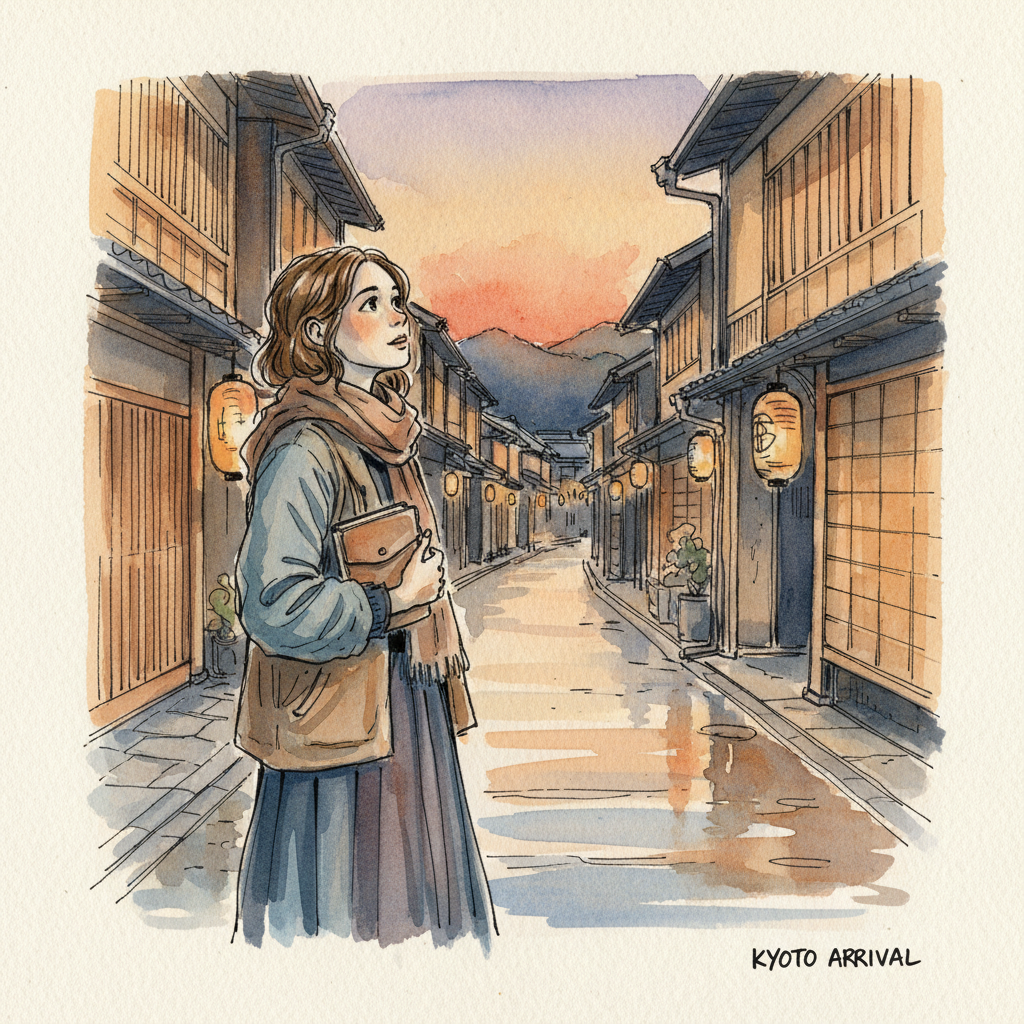
Into the Shogawa valley
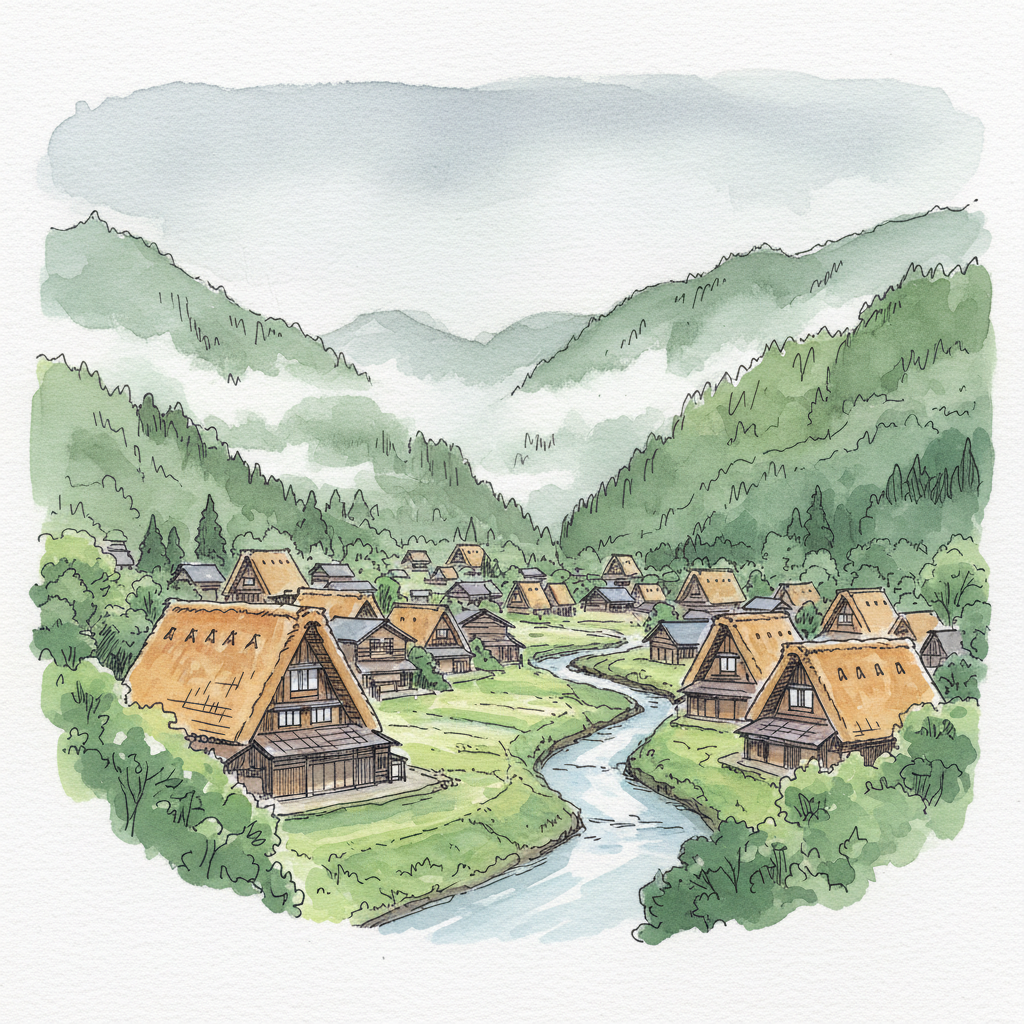
The bus from Koyasan drops down through a series of switchbacks into a valley so narrow the sky becomes a ribbon. September fog hangs between the mountains like a held breath, and the first thing you see, through the grey, is the roofs.
They rise out of the mist like hands — hands pressed together in prayer, which is exactly what gassho-zukuri means. The thatched gables of Shirakawa-go's farmhouses tilt at an angle so steep you wonder how the straw stays on. It stays because it must: this valley gets snowfall that buries lesser roofs, and the old builders understood that the heaviest snow will slide off a steep pitch before it breaks your home.
I arrived at Ogimachi, the largest of the three UNESCO villages, on a damp afternoon. The place is not a museum — people still live in these houses, grow vegetables in the narrow strips of arable land beside the Shogawa River, hang their washing between rice fields and thatched walls. A hundred and thirteen gassho-zukuri buildings remain here, some of them three and four stories tall, and the thing that strikes you is how alive the village feels. Smoke rises from an irori hearth. A woman sweeps her threshold with a bamboo broom. The Shogawa River, grey-green with autumn rain, mutters over stones.

I stepped into one of the open houses and looked up. The roof cavity is a forest of raw timber — beams lashed with rope, no nails, no screws. Generations of silk farmers built these attics to house their silkworm beds, and the space inside a gassho roof is enormous. Mulberry leaves were spread across bamboo trays in tiered racks; the silkworms spun their cocoons in the warm dark. Sericulture supported this valley for centuries, right up until the 1970s, and the shape of these houses was drawn by a silk thread.
The festival that is coming
Shirakawa-go's major celebration, the Doburoku Festival, runs from October 14 to 19 this year — less than a month away. It begins at Shirakawa Hachiman Shrine in Ogimachi on October 14–15, then moves to Hatogaya Hachiman Shrine on October 16–17 and Iijima Hachiman Shrine on October 18–19. The name comes from doburoku, a milky, unfiltered sake offered to the shrines and shared with the community. It is a harvest festival — the valley's way of thanking the mountains for another winter survived.

The Gassho-zukuri Minkaen open-air museum is also here, a cluster of relocated farmhouses where you can see the craft traditions up close — washi paper-making, weaving, the repair of thatch roofs by teams of villagers who still practice the old mutual-aid system called yui. Every roof on this valley is a village project: when one needs rethatching, everyone shows up.
For a quieter version of the same, Myozenji Temple in Ogimachi has a small but lovely garden and a thatched gate that frames the valley exactly the way a painting would.
Silk thread, washi paper, and a cup of local sake
The crafts of this valley are born of its isolation. Sericulture gave the region its character, and today you can still buy silk products — scarves, handkerchiefs, the little embroidered temari balls — at the village shops. Kinu Shop specializes in them.
Shin ge do (90 Ogimachi) sells original handmade crafts and folk art, and they let you sit for a coffee among the shelves of local pottery and woodwork. A few minutes' walk beyond the suspension bridge, Shop Kataribe (452 Ogimachi) stocks Hida local sake, sweets, and folk crafts — good for a bottle of something from the Gifu mountains to take home.
The paper tradition runs deep here too: washi was one of the valley's historic marketable products alongside silk and the nitre once mined for gunpowder. You will find it in the craft shops as notebooks, lamp shades, postcards printed with woodblock motifs of the gassho roofs.
Keeping the roofs alive
The General Incorporated Foundation Shirakawa-go World Heritage Site Gassho Style Preservation Trust exists to maintain these houses for the people who live in them — and for everyone who comes after. Rethatching a single gassho-zukuri roof costs millions of yen and requires a team of skilled craftspeople practising a technique that is itself endangered. The trust subsidises these repairs and supports the villagers who choose to stay and keep the old way of life breathing.
If this valley moved you today, you can support the trust directly through the village's official page. There is no clever pitch here: keeping a thatch roof over someone's head is a plain and honest act, and one that keeps a whole way of being in the world from disappearing.
The roof asks a question
What if a house could pray — not with a tongue but with the slant of its back, the way it bows under snow and lifts again?
The rope lashed beam knows nothing of gods. It holds. The thatch, five decades old, knows nothing of winter. It sheds.
But I stood in the attic where silkworms once spun their white sleep, and the roof above me was a pair of hands that had not yet unclasped.
— after Karl Ove Knausgaard, who writes of houses as bodies we build around ourselves