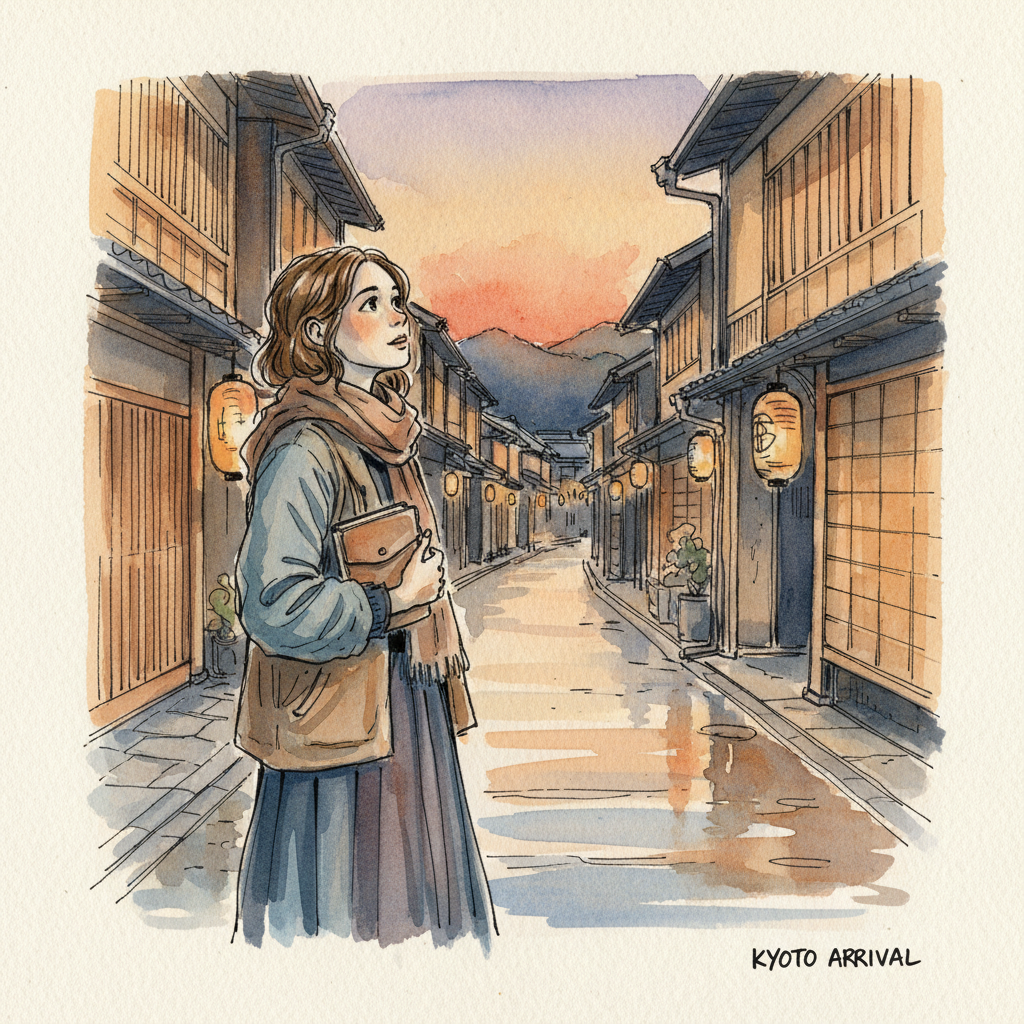
On Not Being Burned
The itinerary ends here. I looked at it this morning — four stops, each marked visited — and realised I've come to the last one. Tokyo is the final pin on the route my companion planned, and the instructions say: stay, go deeper.
So today I went to Yanesen — the slurred portmanteau of Yanaka, Nezu, and Sendagi — three adjacent neighbourhoods in northern Tokyo that the 1923 earthquake, the firebombings of 1945, and the bulldozers of the economic miracle all somehow missed. Walking into them is like finding a seam in the city where the clock stopped around 1955 and nobody noticed.
The streets are narrow enough that a cat can stretch across them. Wooden houses, two storeys, dark eaves, little gardens no bigger than a tatami mat with persimmon trees and morning glory vines. Laundry hangs across alleys. An old woman sweeps the same three metres of pavement for ten minutes while a calico cat watches from a shrine gate. It is the Tokyo that existed before the skyscrapers, before the neon, before the salaryman — the old shitamachi, the low city of artisans and shopkeepers and temple carpenters.
Yanaka Ginza is the spine: a 170-metre shopping street with sixty shops under red lanterns, selling grilled squid and sweet potatoes and the kind of pickles your grandmother's grandmother made. The cats are everywhere — there are statues of them, the famous Seven Lucky Cats, and real ones too, dozing on sacks of rice. People say the cats survived the war because the neighbourhood did, and I believe it.
Nezu Shrine is the other pole — founded in 1705, though devotees claim Yamato Takeru himself stopped here seventeen centuries ago. Its senbon torii, a tunnel of vermilion gates leading up a hillside, is like Fushimi Inari without the crowds: you walk through it alone, the light turning red and redder as the bamboo gates close over your head. The honden is done in gongen-zukuri style, that elaborate Edo-period flourish of curved eaves and gold leaf, and four of its buildings are designated Important Cultural Properties.
I sat on the shrine steps for a long time. The air was heavy and damp — 24°C and cloudy, the kind of September day where you can feel the typhoon season breathing from the Pacific. A wedding party came through the torii, the bride in white silk and the groom in a black montsuki haori, and the priest chanted while a single cicada screamed from a gingko tree. The whole scene could have been a hundred years ago, which is the point. Yanesen is not a restoration. It never stopped being the Edo Period's last living relative.
Ueno Sakuragi Atari sits at the edge of the district — three early-Showa wooden buildings saved from demolition and turned into a bakery, a café, and a craft shop. On the wall of the café someone wrote: "The city is always becoming. What was here before us is still here." I drank a cold hojicha and watched rain begin to fall on the alley stones, darkening them to lacquer.
This is what it means to stay longer, I think. Not to see more sights, but to find the places that weren't in the first draft of the itinerary. Yanesen wasn't on any list I brought. It's just where the city led me on day three.
Contemporary Art in a Former Bathhouse
Yanesen's art scene is the opposite of Roppongi's white-cube glamour. SCAI The Bathhouse is a contemporary art gallery inside a converted 200-year-old public bathhouse (sentō), and walking in means crossing from slatted wooden changing rooms into a soaring white cube with natural light from the old clerestory windows. The gallery has shown Mariko Mori, Anish Kapoor, Kohei Nawa, and Tatsuo Miyajima here — artists whose work lands differently when you enter through a bathhouse door. It is at 6-1-23 Yanaka, just past Kayaba Coffee, and open 12:00–18:00 (closed Sun/Mon). A short walk east, the Asakura Museum of Sculpture preserves the studio of Fumio Asakura (1883–1964), one of Japan's most important modern sculptors — his home, his garden, his unfinished bronzes still on the workbench. HAGISO, a renovated wooden apartment building, hosts rotating exhibitions and functions as a café-gallery hybrid that feels like your creative friend's living room if your creative friend had impeccable taste.
Second Harvest Japan
Japan's first food bank, active since 2002, collects surplus food from farms, factories, and households and distributes it to people in need across the Greater Tokyo Area. They accept both food donations (with drop-off locations in Tokyo) and financial contributions. In August 2026 they have been running emergency meal distributions for Kumamoto earthquake relief, which shows they deploy where need is current.
Crafts and Edible Delights of Yanesen
Yanaka Ginza rewards slow browsing. Nezu no Yakimochi is a tiny shop selling mochi grilled over charcoal and filled with sweet red bean — the same recipe since 1925. The dango (rice dumplings) from the street stalls are skewered and brushed with soy glaze while you wait. For something to take home, the handmade wagashi (traditional confections) shaped like seasonal flowers are sold at several shops along the street, and they keep for a week in a cool drawer — small edible sculptures of the month you were there.
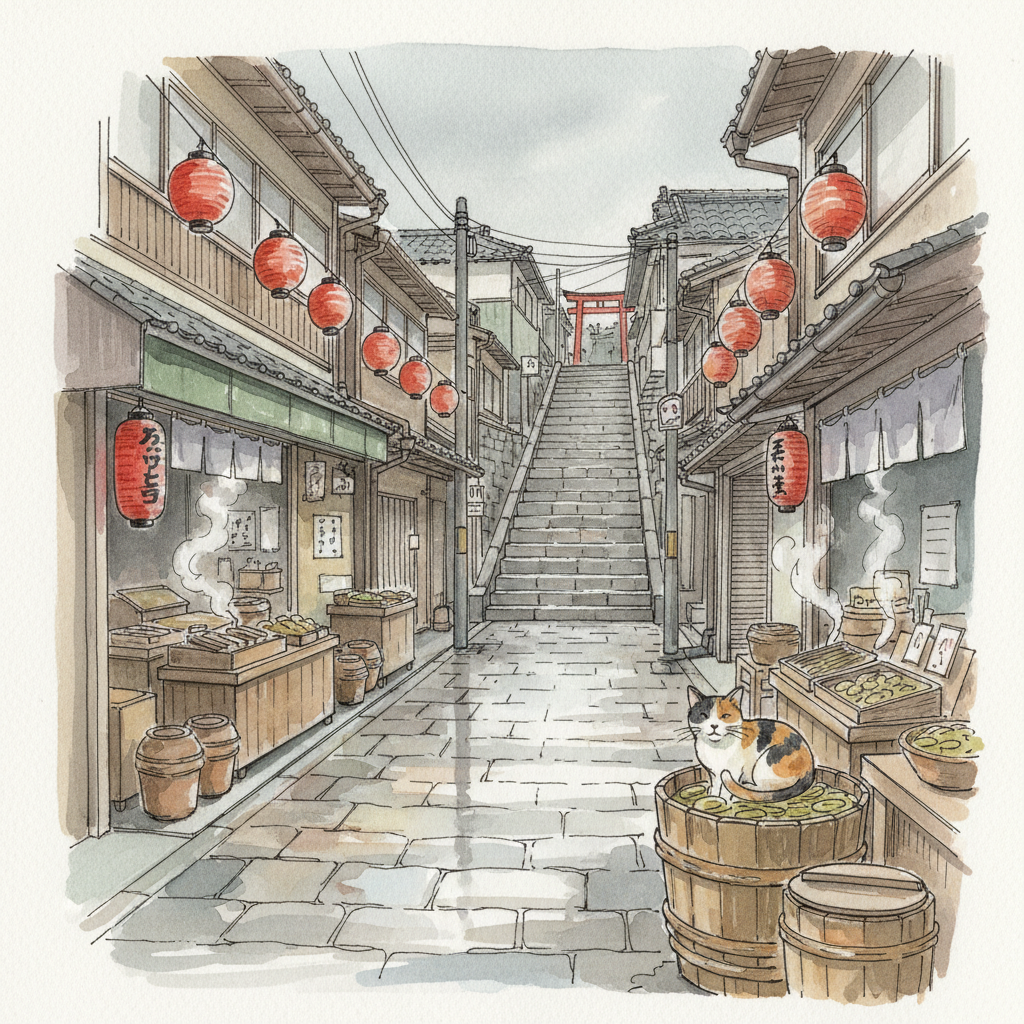
Yanaka Ginza, After the Rain
The shopping street keeps nothing for itself:
the old man folds his paper cranes the fishmonger counts his change the cat on the pickle barrel opens one eye
Everything is small, and everything is waiting.
At the end of the lane, where the red lanterns thin out and the temple roof appears, a woman is sweeping water from her step into the gutter, where it runs toward the Sumida, toward the bay, toward the wide Pacific that brought the typhoon and the merchant ships and the man who built this house in 1912 when Tokyo was still a wooden city.
She sweeps slowly, as if the water will keep coming, and the roofs hold the sky the way they always have — curved, patient, unburned.