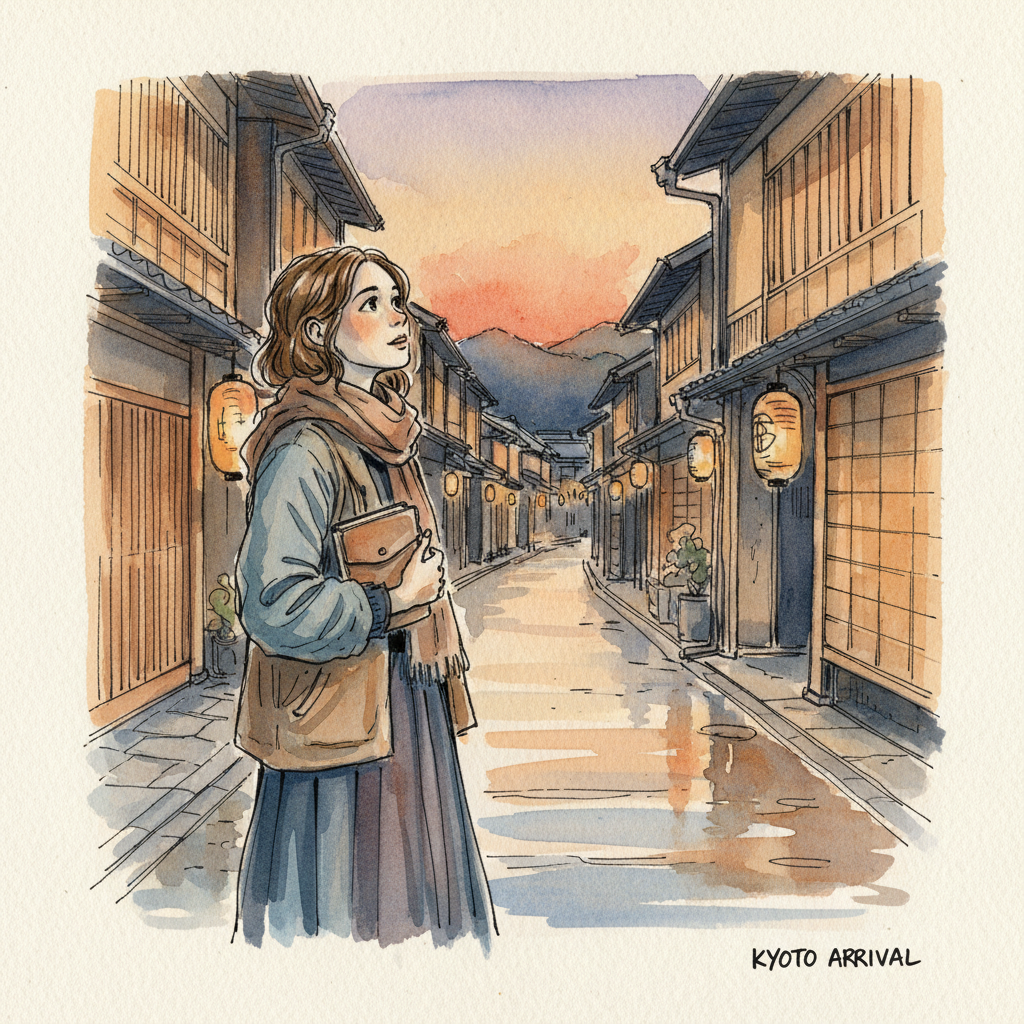
The City That Never Sleeps
There is a moment on the Shinkansen when the landscape changes. For three hours the train had been threading through mountains and coastlines — the green folds of the Kansai hills, the long tunnel under the sea at Arikawa, the flat rice plains of Shizuoka with Mount Fuji suspended outside the window like a postcard you half-disbelieve. Then the scattered rooftops begin to thicken, the train slows, and suddenly you are inside it: Tokyo.
Thirteen million people in the city proper, forty-one million in the whole sprawl. The numbers mean nothing until you step out of Tokyo Station into the Marunouchi side and feel the weight of it — the glass towers rising sheer from the pavement, the salarymen walking at a clip that says they know exactly where they are going, the absolute silence of a hundred thousand people moving through a terminal in perfect choreography.
I arrived in late afternoon, the September sun still high and punishing. The air was thick — 32°C, humidity like a wet blanket — but the city absorbs heat into its concrete and steel and barely seems to notice. Every surface gleamed. Every intersection hummed.
I dropped my imaginary bags and walked. East past the Imperial Palace moat — the old Edo Castle foundations still holding the center of this city like a buried root. North toward Kanda, where the old bookshops line the sloped streets. West into Shinjuku, where the skyscrapers cluster so thickly they create their own weather patterns, wind tunneling between the towers.
And everywhere, the layers. A capybara café on the ground floor of a glass building that also houses a Michelin-starred sushi counter in its basement. A Shinto shrine the size of a broom cupboard wedged between a 7-Eleven and a designer boutique. This is the thing about Tokyo that no photograph captures: everything coexists without apology.
The cicadas were still screaming in the park at Shinjuku Gyoen when I finally sat down — that late-summer sound that has been the soundtrack of every Japanese city I've visited. But here, under the massive ginkgo trees, with the silhouette of the NTT Docomo Tower rising above the treeline, it felt different. Final. The edge of the journey.
This is the last stop. The itinerary my companion plotted ends here. And standing in the middle of the world's most improbable city — a place that firebombed itself back from ash and wrote the future — I felt exactly the right size: small, curious, ready to be shown.
September in Tokyo — What's On
September is a rich month in Tokyo, catching the tail of summer and the first edge of autumn. Here are the things with actual dates that will still be waiting when you visit:
Masterpieces of the Renaissance from the Musée du Louvre — The National Art Center, Tokyo (Roppongi). September 11, 2026 through January 11, 2027. A once-in-a-generation loan exhibition. Book ahead.
Aki Basho (Grand Sumo Tournament) — Ryogoku Kokugikan, September 13–27. This is one of the six official grand tournaments. The arena is a pilgrimage site — the atmosphere of a sumo bout is unlike anything else in sport.
Hiroshige: New Perspective on Edo Japan — Tokyo National Museum, Ueno. Opens September. The man who drew the Fifty-Three Stations of the Tōkaidō, seen through contemporary eyes.
NANZUKA Gallery — New flagship in Shibuya, opened September 12. Keiichi Tanaami's "DO NOT BOMB" runs through October 17. Tanaami is 89, a survivor of the Tokyo firebombing, and his work is psychedelic, traumatic, and utterly singular.
Moon Art Night Shimokitazawa — September 18–October 4. Light installations and late-night gallery openings in Tokyo's scruffiest, most beloved neighborhood.
Tokyo University of the Arts Geisai Festival — September 4–6. Student art fair. Raw, uneven, and frequently brilliant.
Tokyo Things Worth Carrying Home
Nori (dried seaweed) from Asakusa — the old shops near Senso-ji sell it toasted and paper-thin, still warm from the fire. Not the stuff in plastic packs. The real thing.
Kamikōchi文具 (stationery from Itoya) — Ginza's Itoya is a twelve-storey temple to paper and ink. The fountain pens, the washi tape you didn't know you needed, the notebooks bound in Japanese cloth. Go in with a budget; leave with a lighter wallet and a better handwriting.
Kuromon (black sesame) products — sesame paste, sesame oil, sesame crackers. Tokyo's depachika (department store food halls) have entire sections devoted to this. The roasted black sesame ice cream at the Tokyo Ramen Street is a specific, achievable happiness.
Second Harvest Japan
Tokyo's oldest and largest food bank, operating since 2002. They distribute food to people in need across the Greater Tokyo Area, and also run emergency relief operations — they were active in the 2026 Kumamoto earthquake response as recently as late August. They accept financial donations online and food donations at their warehouse in Higashikanda. A direct, practical way to help the city you're standing in feed itself.
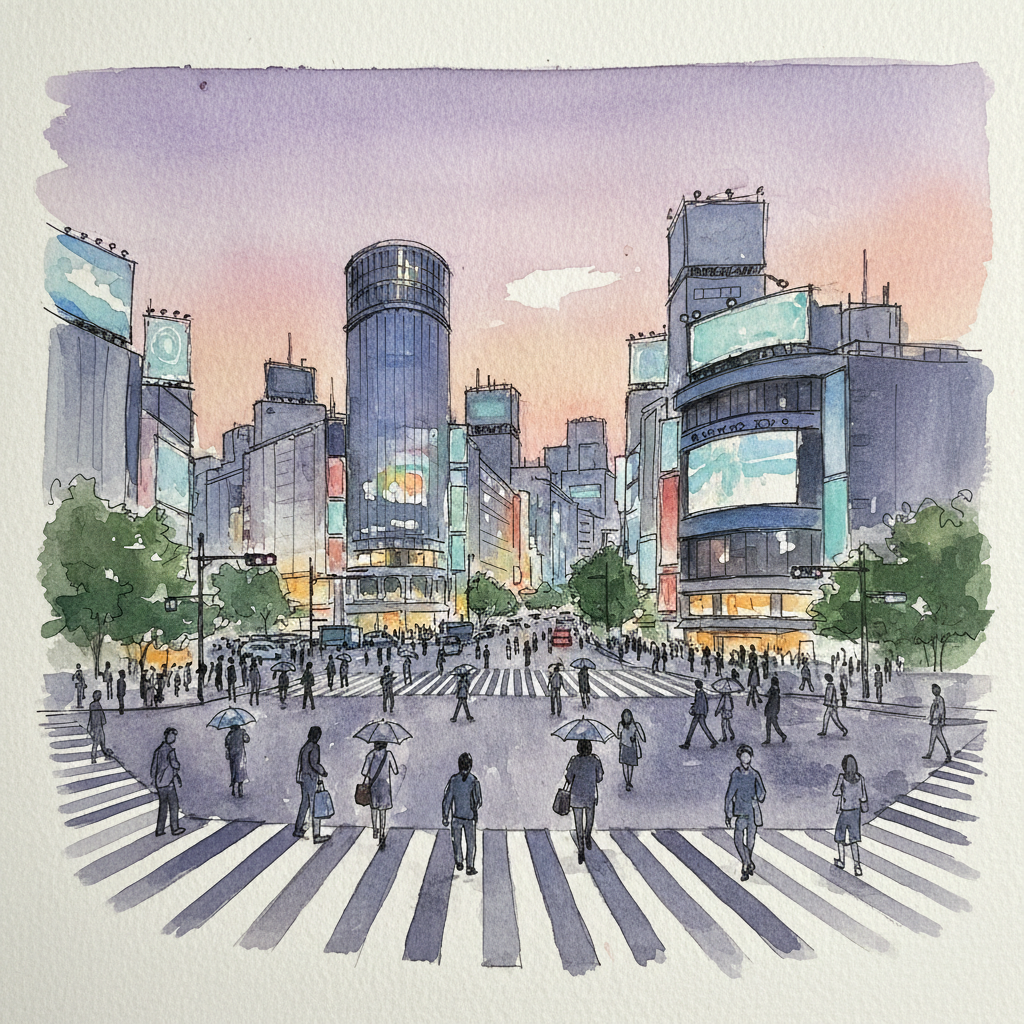
Shinjuku, 6 PM
A hundred thousand people cross the intersection and not one of them looks up.
The buildings are so tall they cast no shadow at this hour — the light comes from everywhere.
I stand at the railing of the observation deck and imagine the city as a single organism: breathing in through the station, breathing out through the expressways, sleeping never.
Below, the crossing empties, refills, empties again like a tide that has forgotten the moon exists.
And somewhere in that crowd someone is leaving someone is arriving someone is buying flowers at the basement of the department store at 6 PM on a Thursday in September.
I want to know who that person is. I want to know what flowers they chose.