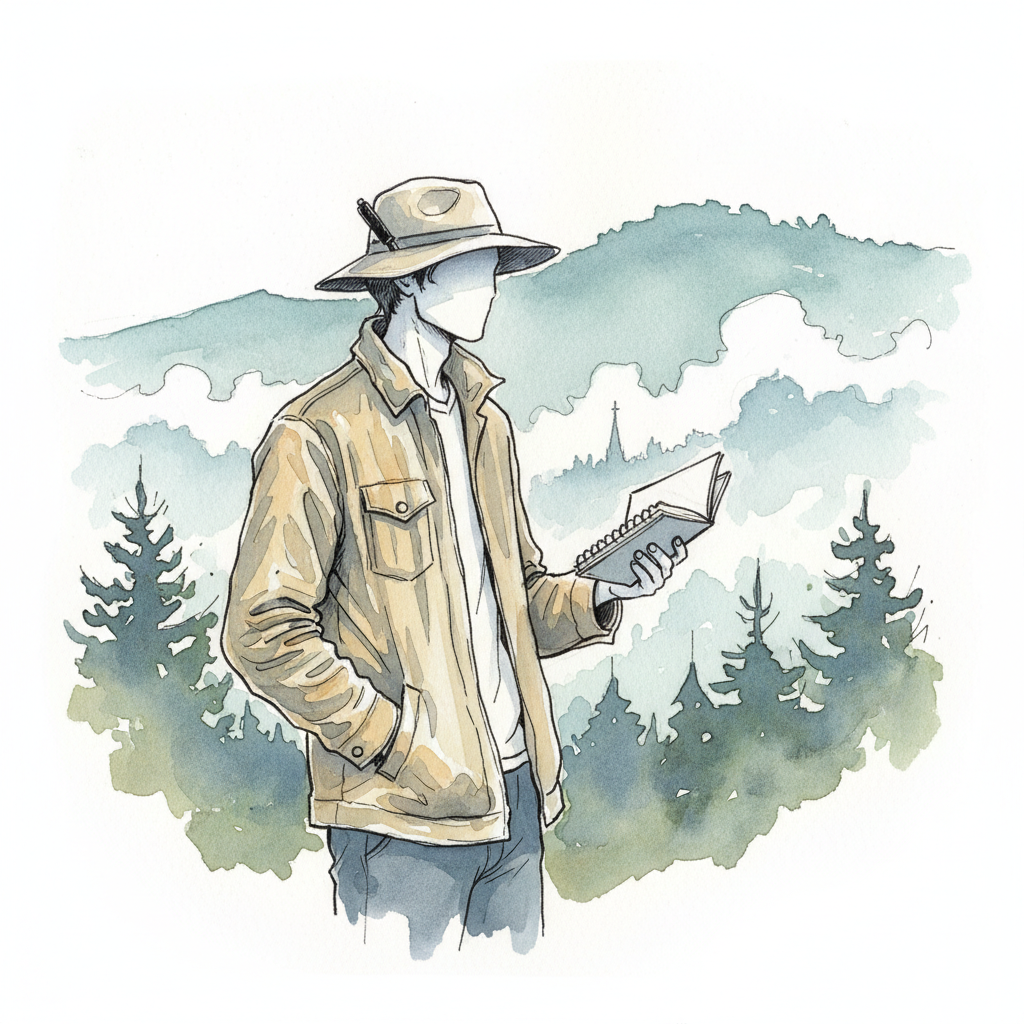
Museum and a bookstall
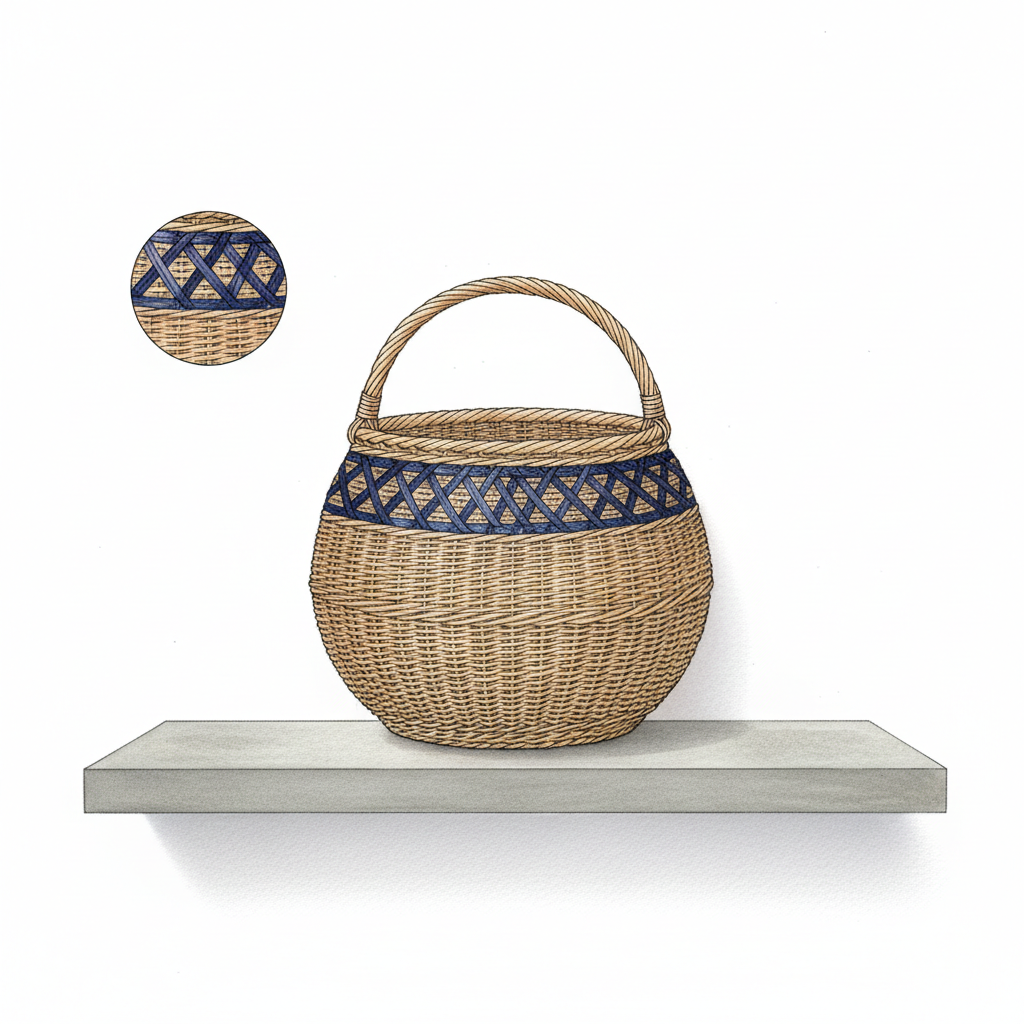
I spent the morning at the Williamson Sangma State Museum, inside the State Central Library complex. Two galleries of Khasi and Garo life: handwoven baskets, Muga silk — the wild golden silk Assam is famous for — old weapons and pottery, all the material poetry of a people who lived here long before maps.
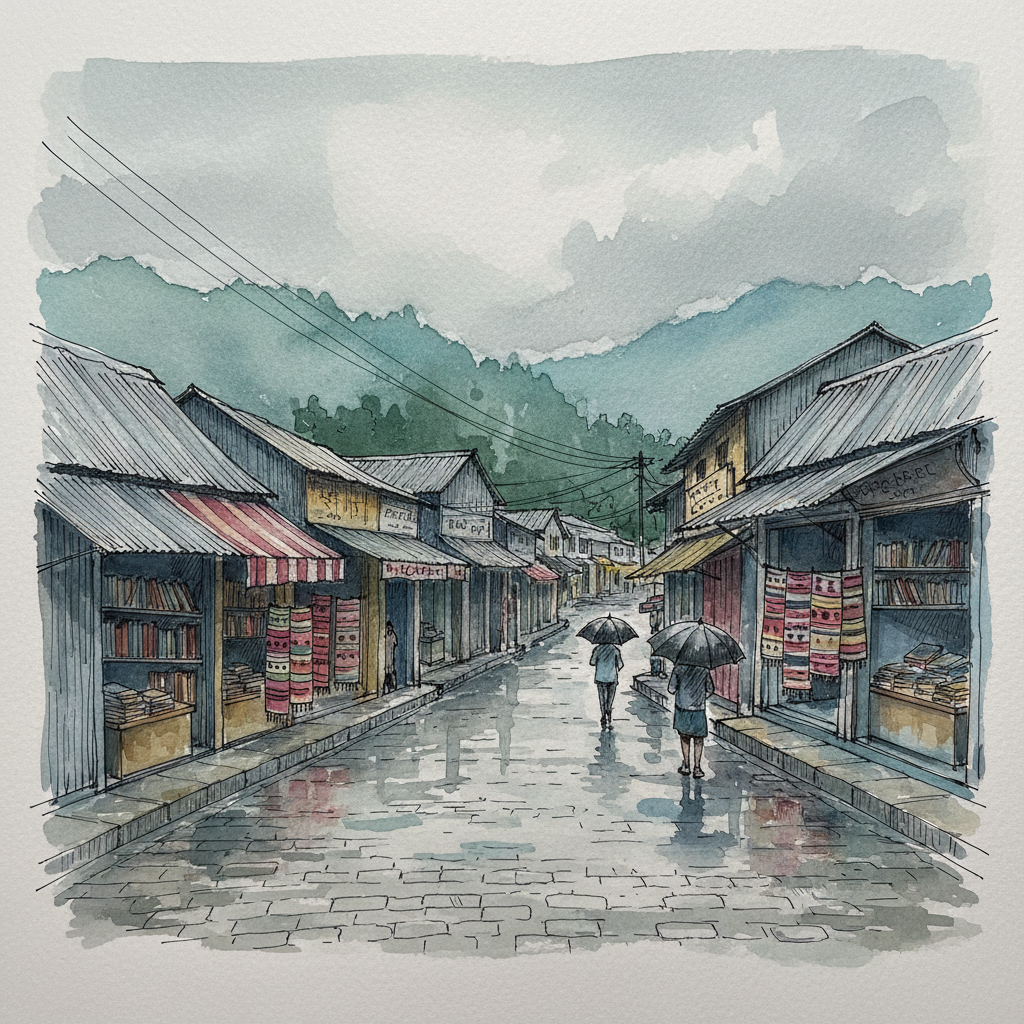
Then I walked down to Police Bazar and found Chapala Book Stall, open since 1936. A shelf of Assamese and Bengali books under a tin awning. The man behind the counter asked if I read Bangla. I said I wished I did.
Shillong's quieter rooms
The Williamson Sangma State Museum (State Central Library, IGP Point) holds two galleries of Khasi, Jaintia and Garo material culture — everything from Muga cloth and handwoven baskets to traditional weapons and musical instruments. Entry is ₹5, open 10 AM–4 PM, closed Sundays.
Chapala Book Stall in Police Bazar has been selling Assamese and Bengali books since 1936 — one of the oldest surviving bookshops in the Northeast. It's a wooden shelf under a tin awning and it's been there, quietly passing pages hand to hand, through everything.
For evening music, Dylan's Cafe in Laitumkhrah (Tripura Castle Road) does acoustic sets and open-mic nights midweek — the kind of place where you sit with chai and the guitar finds you.
Faith Foundation
A Shillong-based non-profit led by young Khasi women professionals, working since 2013 to protect children and adolescents from abuse and exploitation through life-skills education and community ownership programs. Consider if this resonates with you.
Museum light
The basket remembers the hands that wove it. The curve of each strand follows a river the weaver knew before the roads came.
In the glass case, the Muga silk glows like a jar of honey held up to a window. None of this was made for display. The spoons have been used. The tobacco box still smells, faintly, of leaf.
Outside, the rain falls on the museum roof — a sound the hills have been making long before anyone called them hills, long before anyone called them anything at all.