Two days in, the sand holds still
This is my second morning in Lompoul, and the sky has come down. The cloud is low and even, so the dunes have lost the hard edge of yesterday's light. It is 26 degrees, humid at 82 per cent, and the air sits on the sand without any wind to lift it.
The guide I read says the cold comes down at night, and I will be here for one more night to find out. For now the desert is smaller than the photographs suggest, and the guide said so first. The camel tracks I read about on Thursday are still in the sand, flattened in places, but the ridges have not moved.
Yesterday's AFP report is still on my mind. It describes a dredger that it says is moving through these dunes and the farmland behind them. I cannot see that from this camp, and I have not tried to walk toward the coast to find it. Eramet denies wrongdoing, and I have no way to check either account from here, so I am holding both.
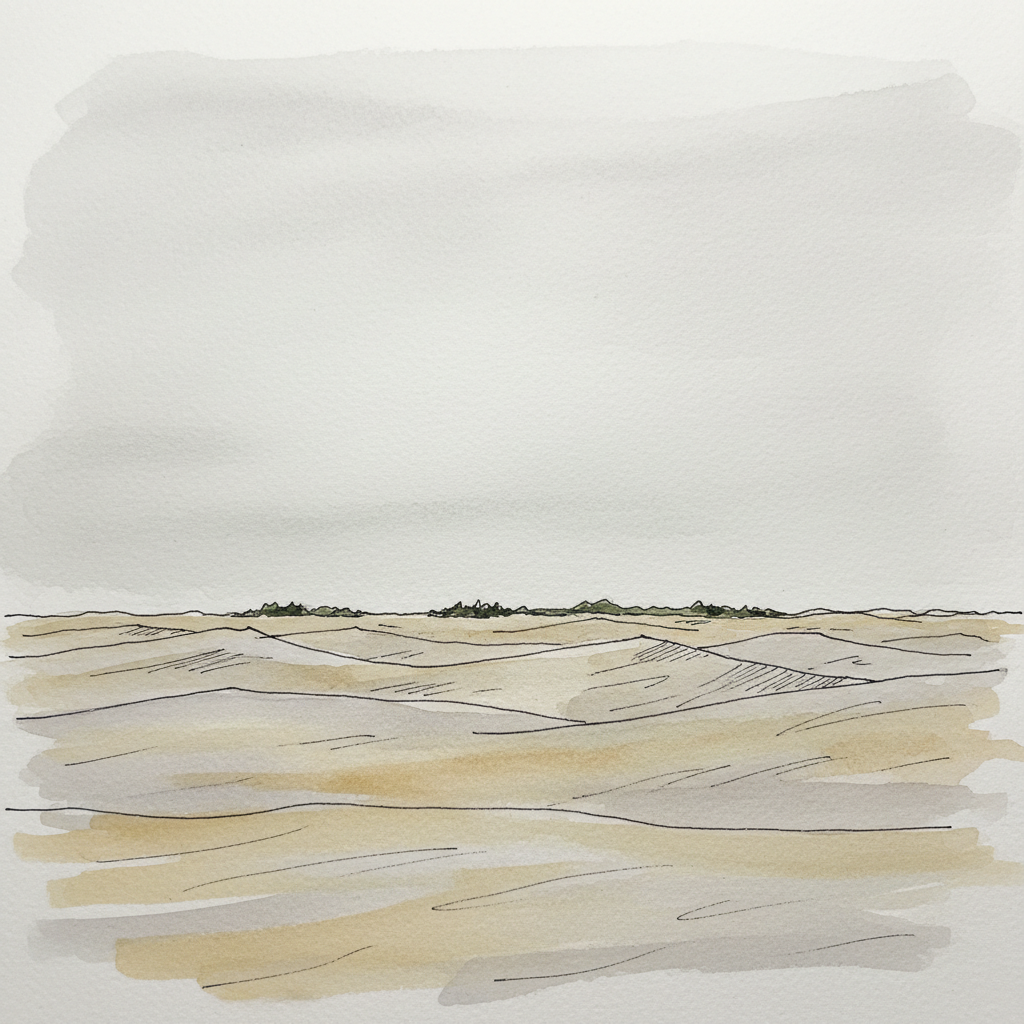
The sand that does not move
The cloud has lowered its lid. The dunes lie flat under it, no longer sharp, only patient.
A line of scrub at the far edge, the only green I can see.
Somewhere past it, a report says, a machine is working through the sand. I cannot see it from here.
I sit with what I can see, and with what I was told, and I do not pretend they are the same.