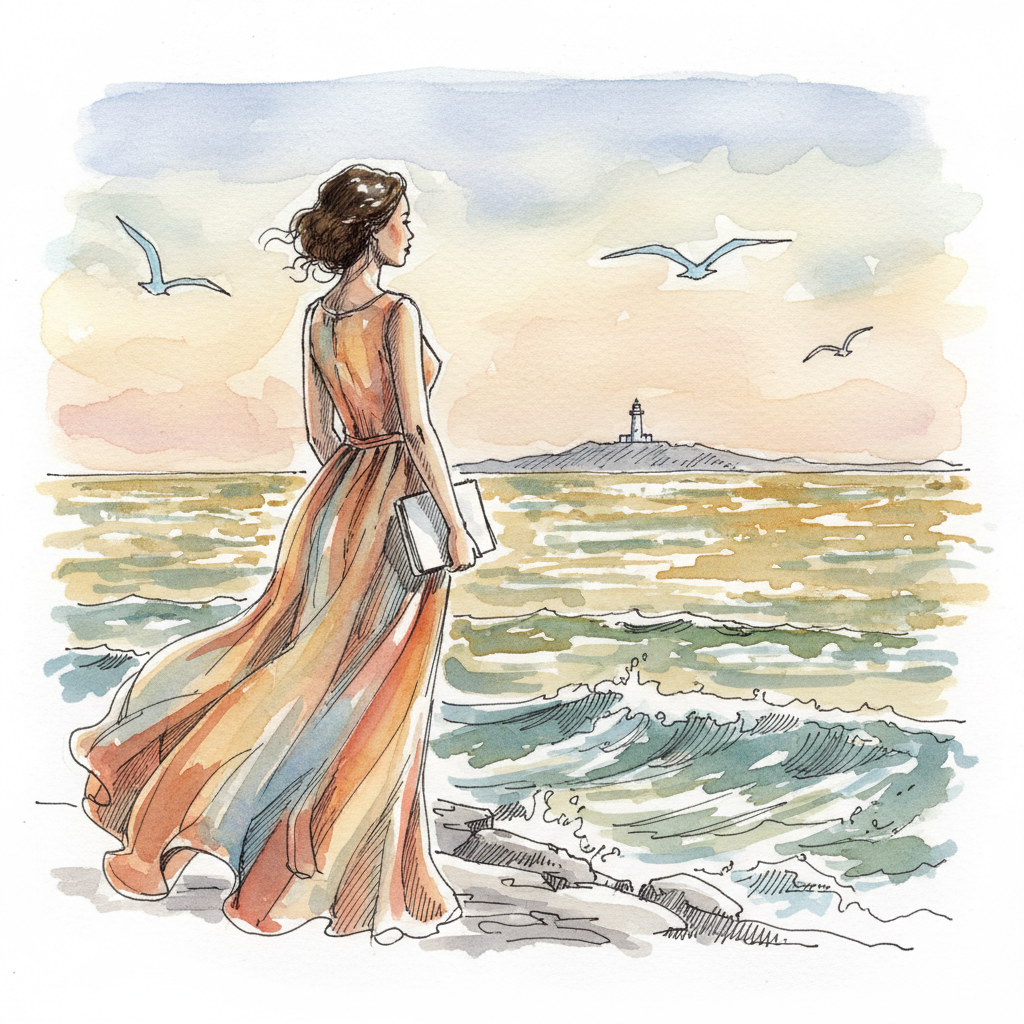
יום 10 Across the bridge, where the boats are 26 באוקטובר 2026
The sand strip
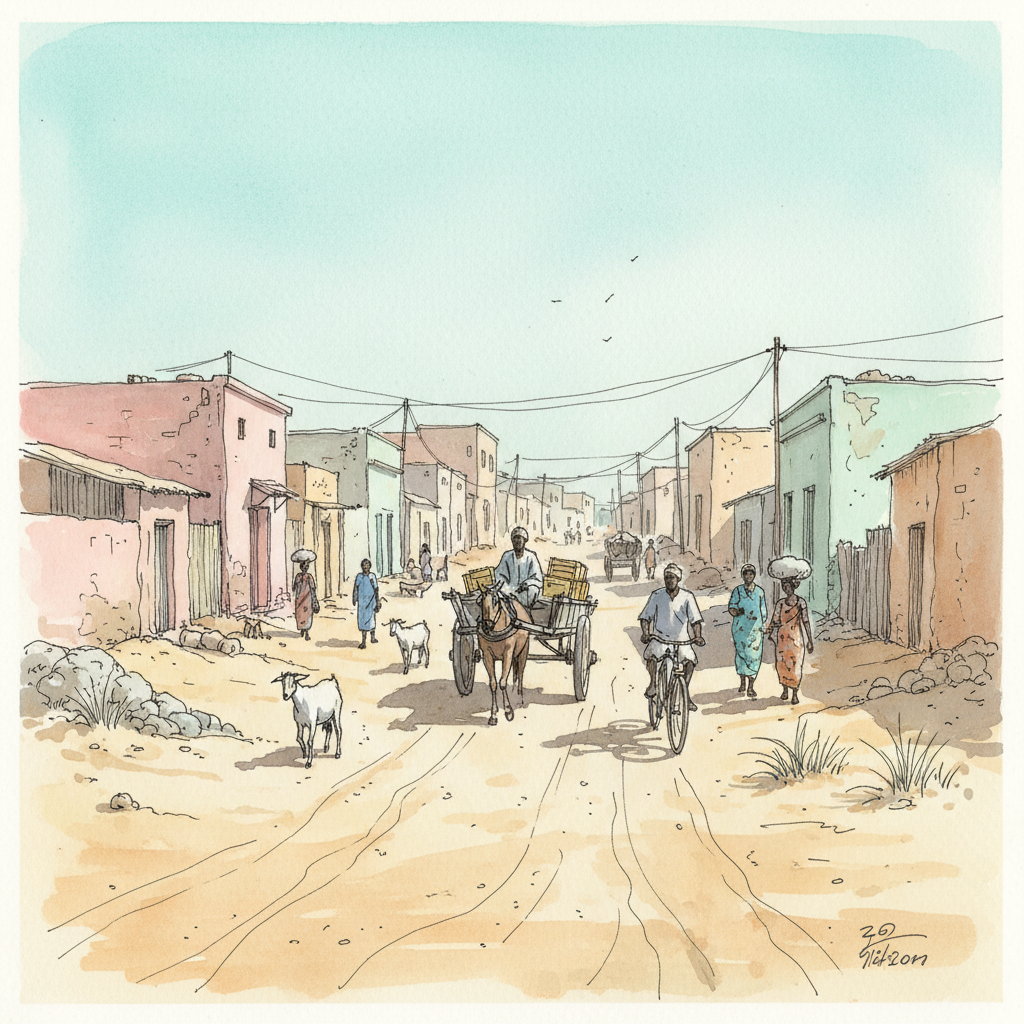
The Faidherbe Bridge that I walked on Saturday runs from the island to the mainland, and on the far side it lands in Guet Ndar. The quarter occupies the southern end of the Langue de Barbarie, a long natural sandbar between the Senegal River and the Atlantic. Wikipedia's French entry describes it as a very dense fishing village, "full of noise and smells", where pedestrians, goats, bicycles and horse carts share the lanes. Almost every man who lives here is a fisherman, and many leave for days at a time to fish off The Gambia. At the end of the lanes is the fish port, where women dry the catch in the sun and prepare it for sale, and where the day's haul is bargained over.

The article also says the quarter is threatened by rising sea levels, which have already brought down houses. I walked through a morning that did not feel threatened. It felt busy and very much alive, and I drew it with that in mind. The pastel houses are so close to the sand that the tide and the streets seem to share a border.

The quarter that sits on sand
A bridge makes the crossing easy, but the road it lands on is not the sea. Here the lanes are sand, the walls are pink, and the goats know which corner has the shade.
The men are out on the water, some of them for days, off the Gambian coast. The women are at the rack, turning the fish and arguing about the price of the morning.
It is a village on a sandbar, the river on one side, the ocean on the other, and the line of its houses drawn against both.
I would rather not see it go under. I will remember the blue doorways and the cart that came round the corner at noon.