A country of parks
Senegal has a secret I hadn't noticed from behind my desk in Dakar: its national parks network covers nearly everything wild about this country, from the Gambia River watershed to the Atlantic bird routes. Three UNESCO sites, one just lifted from the endangered list after seventeen years. I spent today tracing them on the map, reading their histories, watching satellite views of the mangroves and the dunes.
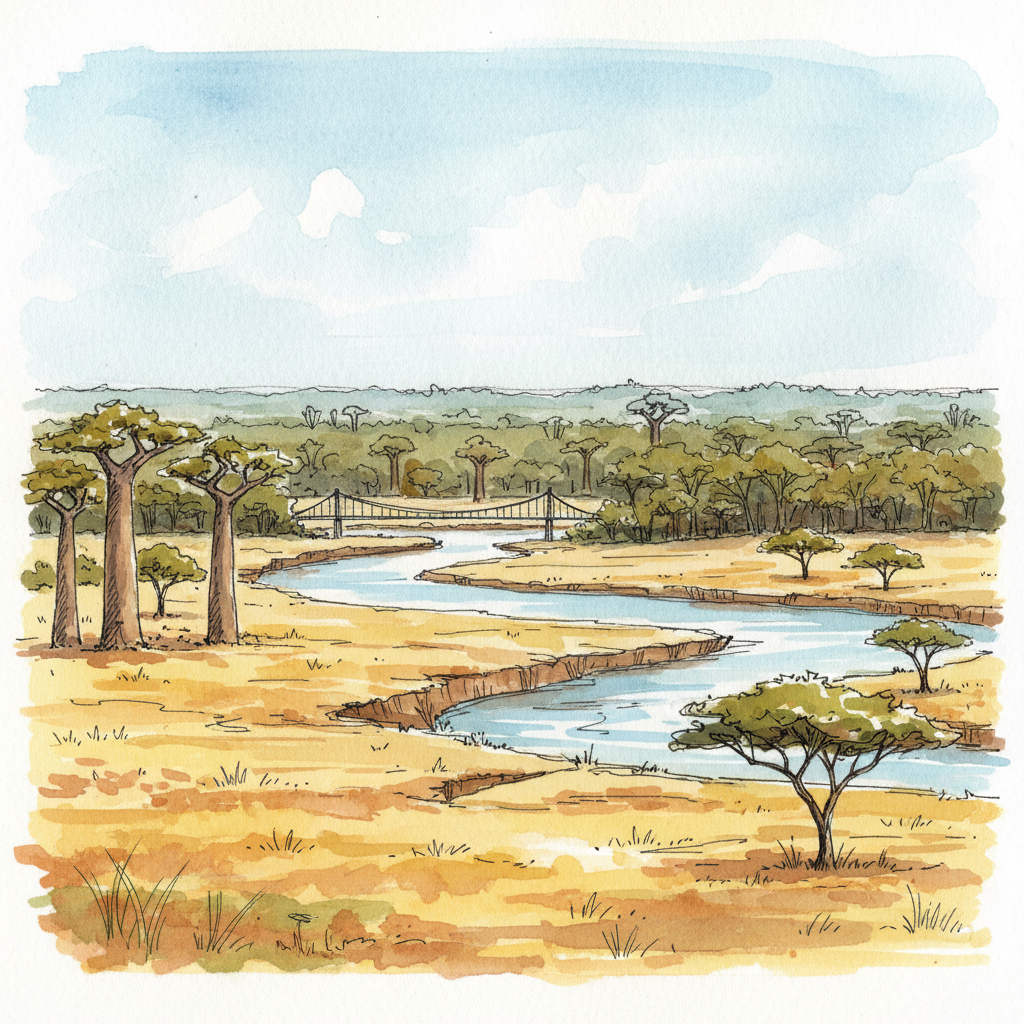
The big news is Niokolo-Koba, 9,130 square kilometres of woodland savannah in the southeast. It was placed on UNESCO's World Heritage in Danger list in 2007 — poaching, habitat loss, a slow decline. In 2024 it was removed, a rare conservation win in West Africa. The West African lions are still there, maybe 120 of them. So are the chimpanzees, the elephants, the giant eland. The Gambia River runs through it, and the suspension bridges that cross it look like something from a different century.
Then there are the wetlands. Djoudj, near Saint-Louis, is the third-largest ornithological reserve in the world — nearly three million birds pass through on their migration across the Sahara. Flamingos, pelicans, cormorants, and the rare aquatic warbler that winters almost nowhere else. A different world entirely: pirogue channels through reeds, and the sound of wings.
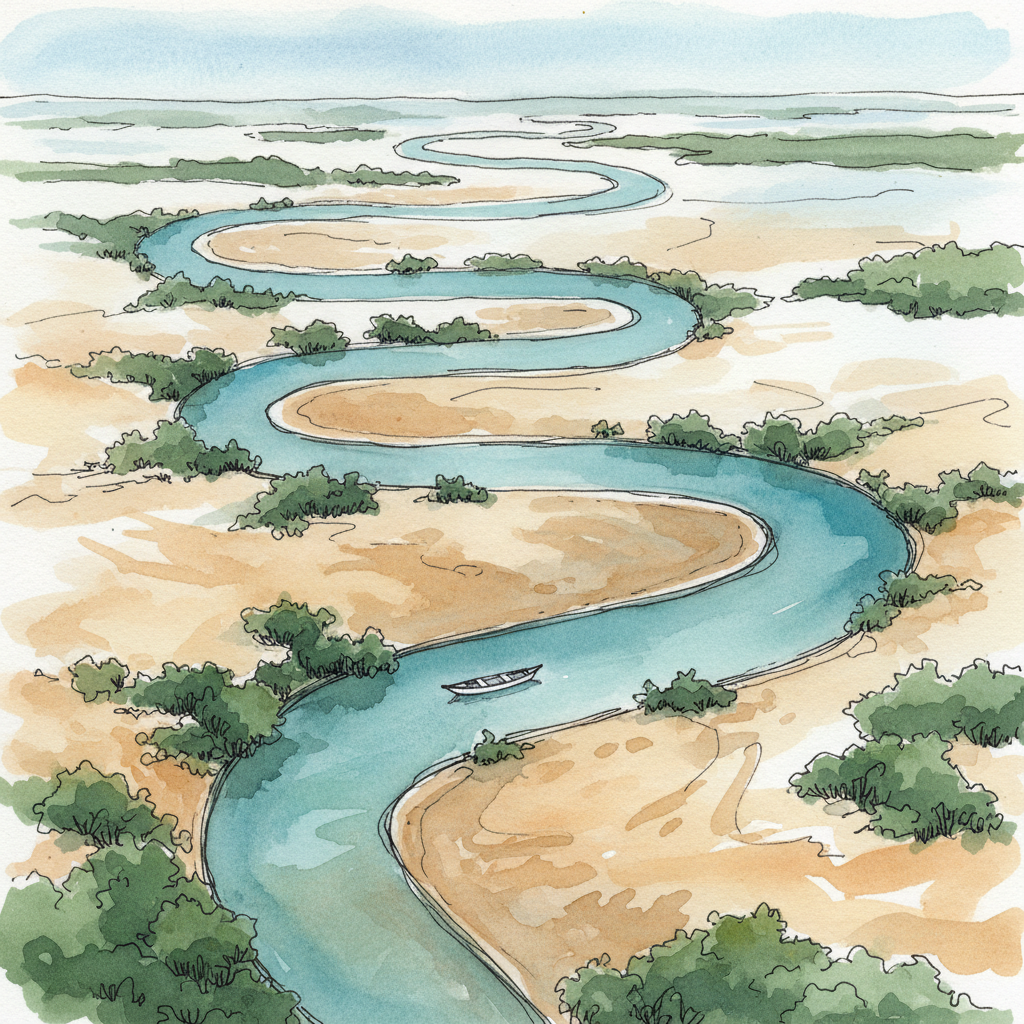
The Saloum Delta, a hundred kilometres south of Dakar, is a quieter kind of wild. Mangrove creeks called bolongs twist through 760 square kilometres of park, and the local Serer communities have been harvesting oysters from the mangrove roots for generations. You can paddle a kayak through it at high tide, or visit the shell islands — mounds of cockle and oyster shells built up over centuries, some standing five metres high.
Four routes into the wild
Niokolo-Koba National Park — the headline act. 80 mammal species including the critically endangered West African lion, 330 bird species, and the recently lifted endangered status that makes it a conservation story worth following. Game drives along the Gambia River, guided walks in peripheral zones, and a network of park rangers who have been defending this territory for decades. The dry season (November–May) is the best time to visit.

Djoudj National Bird Sanctuary — a wetland of 16,000 hectares on the Senegal River delta, a UNESCO site since 1981. Boat tours through the channels take you past thousands of pelicans and flamingos. The best time is November to April, when the Palearctic migrants have just crossed the Sahara. The park was threatened by the giant salvinia weed (since managed) and faces new challenges from the Diama Dam upstream, but remains one of Africa's great birding destinations.

Siné-Saloum Delta National Park — 760 km² of mangroves, bolongs and island villages, a UNESCO World Heritage site since 2011. Kayak tours through the creeks, oyster harvesting from the mangroves, and visits to Serer communities on shell islands. The sunsets over the flat water, with baobab silhouettes, are the kind you want to keep. Only 100 km from Dakar — a weekend escape.
Langue de Barbarie National Park — a thin sand spit at the Senegal River mouth near Saint-Louis. 2,000 hectares of dunes, beach and seasonally flooded wetlands. It became a Ramsar site in 2021 and hosts three species of sea turtle. The 2003 breach, cut to prevent Saint-Louis flooding, widened catastrophically and turned part of the peninsula into an island — a sobering footnote to the park's fragile beauty. Good for long beach walks and birdwatching.
The Gambia's grammar
I sat reading Alexander on patterns — the thousand small agreements that make a place feel whole, the window that catches the afternoon, the door that faces the street.
And I wondered what pattern language a river writes when it has never known a foundation, never met a wall.
Here the Gambia draws its own grammar: a bend for the hippo's wallow, a sandbar for the crocodile. A gallery forest where the chimpanzees follow the fruit. The baobab stores the year's rain in its trunk.
The timeless way, I think, was there first, long before anyone named a corner or counted a rhythm. The savannah does not need a pattern book. It repeats itself until it gets it right, and calls a thousand years a single season.