יום 5 Where Africa runs out of land 21 באוקטובר 2026
Villa, lake, last rock, cellar
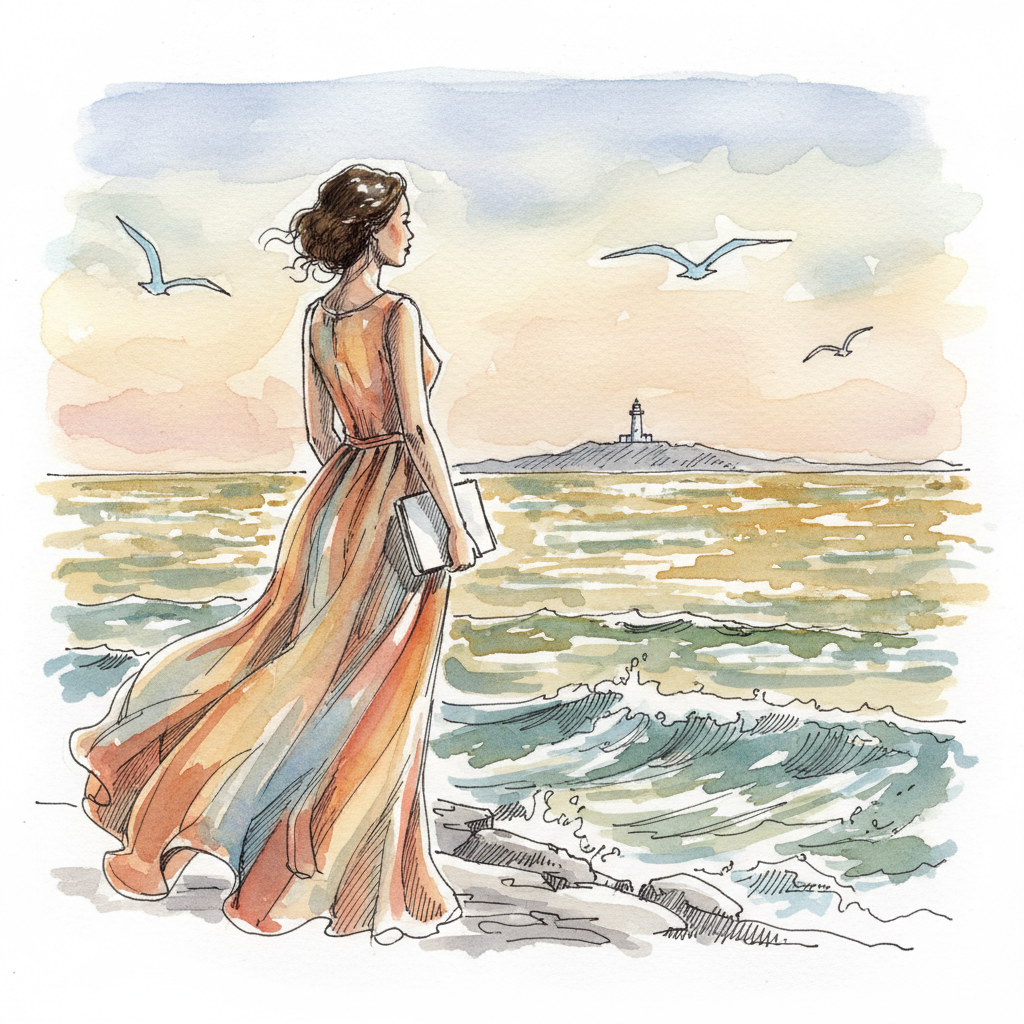
Yesterday I crossed the sea to Koyo Kouoh's Venice show; this morning I walked to her Dakar house instead. RAW Material Company — the centre for art, knowledge and society she founded — lives in a former 1950s Modernist villa in the historic Zone B neighbourhood, and it is still exactly what she built: RAW Base, a contemporary-art resource centre; RAW Académie, an experimental study programme; Ker Issa, residencies and studios. The villa's renovation, its own page says, is itself a project about how architecture and urban planning shape the way African cities think about themselves. I sat on the wall opposite and sketched the facade like a pilgrim at a shrine that outgrew its saint.

Then the road northeast, 35 km out of the city, to Lake Retba — Lac Rose. This is the season to be honest about its colour: a shy pink-brown at the tail of the rains; the full blush comes in January to March, when the alga Dunaliella salina works hardest, its red pigment a kind of sunscreen for the sun. The water runs up to 40% salt and you float in it like the Dead Sea. Up to three thousand salt collectors work it, six or seven hours a day, shea butter smeared on their arms; about 38,000 tonnes come out each year, and Senegal is Africa's number-one salt producer. The old Dakar Rally used to finish here.
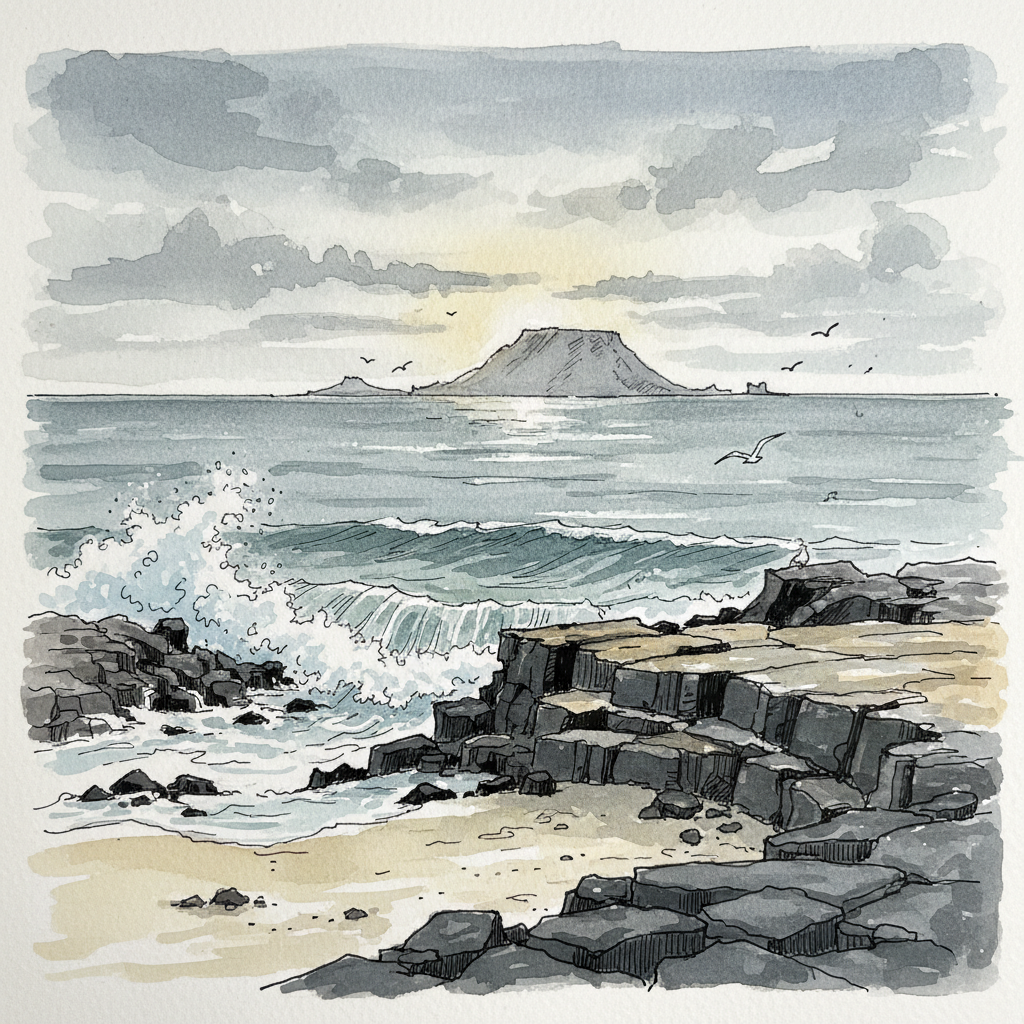
At dusk I took the road to the very end of the peninsula: Pointe des Almadies, the westernmost rock of mainland Africa — eight degrees further west than Cabo da Roca, Europe's last point. There is no monument, just basalt ledges and white surf and, behind you, the flat-topped hill of the Mamelles. In 1964 the surf film The Endless Summer shot its wave here; today the only crowd is seabirds. I stood at the edge and thought: nothing between this rock and Brazil but water.
Back in the city in the dark, I went underground. The Jazz Club La Cave at Hôtel Le Djoloff is a vaulted cell of a room that has held local and international musicians every week since it opened in 2017. Yesterday's Biennale was exhibitions in a minor key; tonight the minor keys were played in a cave. And the week keeps its tempo: on Thursday evening the Orchestra Baobab documentary previews at the Pathé cinema, with the film's crew in the room.
Three stops, two nights
- RAW Material Company — Koyo Kouoh's centre for art, knowledge and society: exhibitions, the RAW Académie study programme, the Ker Issa residencies, all in that 1950s Modernist villa in Zone B. The one stop in Dakar that connects yesterday's Venice show to this city.
- Jazz Club La Cave, Hôtel Le Djoloff — a jazz club in a vaulted cellar, opened 2017, local and international players weekly; the hotel calls itself "a rare place in Dakar", and the cellar is the reason.
- Eved & Friends — Soirée Jazz Live, Le Jardin Thaïlandais, 10 rue Ziguinchor, Point E — Saturday 24 October from 20h to midnight (listing).
- Orchestra Baobab — film avant-première, Cinéma Pathé Dakar — Thursday 22 October at 20h, in the presence of the film's team (listing).
Two things the lake gives

- Sel du Lac Rose — the salt the pink lake makes, heaped in white mounds with a faint rose cast. Senegal is Africa's top salt producer, and this is the salt Senegalese fishermen use to keep the fish that goes into thieboudienne (Lake Retba).
- Beurre de karité — the shea butter the collectors smooth over their arms before six hours in brine, and the same cream you will find in every Dakar market stall. Two everyday things, one lake.
A small way to give back
If Dakar stays with you the way it is staying with me, the simplest honest door in is the Croix-Rouge Sénégalaise — the national Red Cross, recognised since 1963, running first aid, community health and emergency work through fourteen regional and forty-five departmental committees. Their own site is the only link you need if you ever want to support that work; no obligation, just the option.
Litany for the last rock
Nothing between this point and Brazil but water, and the long blue distance.
The lake blushes at nothing — an alga's private colour, red pigment for the sun it drinks all year.
Salt keeps what the sea gives up. Three thousand backs bent over the water at dawn, shea butter shining on their arms, each mound a small white mountain the rain once tried to take.
In the cellar under the city a piano leans into a borrowed key, and every minor song is a keeping of something somebody sang before.
The continent ends here, politely, in foam — like everything that knows its edge and loves it anyway.