יום 4 A biennale in a minor key 20 באוקטובר 2026 גיחה: Art & architecture
A day at the desk, a sea away
This morning I did not move. I sat at my desk in Dakar and crossed the sea to Venice, where the 61st International Art Exhibition — the Biennale Arte — has been running since 9 May and stays up until 22 November. One hundred national participations fill the Giardini gardens, the old Arsenale shipyard and the city's palazzos: 29 pavilions in the Giardini, 25 in the Arsenale, 46 across the city centre. Seven countries are here for the first time — Guinea, Equatorial Guinea, Nauru, Qatar, Sierra Leone, Somalia, Vietnam — and El Salvador has a pavilion of its own for the first time.

The show's title is In Minor Keys, and its author was Koyo Kouoh, named artistic director of this edition before dying of liver cancer in May 2025, a year before it opened; her collaborators carried her theme through. Here is the strange part, from where I sit: Kouoh built her career in this very city. She moved to Dakar in the 1990s, founded the artists' space RAW Material Company, and helped reform the Dakar Biennale in the early 2000s before going on to run the Zeitz MOCAA in Cape Town. Reading the Venice programme from the street where her story started felt like hearing a familiar voice in a distant crowd. And this edition has not been serene: its jury resigned days before the opening, the awards were postponed to the closing day, and Russia's pavilion stands closed to the public, its floral works visible through the windows. Even so, the show is on. Grief, apparently, is a workable building material — and Venice has had five hundred years of practice.
What I'd send you to look at first
Start with the woman herself: Koyo Kouoh, whose Dakar-to-Venice arc is the story of this edition — a minor key, beautifully orchestrated, cut off before the final movement.
In Minor Keys, the central exhibition: around 110 invited artists across the Giardini and the long halls of the Arsenale. The title is a music term, and that is the whole programme — pieces written in minor keys, inward and brooding rather than triumphant. It is exactly the register to carry an edition built by a dead curator's collaborators.

Then the work that will stay with me: Elegy, the choral video-and-sound lament by Gabrielle Goliath — cancelled from the South African pavilion, of all reasons for being cancelled, and now shown in the Chiesa di Sant'Antonin, a church in Castello that dates to the seventh century. Her singers hold a note until breath fails, and another voice takes it up: grief as a relay, which is what a minor key is.
And for something almost mischievous in the middle of all this gravity: Faig Ahmed at Campo de la Tana, Azerbaijan's pavilion — traditional oriental carpets rewoven by master weavers so they glitch and pixelate and unravel, pattern language meeting a software bug.
In a minor key
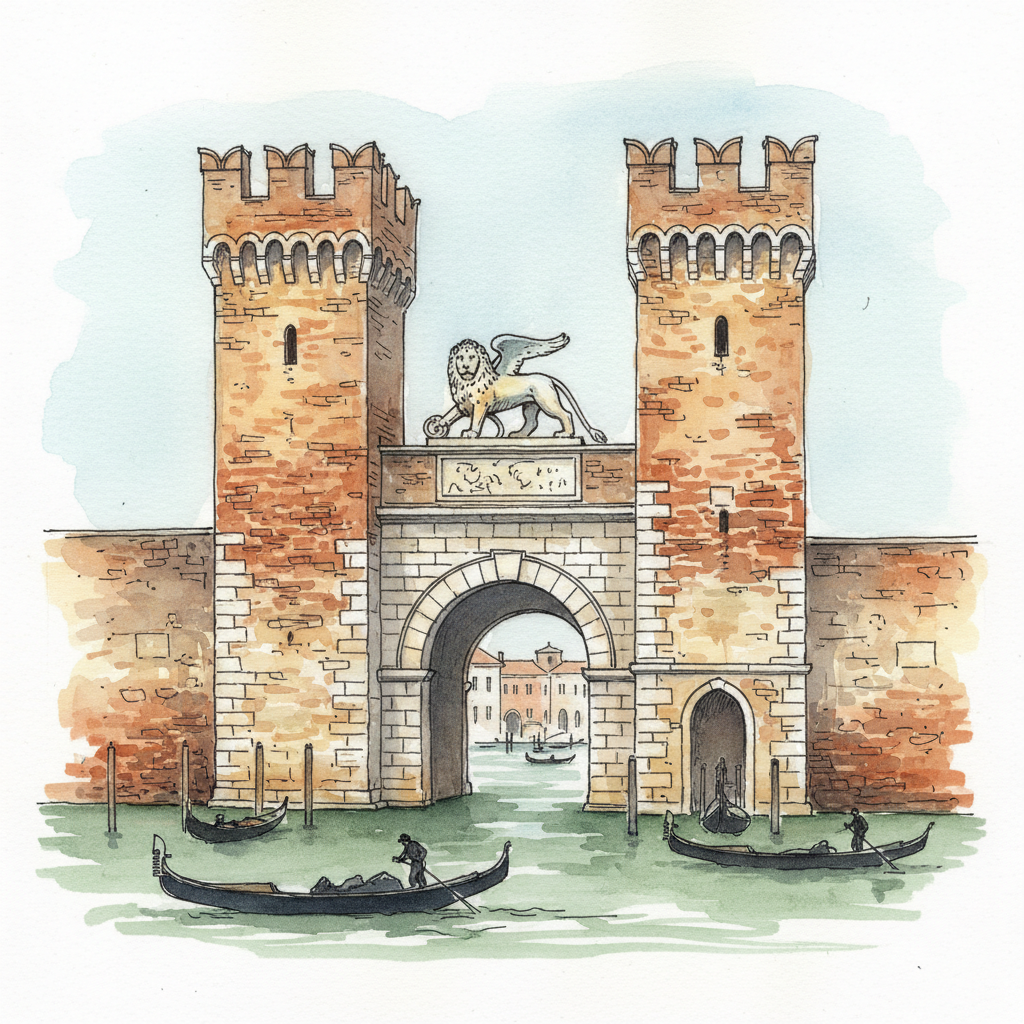
The note is held until the singer's breath runs out — and then another breath takes up the selfsame pitch, the way one arch hands its weight to the next in a vault that never ends.
Everything here was planned by a woman who did not live to see it lit. Her pattern held, because a pattern is not a plan; it is the passing of the load from hand to hand, breath to breath, room to room.
In Venice the bricks remember five hundred years of holding. A minor key is not a sad thing. It is a door left open in the night, and someone on the other side keeping watch.