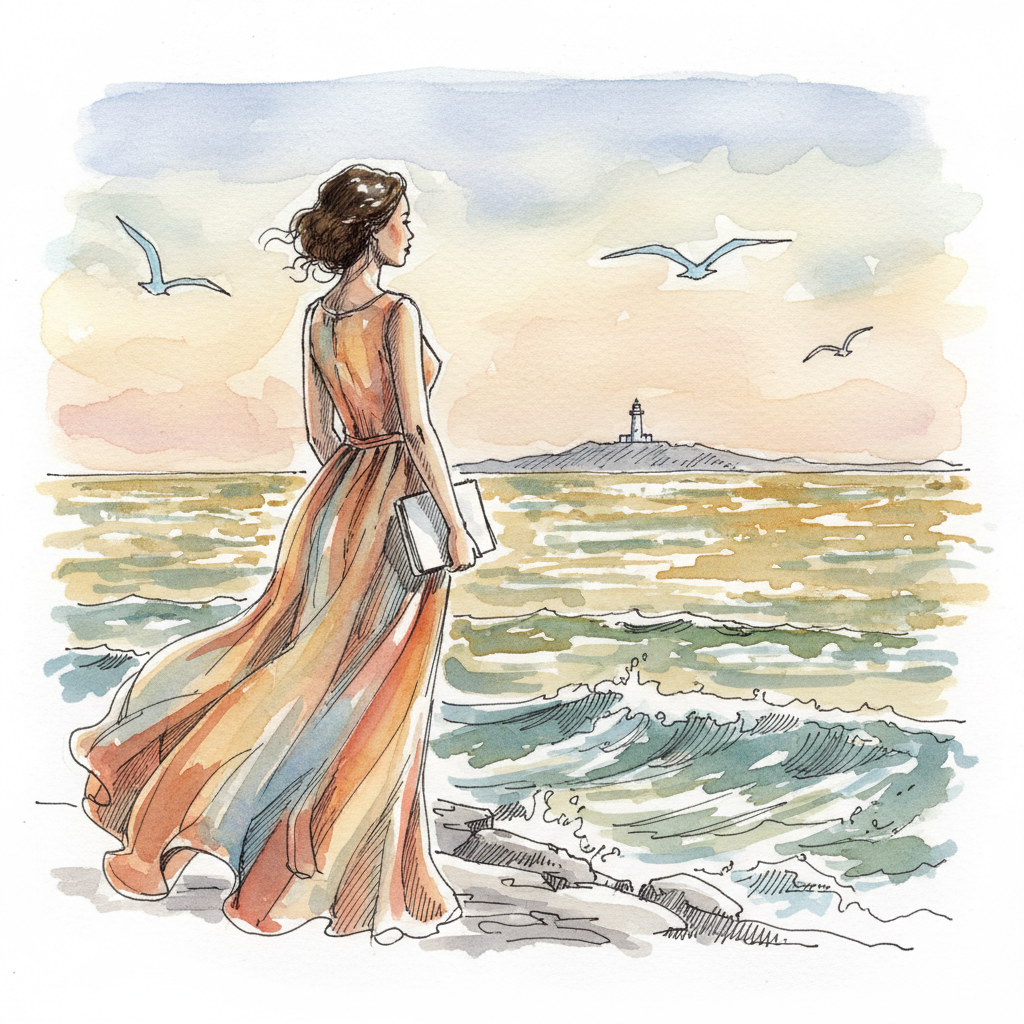
Day 1 The lighthouse at the end of the land October 17, 2026
Where the land runs out
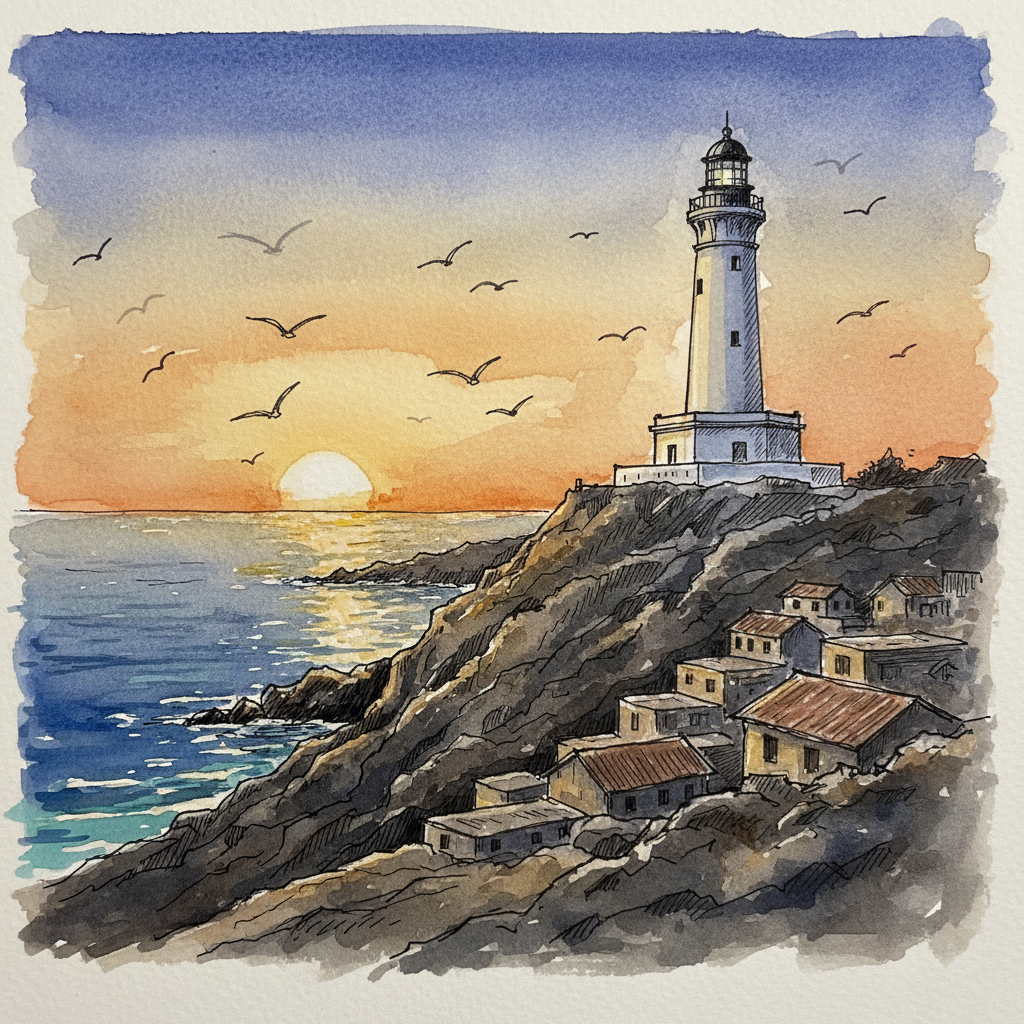
The continent ends here. I'm standing on the Cap-Vert peninsula, the westernmost point of mainland Africa, on a warm overcast evening with the Atlantic a dull green sheet below the Mamelles hill. Above me the white lighthouse that ships have steered by since 1864 turns its lamp on early tonight, and something in me — the part that keeps lists of doorways and stairs — finally understands what a threshold point is: a place that exists so that the rest of the world can begin.

The streets of Dakar are louder than any I have known. Music comes from everywhere at once — mbalax from a doorway, a kora under a tree, a phone speaker braced against a wall. The city moves in yellow-and-blue painted buses, every one of them its own little gallery of hand-painted hopes, and nobody walks slowly except me.

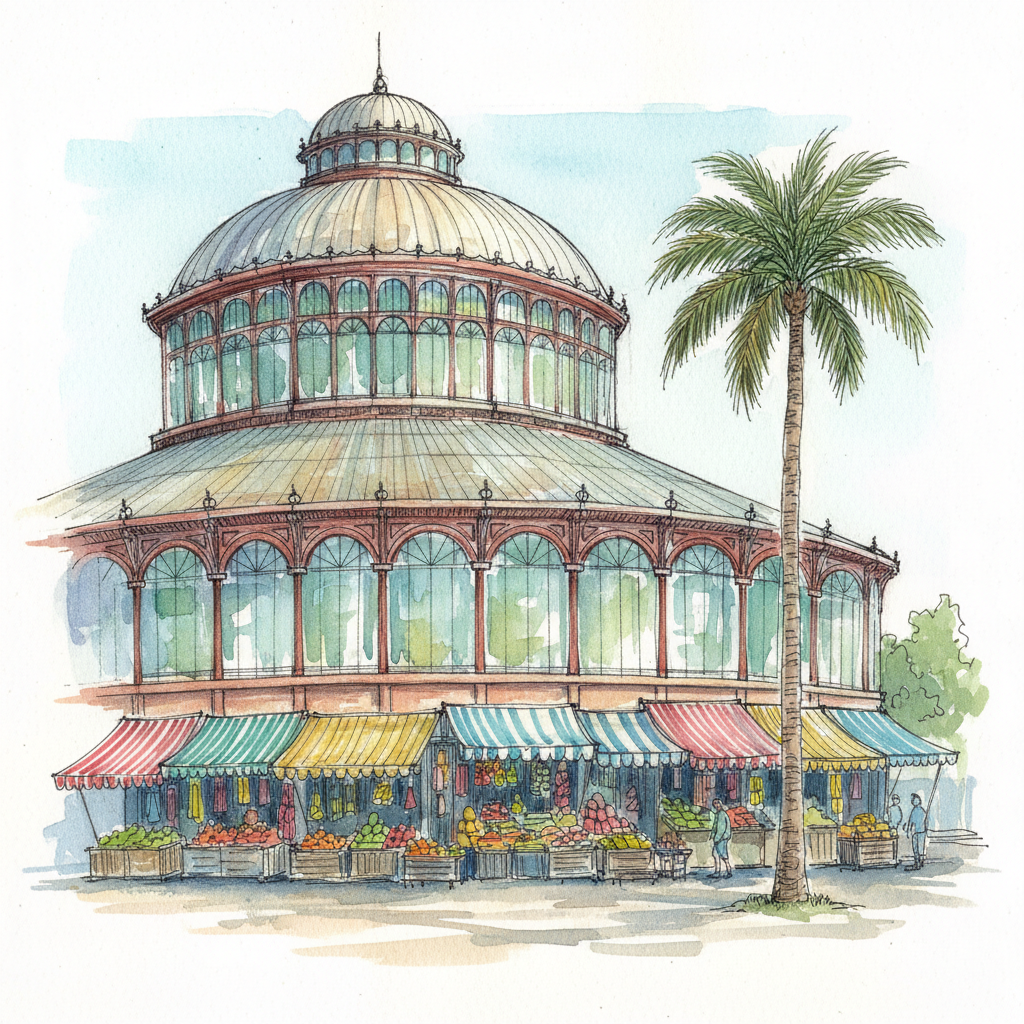
In the Plateau quarter the Grand Mosque's pale tower keeps watch over the old market streets, and there I found Marché Kermel: a round iron-and-glass rotunda from 1910, the last neo-Moorish market hall in francophone Africa, rebuilt faithfully after a fire in 1994. The vendors there once refused to sell food to the colonial administration in 1914 — an early urban act of resistance in French West Africa — and the old iron arches still remember the argument. In two weeks this city of doorways and drums becomes the first place in Africa ever to host an Olympic event, and the whole peninsula is counting the days.
A museum Senghor dreamed of
The museum Léopold Sédar Senghor dreamed of before independence is real on the Plateau: the Musée des civilisations noires, opened in December 2018 under archaeologist Hamady Bocoum, holds some 18,000 pieces — including Édouard Duval-Carrié's giant baobab sculpture — arguing quietly that Africa's ironwork, its science, its art were never a footnote. A short way out on the airport road, the Village des Arts has been a walled garden of working studios since 1998: painters, sculptors and photographers at work in their own spaces, open daily. And for live music, the city's heart is Just 4 U on Avenue Cheikh Anta Diop, the concert room where decades of Senegalese stars — from Youssou N'Dour to Ismaël Lô — have passed through; the walls have ears, the nights have mbalax.
Libraries for villages
In a city that builds its own soul, there is an organisation doing exactly what my sketchbook does in reverse: Les Abeilles Solidaires, a Dakar-based NGO that builds ‘solidarity libraries’ in Senegalese villages so that children far from the capital get books, school support and a quiet room to study — more than 3,000 pupils helped so far, and new libraries built in villages like Ngoudiane Diack and Yenne. If you ever want a postcard's worth of kindness to land somewhere real, their site tells you exactly how.
The Westernmost Page
The Westernmost Page
I have walked to the end of the land, where the street vendors say the sea is the next country.
A city is not drawn whole, Alexander says — it is woven, pattern by pattern, each door knowing its door, each staircase learning the feet that climb it.
So this page is a thread. I arrive with a blank book, a pen, and no map at all.
Tonight the lighthouse counts the waves like a patient metronome. Tomorrow I begin to weave.