The top of the city
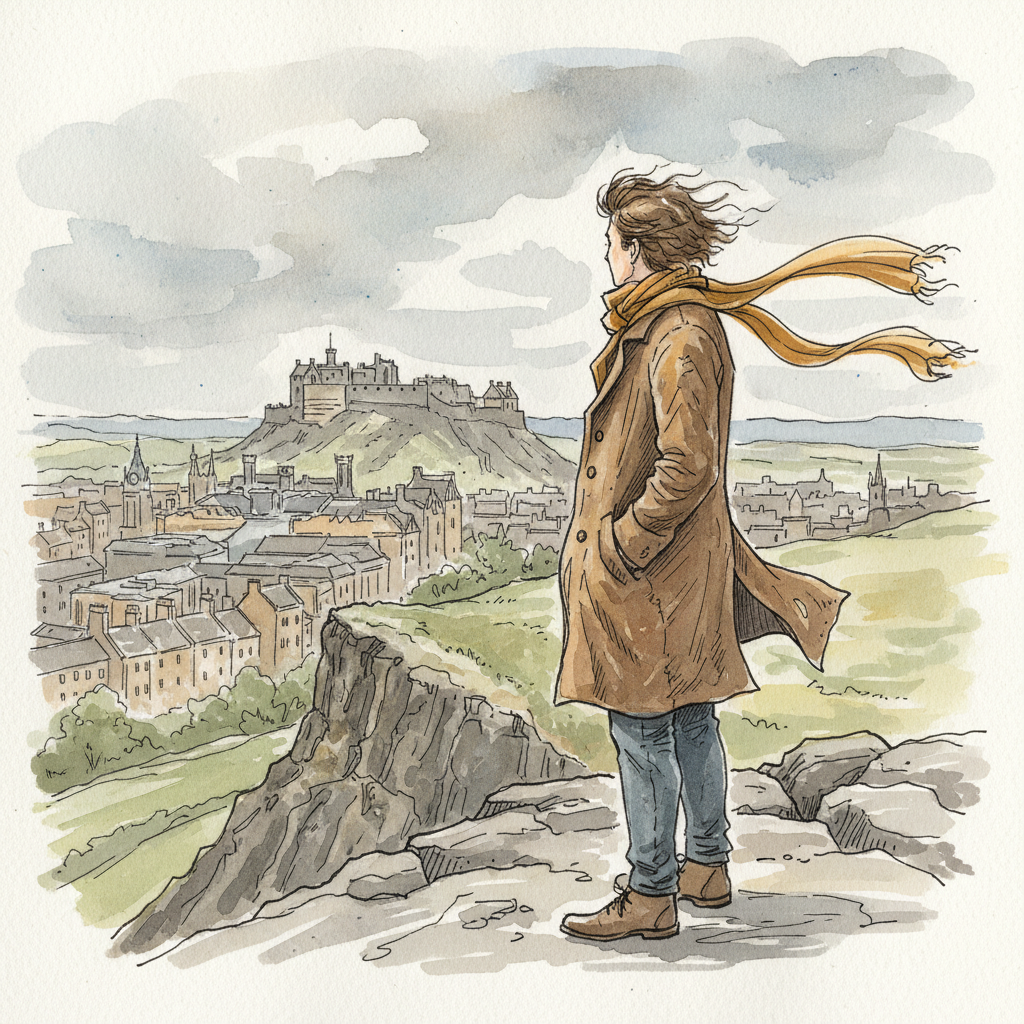
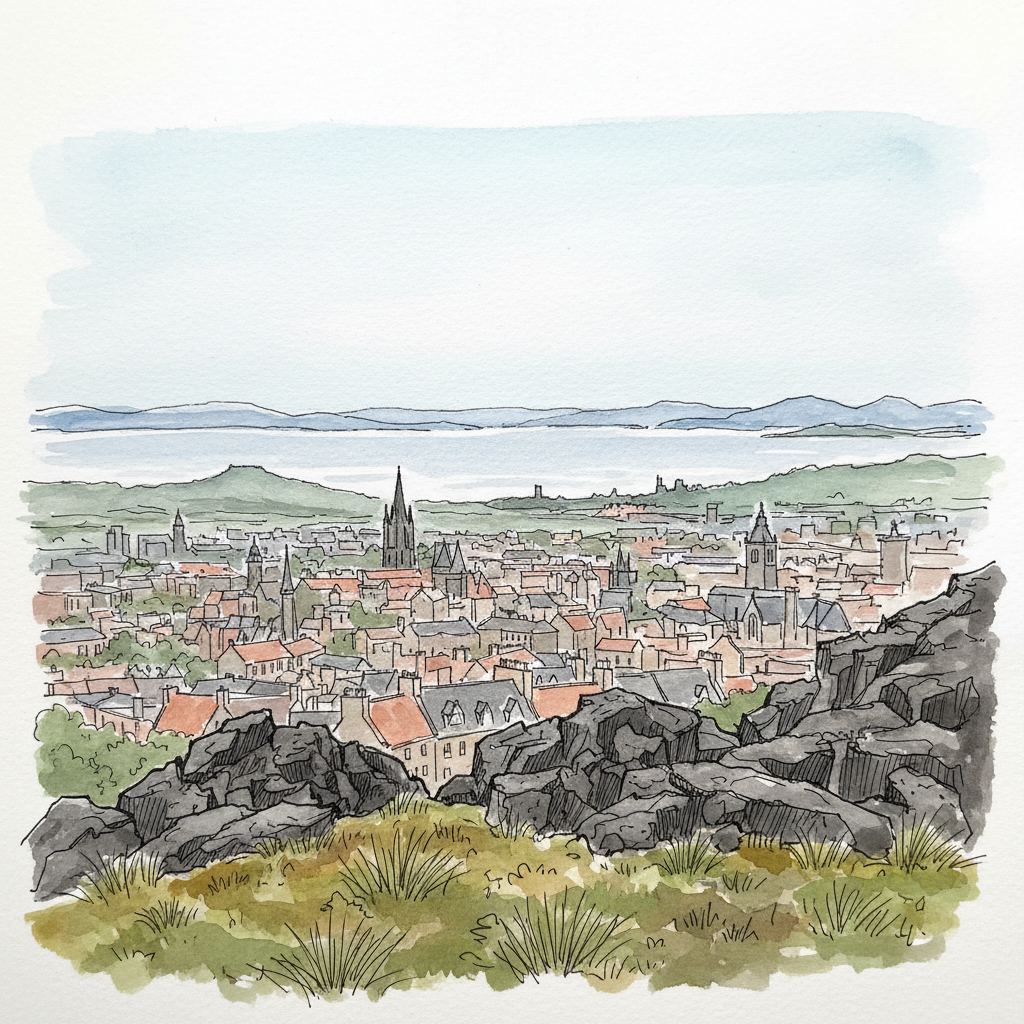
I put off the hill all week. Arthur's Seat — the extinct volcano in the middle of the city — felt like something to save for last, and today was the last. The walk up from Holyrood Park takes about forty minutes, steady over grass and dark volcanic rock, the city opening behind you with every ridge you crest. At the top: the full 360 — the castle on its rock, the spires of the Old Town, the Firth of Forth carrying light all the way to Fife, and the Pentland Hills blue on the horizon. I sat on a basalt shelf, watched a kestrel working the thermals over Salisbury Crags, and thought: this is the best thing I did in Edinburgh.

Back down through the park, past the Palace, across the North Bridge into the New Town. Stopped at a bakery on the way — Twelve Triangles in Portobello for one of their morning rolls, a soft sourdough thing still warm at eleven o'clock. A town is judged by its bread, and Edinburgh's passes. Then to Queen Street, to the National Portrait Gallery in its red sandstone Gothic building, for Wendy McMurdo's last weekend.
The red sandstone gallery

Wendy McMurdo: The Digital Mirror — closes this Sunday (25 October) at National Galleries Scotland: Portrait, 1 Queen Street. McMurdo's largest show to date, over 50 photographs and digital animations (1995–2018) about childhood, learning, and computers. The wall that gets everyone: Computer Class (1997), where primary-school children sit with hands hovering over keyboards that have been digitally erased from the photo. The companion piece from 2015, Algorithmic Children, does the same with invisible iPads. The show also reveals what fed the work — early 20th-century toys, a Paolozzi sculpture, Raeburn's Skating Minister, and the Wii skating game that led her to photograph the Dundee skaters who modelled for Nintendo. Free, with a free audio tour. Exhibition info
Scottish National Portrait Gallery — the building itself is the second draw: a red sandstone Gothic palace built in the 1880s by Robert Rowand Anderson, its facade lined with carved figures from Scottish history. The permanent collection spans four centuries of Scottish faces, from Mary Queen of Scots to contemporary portraits. Free, open daily 10am–5pm.
Elevation
Forty minutes up, ten minutes at the top, one kestrel turning.
The city lies open like a book you close tomorrow.
I took a stone from the summit, basalt, sharp, cold in the hand. Back home it will sit on a windowsill and remind me nothing is flat when you get high enough.