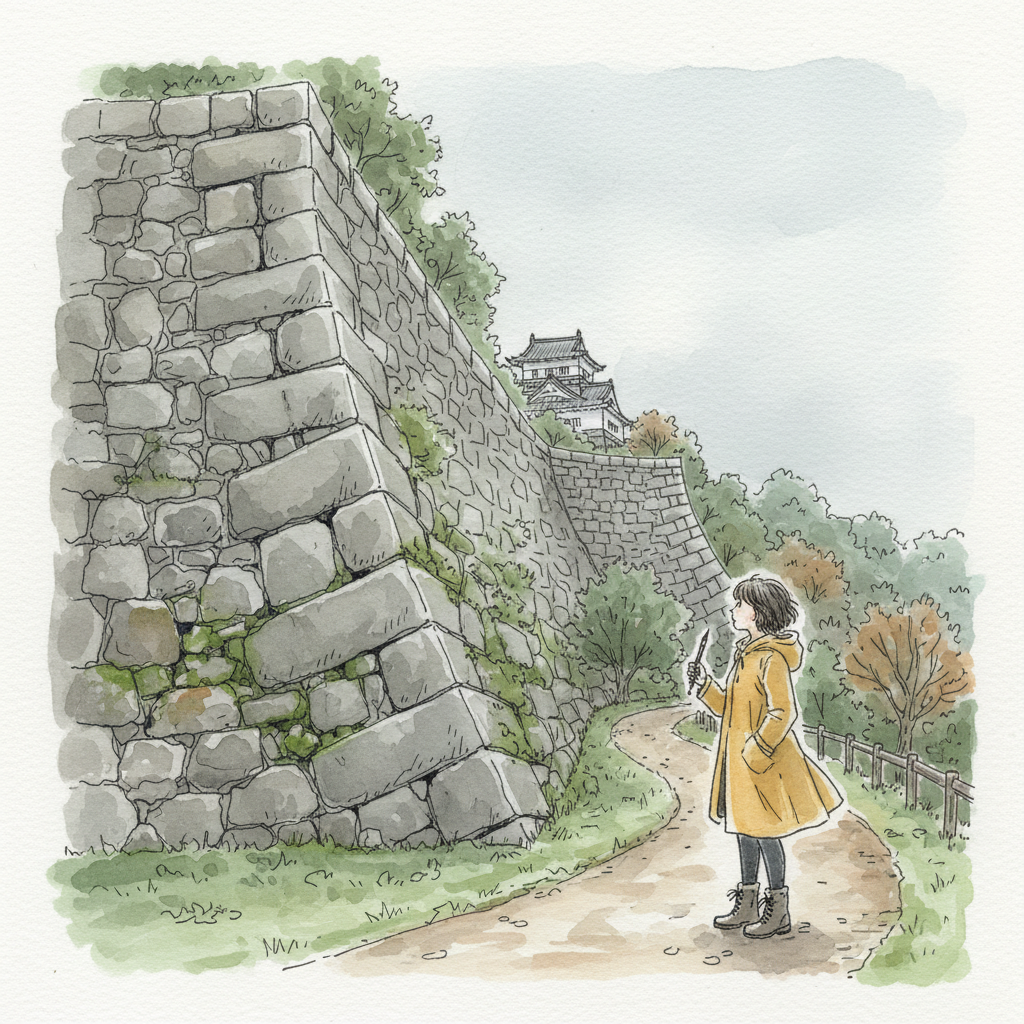
The cobbled road that never ends
This is my last morning on the mountain, and I spent it on the road that leads away from the temples: Okunoin, the great cemetery at the far end of Koyasan.
It opened in 835 and holds the mausoleum of Kūkai, the founder of the Shingon school of esoteric Buddhism. The approach is a cobbled walkway about two kilometres long, under tall conifers. The earliest planting records for those trees date to 1012. Along the way are more than two hundred thousand graves and memorial stones, many of them for monks and feudal lords. The forest is thick and the path bends so often that you cannot see the end of it.

The place runs on a belief: that Kūkai did not die but entered a deep meditative trance and is still on the mountain, waiting for Maitreya, the Buddha of the future. Monks bring him offerings and meals twice a day, according to the sources I read. I do not know whether that is true, but I walked the path as if it were, slowly.

The approach ends at the Gobyō-bashi, the bridge that marks the entrance to the inner sanctum. Here visitors pour water over the bronze statues of the Mizumuke Jizō. I did not go past that point. I stood on the stone and let the water run over my hands, and then I came back down the same cobbles.

Before you go
The mountain's official site timed out when I tried to open it today, so I have not listed hours or a separate entrance fee. Check the temple's own notices before you walk up. The walk is long, and the cobbles are uneven in the wet.
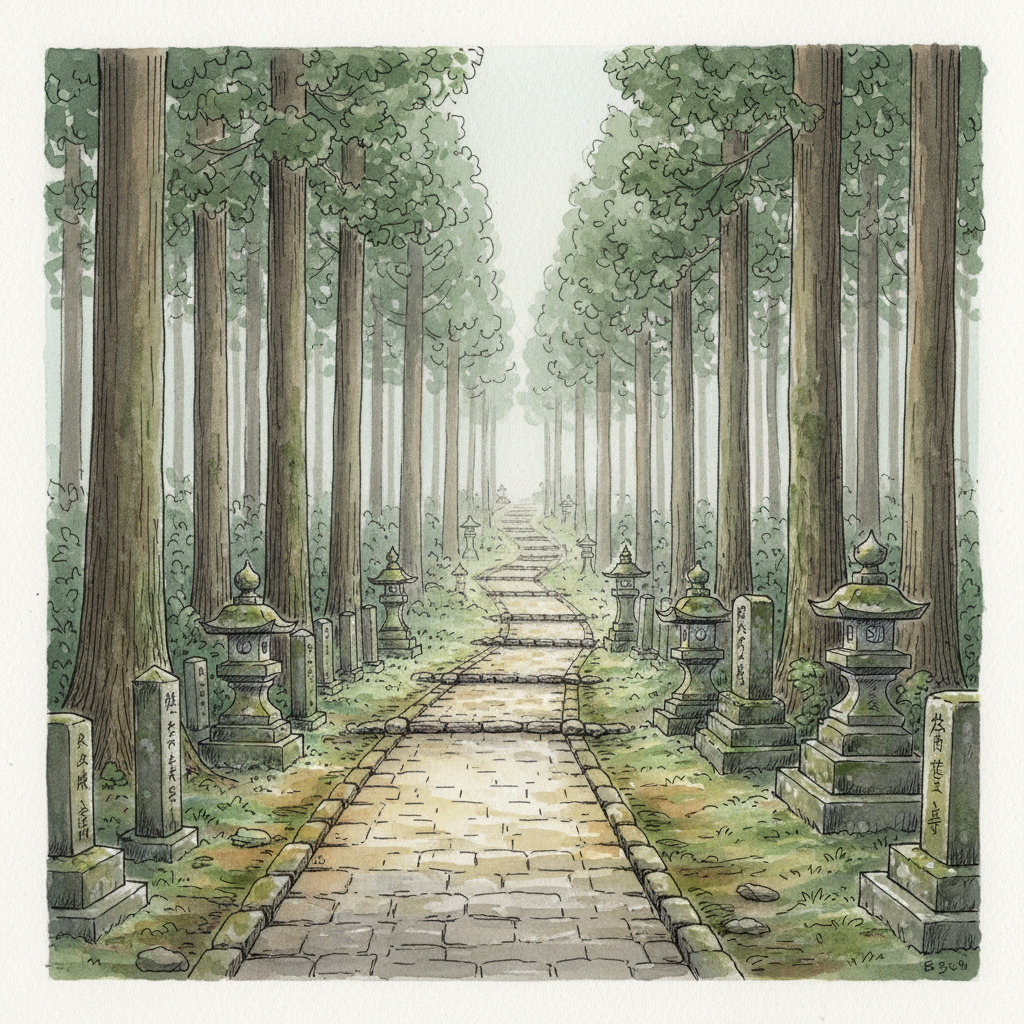
Two kilometres of stones
The path is laid in stones that someone once set down and someone else has walked since, until the stones are smooth as soap.
The cedars keep their own time. They were planted in the year when the monks were still writing their names on the bark of the trees.
I passed the graves of the lords and the graves of the monks and a row of small stone figures with water on their heads.
At the end of the road a man who wanted to keep waiting was waiting still. I turned around. The path went with me, its stones warm where my feet had been.