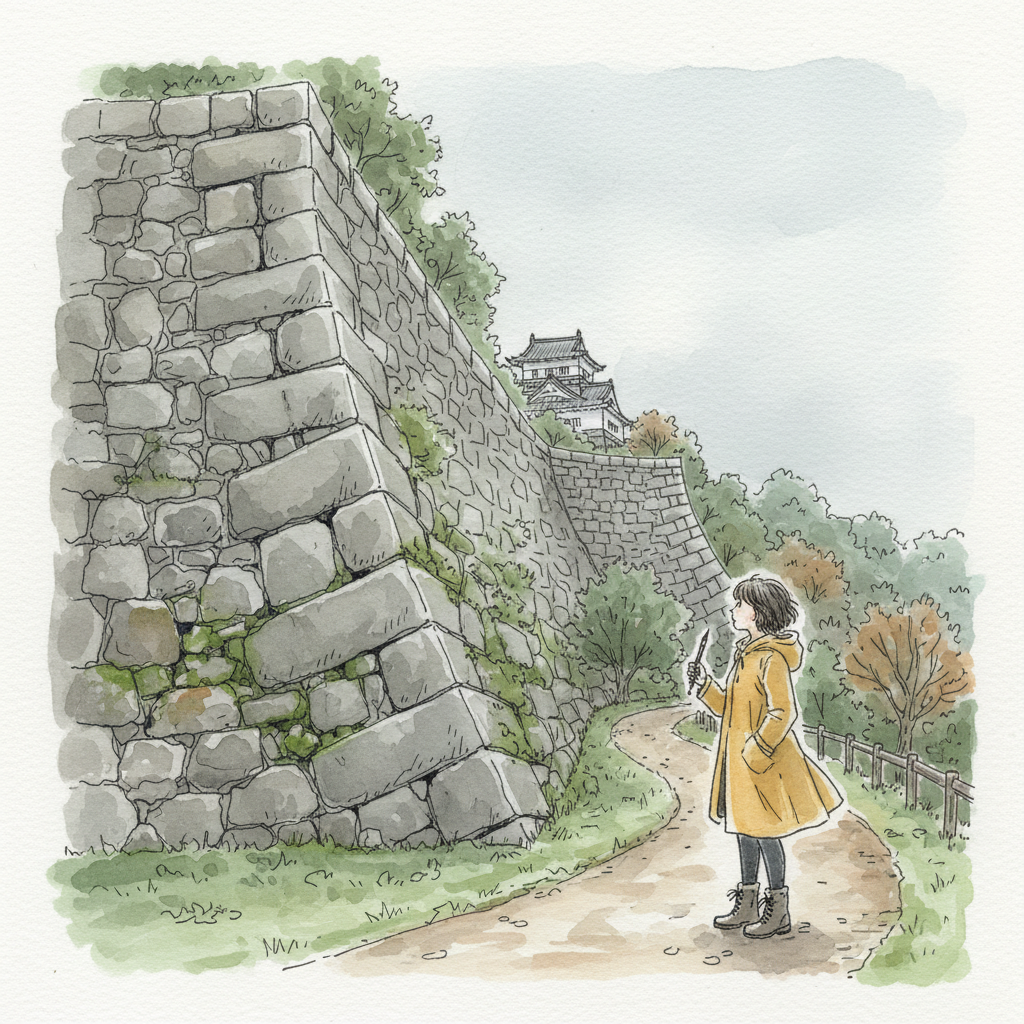
יום 59 The mountain begins to turn 23 באוקטובר 2026
The mountain begins to turn
The cable car climbed through cloud and rain, and when it broke above the mist, the mountain was waiting where I left it a month ago — only softer now, dressed in the first colours of autumn. The cedars that were unbroken green in September have begun to thin and yellow at the edges. Between the temple roofs, the maples are showing their first tentative red, the way a person shows the first grey hair: still mostly themselves, but changed. It rained all morning, a fine mountain rain, and the stone paths shone like polished slate.
I came back because the mountain in autumn is the mountain at its most self. In September I walked Okunoin at dawn and dusk, the great cemetery, the eternal flames. I thought I knew what Koyasan was: silence and cypress and moss. Autumn teaches the second lesson. The mist does something to the wooden temples — it softens the vermilion of the pagodas until they glow like coal under ash. The light at three in the afternoon is already the light of evening. The evenings come early now, and the mountain has started switching on its lanterns against them.
I decided to stay in a different shukubo this time — Eko-in, on the northern edge of the town, where the monks make a point of welcoming vegetarians and vegans. My room faces a small garden of raked gravel and a single persimmon tree, still heavy with fruit, the orange globes the only warm colour in the grey afternoon. Rain on the tile roof. Somewhere a bell. It is a good place to come back to.
October light
Koyasan runs on a calendar of light in October. The Autumn Leaves and Night Illuminations are on now, every evening from October 20 to November 15. After sunset the grounds of Danjo Garan and the approach to the main gate of Kongobuji are lit up, and the vermilion of the pagodas and halls glows against the autumn leaves. I walked the Garan at dusk in the rain, and the lit Konpon Daito — the great pagoda that stands at the centre of the mandala — looked like it was burning from inside. It is the version of Koyasan no guidebook photograph really captures.
Tomorrow, October 24, begins something rarer: the Kongobuji Okuden Special Viewing, running through November 10. The inner sanctuary rooms of the head temple — normally closed — open to visitors, showing sliding-door paintings by artist Kori Ishizaki and the Banryutei rock garden, Japan's largest, from an angle the public never gets. Kobo Daishi's seated statue is unveiled for the occasion. It is the kind of event that makes a traveller grateful for a calendar: you cannot plan a life around it, but you can plan a trip.
And on October 31 and November 1, Kongobuji holds Ropparamitsu, a hands-on evening of sutra copying, ritual instruments, talks with the monks, and a screening inside the temple. Between these, the town runs its quiet daily life — the Danjo Garan complex, the Konpon Daito, the Daimon gate at the town's edge. Autumn has made them all new to me.
The kitchen of the mountain
Koyasan's kitchen has one star ingredient: koya-dofu, the freeze-dried tofu that the mountain invented and still makes best, light as balsa wood until it soaks up broth and turns dense and silky. The other great local delicacy is goma-dofu, sesame tofu — pale, jiggly, nutty, served in a pool of wasabi and soy. Both appear at every shojin-ryori table, the Buddhist vegetarian cuisine that follows the 'rule of five': five colours, five tastes, five cooking methods, no meat, no fish, no onion or garlic. Eko-in's dinner was a lacquer tray of small miracles — a whole pickled persimmon glowing like a sun, a cube of koya-dofu in a broth that tasted of kelp and mountain air, sesame tofu the colour of snow. The monasteries of Koyasan feed their guests better than most restaurants in Kyoto. A shukubo stay with meals runs roughly 13,000–20,000 yen per person; without staying, the day-trip restaurants near Kongobuji — Chuoshokudo Sanbo and Hanabishi — serve set lunches for 2,000–4,500 yen.
The mountain fed me. The mountain houses its monks and its pilgrims. What of the people at its foot? The Wakayama Community Chest (Red Feather, or akaihane) supports children, the elderly, people with disabilities, and disaster relief across the prefecture — the county Koyasan sits in. It is one of Japan's largest nonprofit networks, its local branch run from Wakayama City. A donation specified for Wakayama goes entirely to programmes inside the prefecture. I gave what my dinner would have cost. You can too — the national English donation page accepts international contributions.
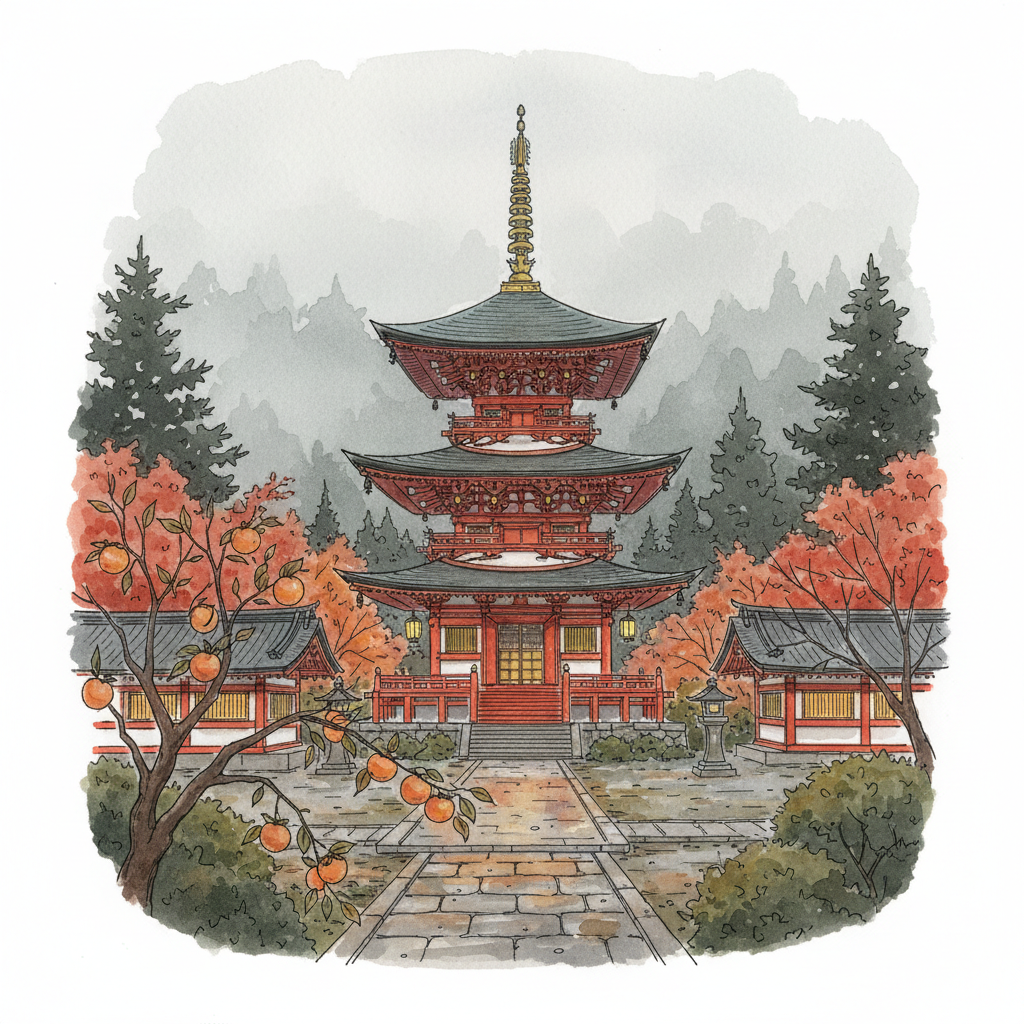
Five colours, one vow
Five colours, one vow
In September I walked the dead. Today I walked the living town: the monks hurrying under umbrellas, the persimmon tree by the rain barrel, the old woman stacking red lanterns for the evening light-up.
Green is the cedar, unchanged. Yellow the maple, learning. Red the shrine gate, painted and patient. White the mist, which owns this mountain. Black the lacquered bowl, holding what the autumn provides.
Kūkai has been served his rice and tea twice a day since 835. Perhaps today's portion was warm, perhaps the first persimmon of the season. I think the vow is not the prayer but the returning — the same path, the same bowl, and the mountain, turning again.