יום 44 The bridge that knows how to drown 8 באוקטובר 2026
The last clear stream
I came down from Kochi City on a train that hugs the coast for half an hour before turning inland, and by the time the windows filled with river valley — green slopes, the glint of water through bamboo — I knew I'd arrived at something different.
Shimanto City is really two settlements sewn together: the old castle town of Nakamura and the river villages that line the Shimanto itself. What makes the river famous is what it lacks. No dams. No weirs. The Shimanto runs 196 kilometres from the mountains of western Shikoku to the Pacific without a single structure holding it back, one of only three free-flowing rivers left in Japan. They call it Nihon saigo no seiryu — Japan's last clear stream — and the water lives up to the name: the colour of pale jade even under an October sky with cloud building over the hills.
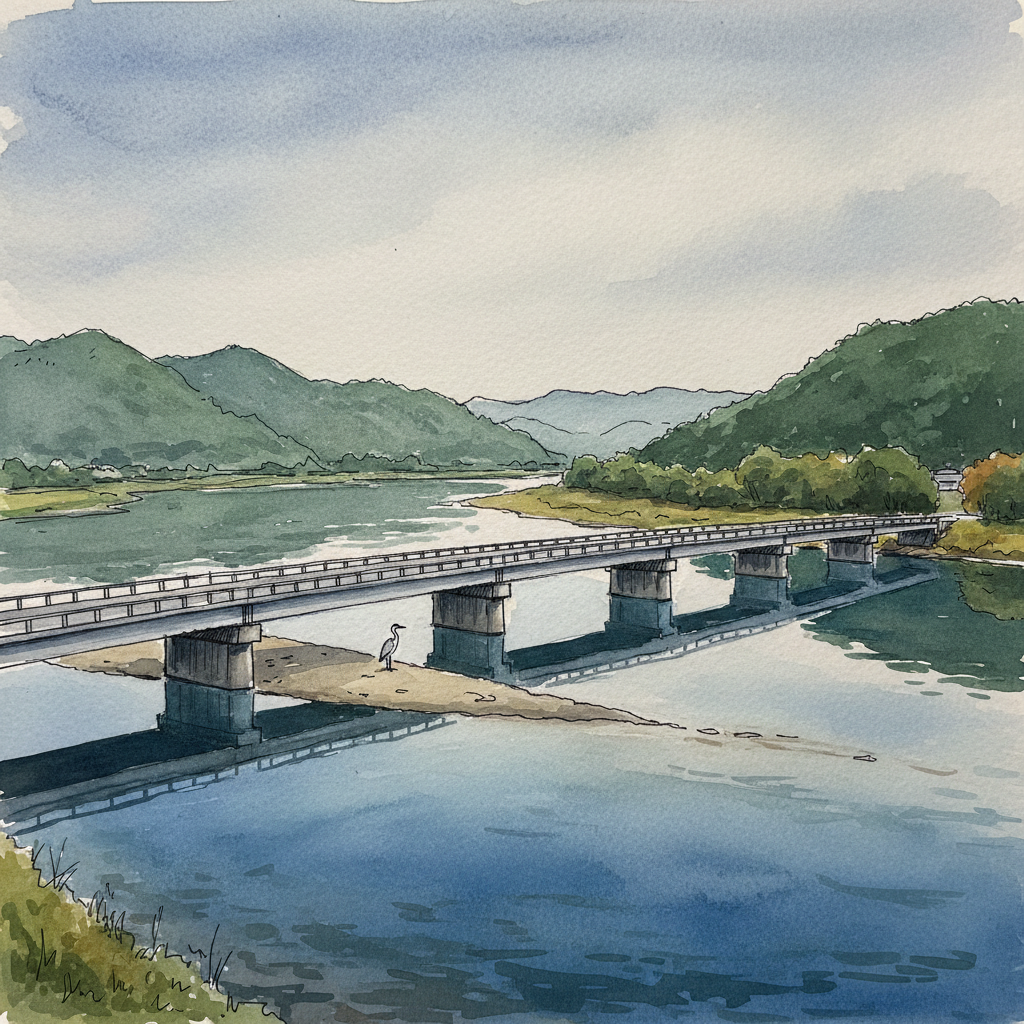
Its most famous feature is what happens when the river floods. The chinkabashi — sinking bridges — are built without guardrails or parapets, and when the water rises they simply disappear beneath it. There are forty-seven of them along the main river and its tributaries, low concrete slabs that a car can cross at a crawl and that a flood can swallow whole without a fight. The prefecture has designated them cultural properties — not despite their habit of drowning, but because of it. A bridge that surrenders instead of obstructing: I can't think of a more Shimanto idea.

Nakamura's layered past
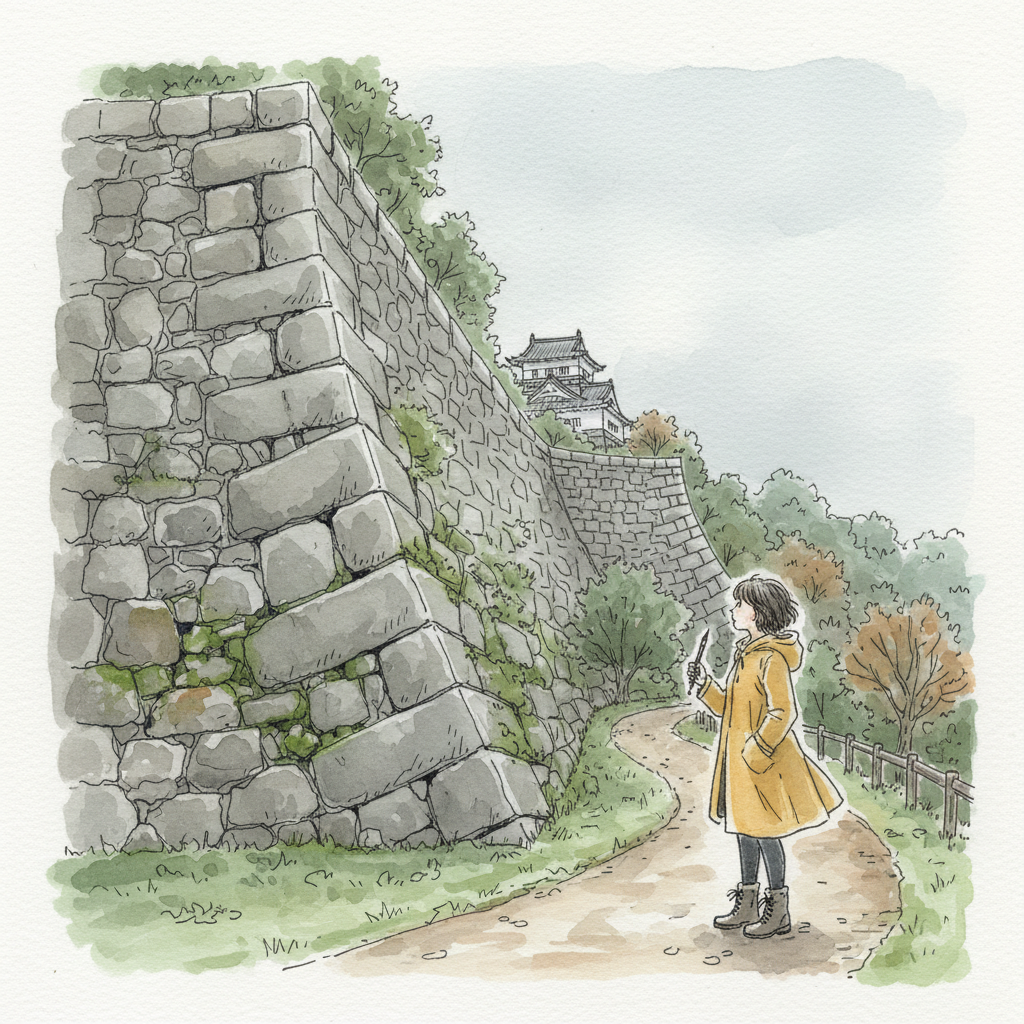
The heart of Shimanto City is the Nakamura district, which was the castle town of the Ichijo family — a junior branch of the Fujiwara regents who ruled Japan from Kyoto. Ichijo Norifusa fled Kyoto during the Onin War in 1468 and established a provincial court here, and the town grew around it. The site of the castle is now Tamematsu Park: a hillside with stone foundations, a reconstructed turret, and a long view over the Shimanto valley. The Shimanto City Museum on the same grounds holds a collection of local archaeology, river culture and daily life.
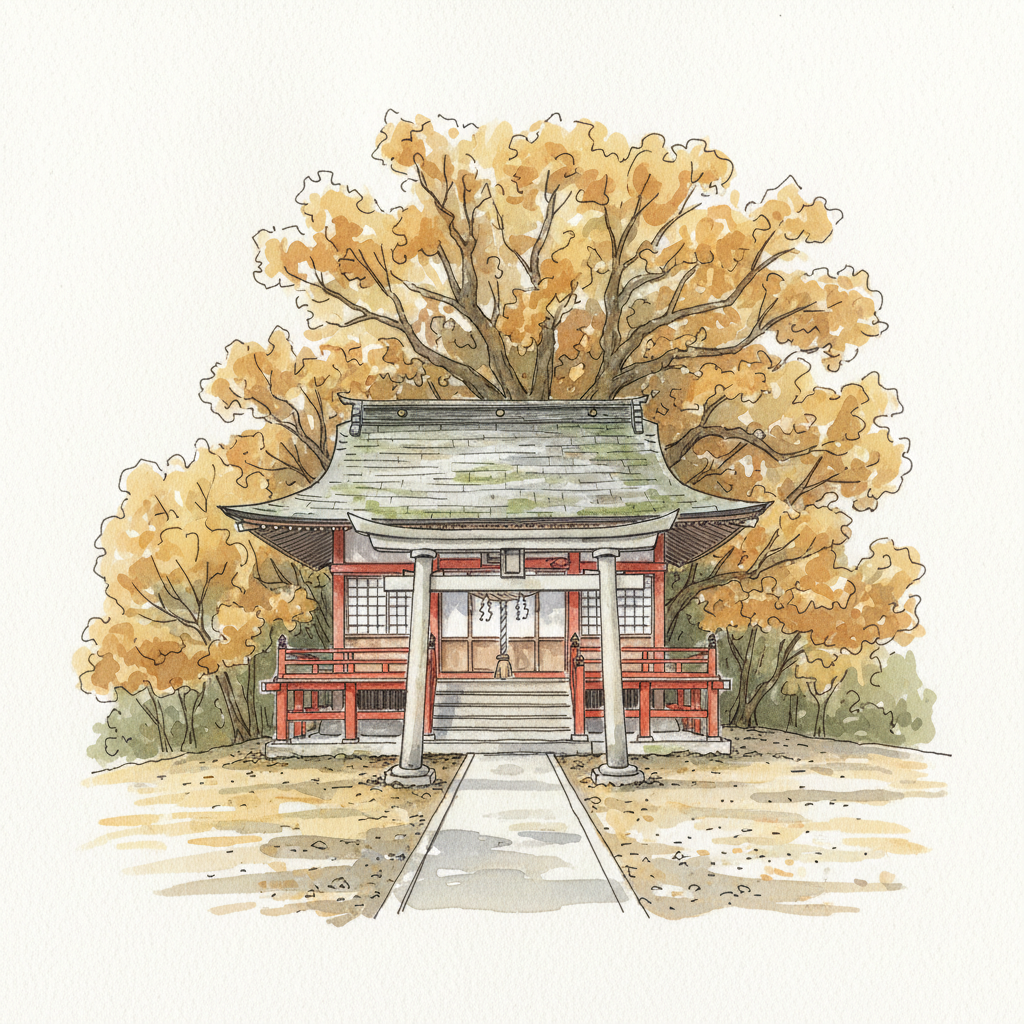
A few blocks south stands Ichijo Shrine, built in 1862 to honour the family that gave the town its character.
At the Shimanto City Hall end of town, the Shimantopia cultural centre runs a steady programme of concerts and events. On October 12 there's a marimba-and-piano concert; the Keion Dance Fest appears on the calendar too. Not a destination on its own, but the kind of noticeboard that reminds you a town of thirty thousand has its own quiet cultural pulse.
What the river gives
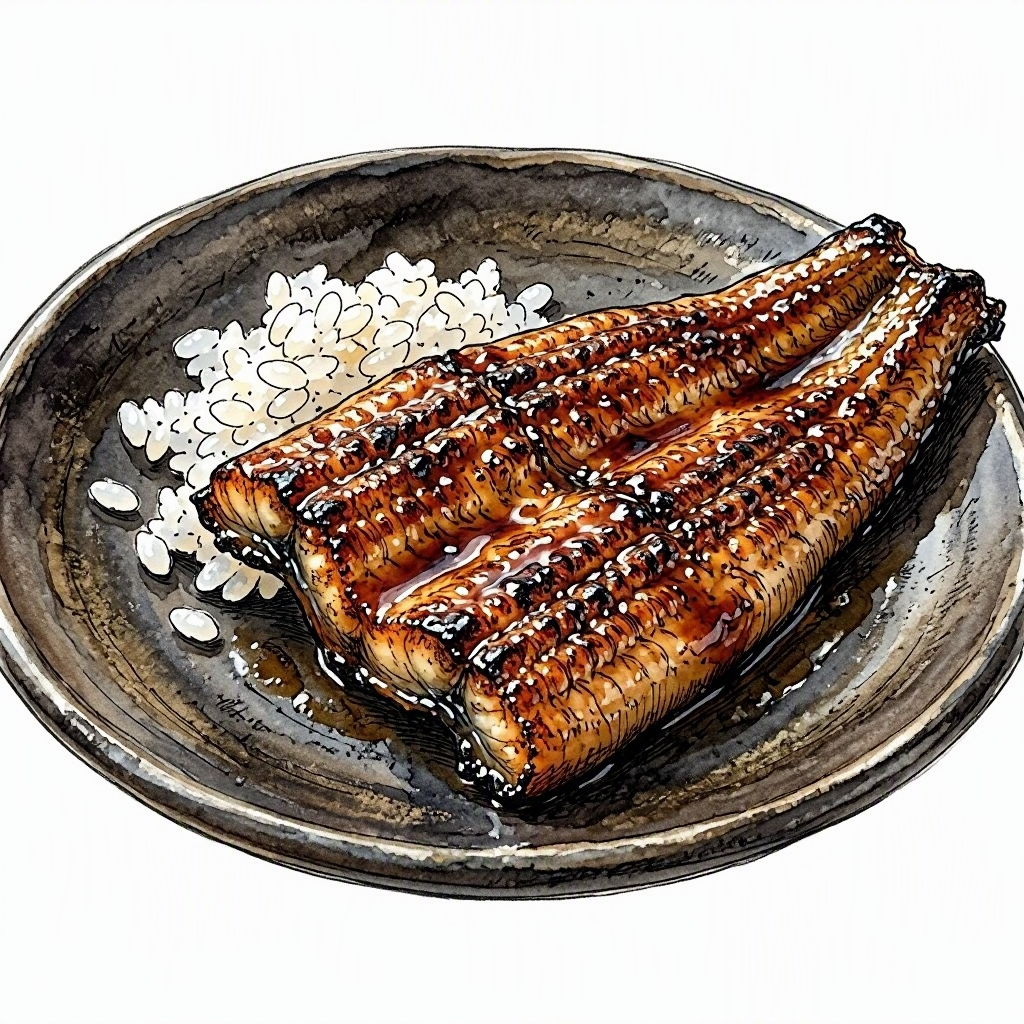
The Shimanto's clean water feeds a small but serious food culture. The river's signature is unagi — wild eel, charcoal-grilled and lacquered with a sweet-savoury sauce that locals guard as a family recipe.
Then there's ayu — sweetfish — which only thrives in water this clean. Salt-grilled whole, it has a faint melon-like fragrance from the algae it feeds on, and the flesh is fine-grained and delicate. Ayu season peaks in summer, but you can still find it through October.
The river also produces nori (seaweed) near its mouth, and the surrounding mountains yield yama no sachi — mountain vegetables harvested by the families who've worked these slopes for generations. The woman on the bicycle at Iwama Bridge was carrying warabi and zenmai in that basket.
Keeping the last clear stream clear
The Shimanto River Foundation (公益財団法人四万十川財団) is the public-interest body that works to keep the river free-flowing and clean. Its work spans riverbank cleanups, water-safety education (lifejacket rentals, swim-awareness programmes for local children), forest conservation in the watershed, and environmental learning for schools — all of it directed at the one goal that matters here: that the Shimanto stays undammed and unpolluted.
You can support them through the Shimanto River Fund — a dedicated giving fund established in 1994 — or by becoming a member of the foundation (individual memberships start at ¥1,000 per year).
The river has never been told to stop
In the castle town they built their bridges low so the flood could take them without a fight.
The Shimanto has no memory of a dam and no grudge against the sea it is becoming.
A woman cycles across a concrete slab that knows how to drown — her basket piled with wild leaves she gathered somewhere the river has already forgotten.
Forty-seven bridges, each one ready to be nothing for a while.
And the herons, who have always known this river, stand in the shallows where the water is exactly as deep as it wants to be.
It is not trust exactly. It is something older.