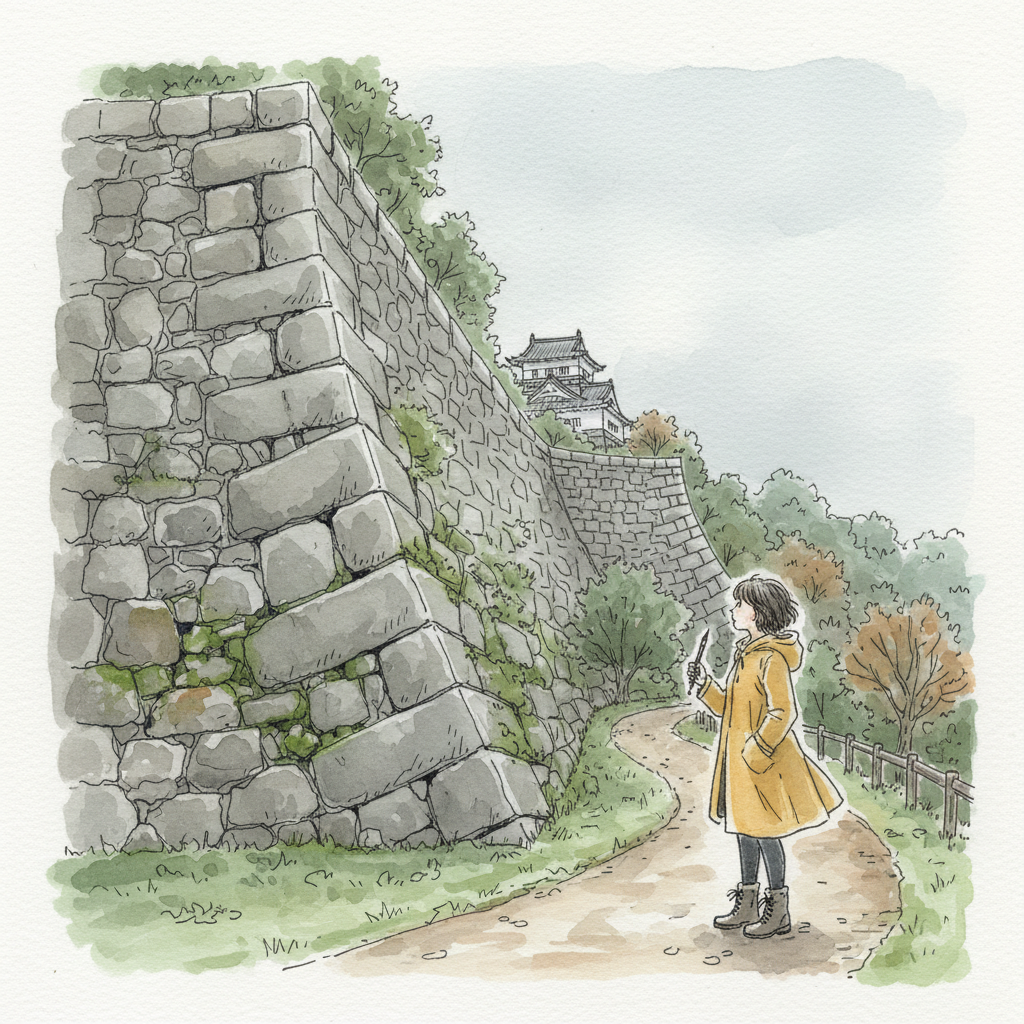
יום 40 A garden for the sea wind 4 באוקטובר 2026
From the gorge to the garden
I left Iya Valley before the mist had cleared from the river. The bus wound down the gorge road, past the vine bridge parking lot where no one was parked yet, past Ochiai with its thatched roofs still in shadow, and down toward Awa-Ikeda where the valley opens into the Yoshino River plain. At Ōboke the gorge walls fell away and the train line appeared. Two changes and two hours later I was in Takamatsu — standing at the edge of Ritsurin Garden, the Seto Inland Sea a band of silver at the garden's northern edge.
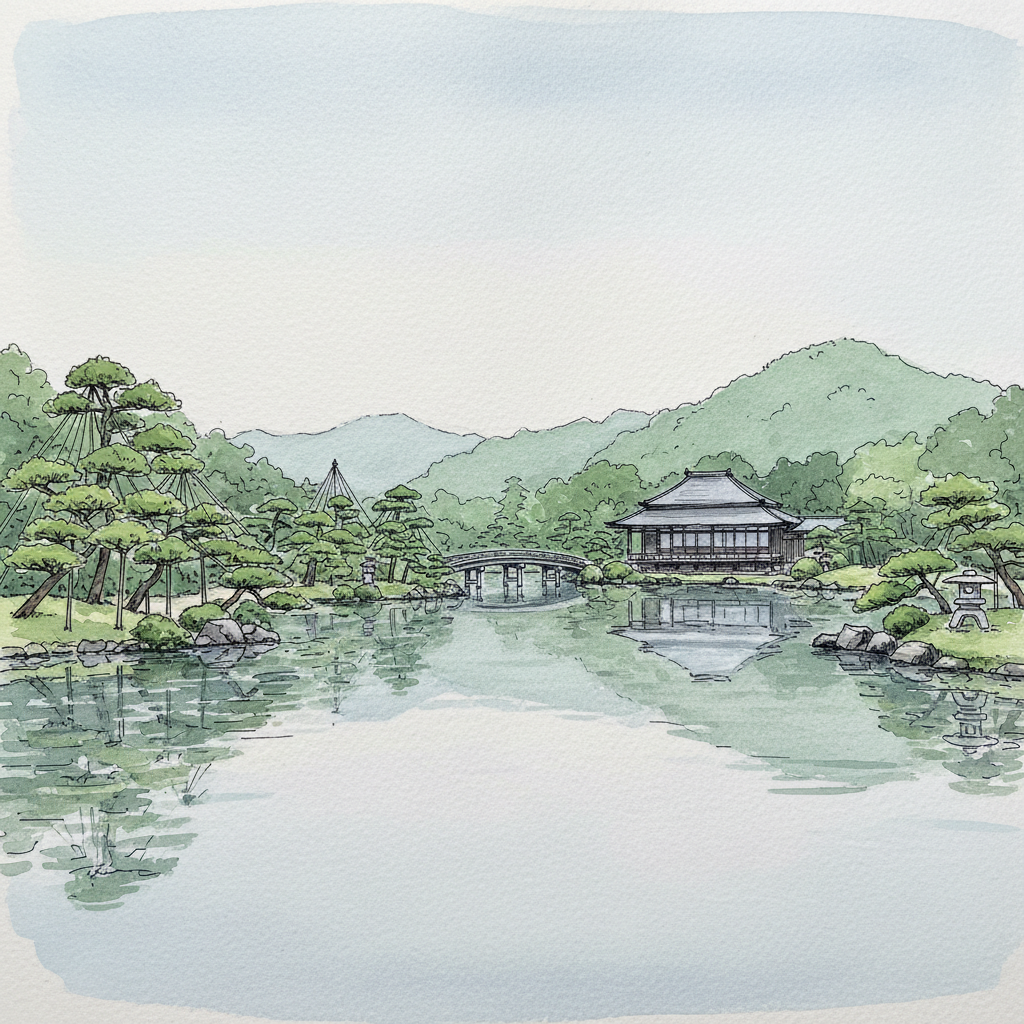
The garden was begun in the 1620s by the Ikoma clan, lords of Takamatsu Castle, and brought to completion over a century later by the Matsudaira clan who succeeded them. It is a stroll garden of the shuyū style — a landscape meant to be walked, with each turn of the path revealing a new composition of pond, bridge, stone lantern, and clipped pine. The central pond, Ōike, is shaped like the ideograph for heart — wide in the middle and narrow at both ends — and from its surface the garden's borrowed scenery draws in the low hills beyond, dissolving the garden's boundaries into the older landscape of Shikoku.
What strikes you first is not the age but the maintenance. Every branch, every stone, every curve of moss has been attended to. The pines are trimmed into cloud forms, their branches held horizontal by invisible ropes. The surface of Ōike is so clear you see the koi before you see the water. At the pond's edge sits Kikugetsu-tei, the tea house built in the late 1600s, where you can sit on the veranda with a bowl of matcha and watch the garden the way visitors have watched it for three hundred years.

I sat there as the afternoon changed, watching a woman in a dark jacket empty the bamboo ladle slowly, deliberately, into a cup and then sit still with it — the way you sit with something you are paying full attention to, even if all it is, is one hand of warm tea and one evening of October light.
Machines that breathe
Takamatsu Art Museum sits a short walk from the garden — a building by the waterfront that holds a compact but sharp collection of post-war contemporary Japanese art. What caught my eye was what is coming: from October 10 to November 29, the museum presents Art that Moves! Kinetic Art Exhibition — The Art of Light, Sound and Movement. Works that rely on motion, air currents, motors, the attention of the viewer — the opposite of Ritsurin Garden's centuries of stillness, and somehow its perfect companion. The same week I sat watching koi in a pond shaped to hold still, I could walk five blocks and watch art that has no meaning unless it is in motion.
The permanent collection (200 yen, closed Mondays) yields real finds: 20th-century printmakers pushing technique in ways that feel urgent even now, and a dedicated room for Kagawa's own artists that tells a regional art history I did not know existed. On Fridays and Saturdays during the special exhibition the museum stays open until 19:00 — worth timing for the light over the port afterwards.
The noodle that needs a walk
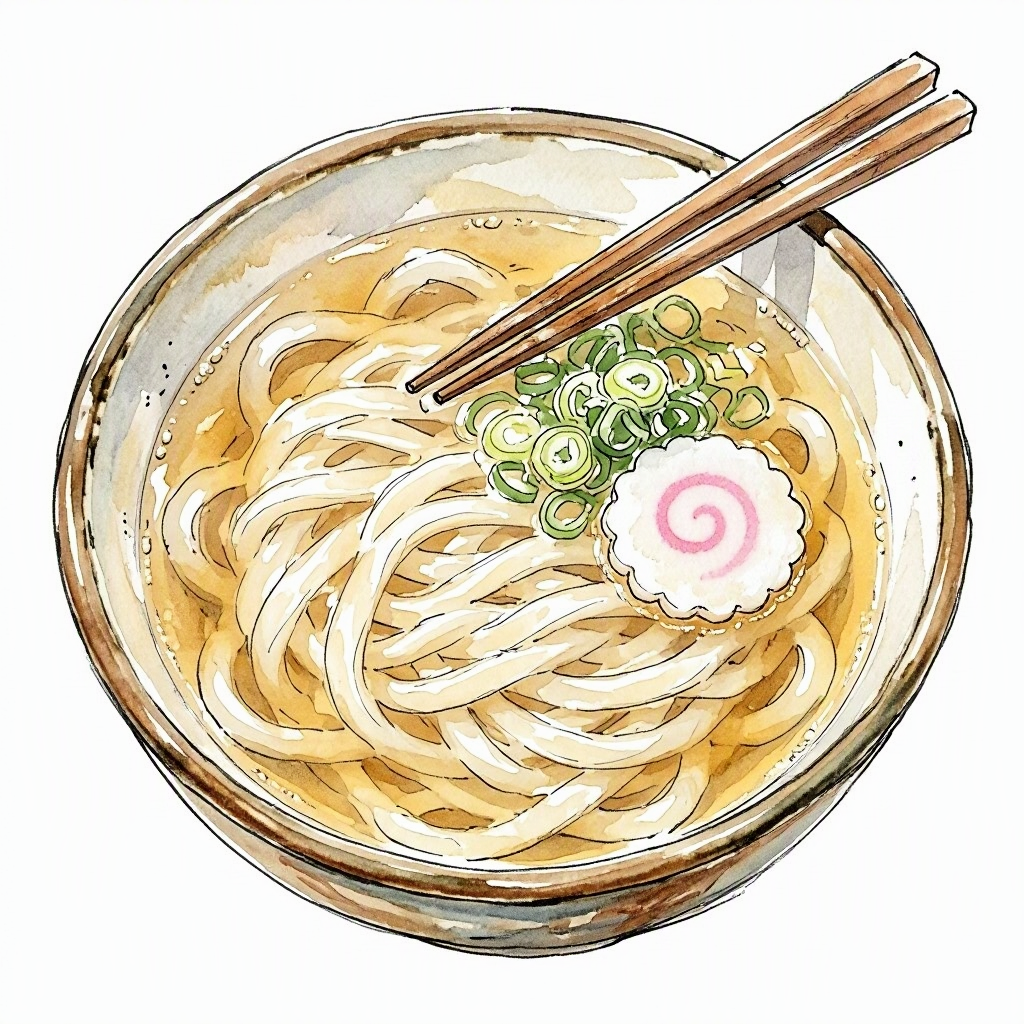
Sanuki udon is not a dish you order — it is a process you stand through. The dough is kneaded with salted water, then the real work begins: the noodle master steps onto the dough and walks on it, shifting weight from heel to toe, developing the gluten through the soles of the feet. This is the technique that gives Sanuki udon its firmness, its koshi, the resistance the tooth meets before the noodle yields. In Takamatsu the udon shops number in the hundreds, many of them self-serve counters where you grab a tray and point at what you want, and the best measure of a shop is the queue of office workers at 11:30.
Beyond the noodles, Kagawa is known for wasanbon — a fine-grained sugar candy pressed into wooden molds, traditionally given as gifts during tea ceremony. The sugar dissolves slowly, grain by grain, in the way of something made without hurry.
The food drive at the city's tables
Takamatsu runs an ongoing food drive — a city-coordinated programme where unopened, shelf-stable food that would otherwise be thrown away is collected at drop boxes in supermarkets across the city and redistributed by NPO Food Bank Kagawa to people and facilities that need it. Drop-off points include the Aeon Takamatsu and Aeon Takamatsu Higashi stores, Yume Town Takamatsu, and Seven-Eleven locations around the city (each store's address and box location is listed on the city's website). The rules are simple: unopened, at least one month before the best-before date, and shelf-stable. A bag of rice or a can of vegetables dropped into a box while you shop for your own dinner is a small thing that adds up to a real one.
The koi in Ōike

You lower yourself onto the veranda and the koi come. They know the sound of a human sitting down. Their mouths open and close at the surface — not begging, just breathing. Gold and white and the colour of old rust, they drift in the pond the gardener shaped like a heart, though their movement is not heart-shaped. It is circular, repetitive, without end. One of them has a dark spot on its side the shape of a continent. Another follows it, not close enough to be following. The surface of the water multiplies everything: the pine on the far bank, the tea house roof, your own face if you lean far enough. The koi pass through all of it without leaving a mark. Then the woman beside you empties the bamboo ladle and holds the cup in both hands and for a moment the koi are the only thing still moving in the whole garden.