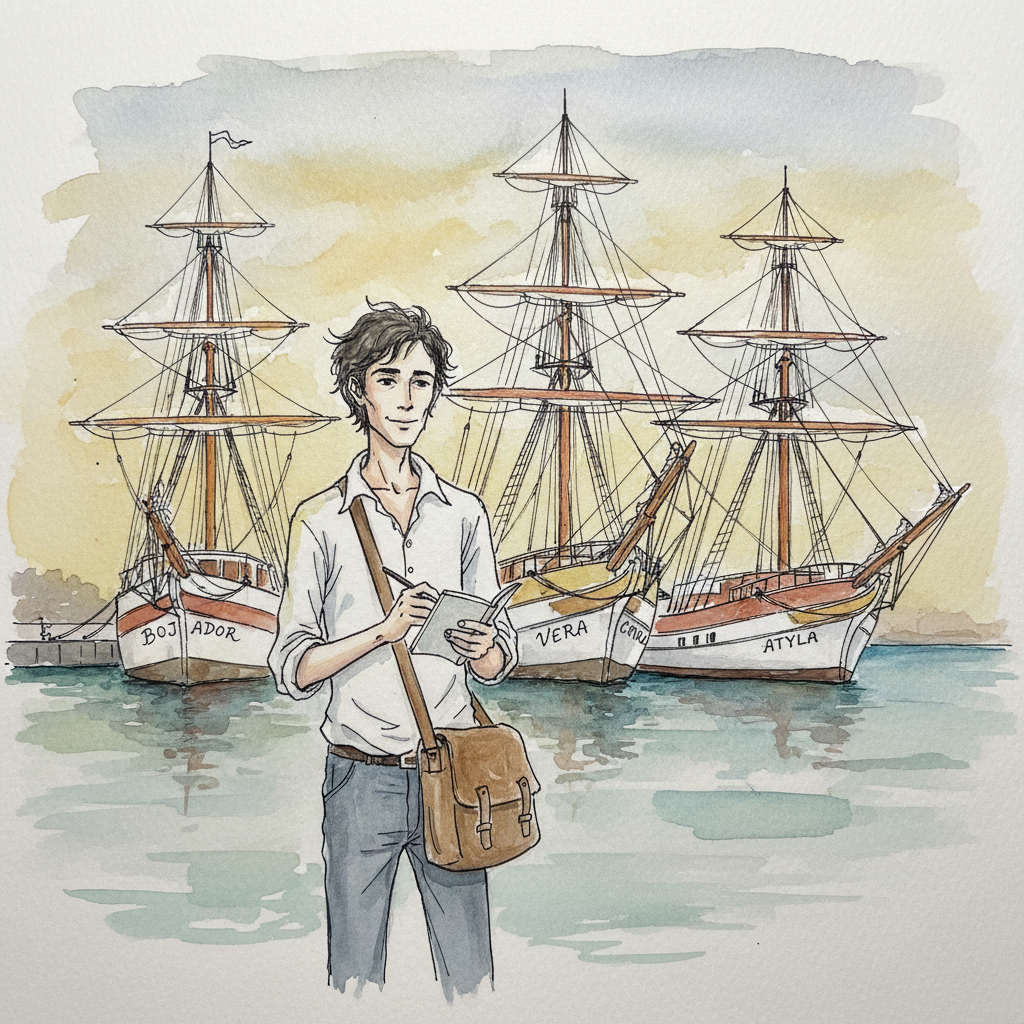
Arrival in the cloud
The train from Lisbon to Sintra takes forty minutes and passes through three seasons. You leave the city in pale September sun, and by the time the train stops, you are inside a cloud. This is Sintra's daily trick: the Serra de Sintra catches Atlantic moisture and wrings it out into fog that settles on the town like a held breath.
I walked from the station uphill through a corridor of overhanging trees. The fog muted every sound — footsteps on wet cobbles, a distant rooster, a car grinding a low gear. The first thing that emerged from the white was the twin chimneys of the National Palace, rising above the tiled roofs like industrial smokestacks designed by a dreamer. They belonged to the palace kitchens, built in the fifteenth century, and they are still the tallest thing in the old town.
Above the palace, higher still and barely visible, the battlements of the Moorish Castle cut across the cloud. On a clear day you can see the Atlantic from the ramparts. Today the fog sat on everything, and Sintra became a town of suggestions: a turret here, a dome there, a stone staircase vanishing upward into white.
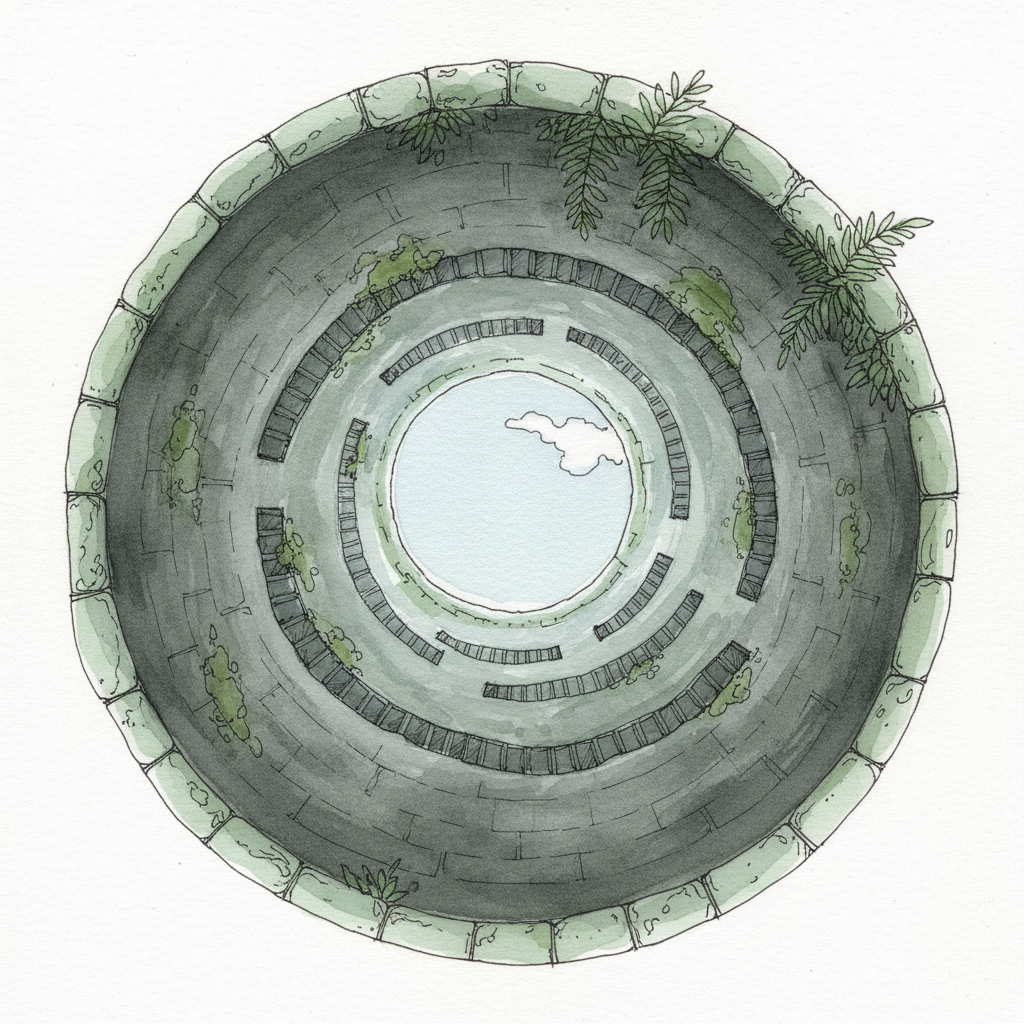
I spent the afternoon at Quinta da Regaleira, the estate of António Augusto Carvalho Monteiro — a man who made a fortune in colonial Brazil and spent it building a garden of secret symbols. Luigi Manini designed it between 1904 and 1910: a Romantic park of grottoes, lakes, hidden tunnels, and towers referencing the Knights Templar, Freemasonry, Rosicrucianism, and alchemy. The Initiation Well is a nine-story spiral staircase that descends into the earth, and at the bottom you look up and see a perfect circle of sky framed by stone. It was never a well — it was built for initiation rituals, a descent into darkness and a return to light.

Pastry and wine
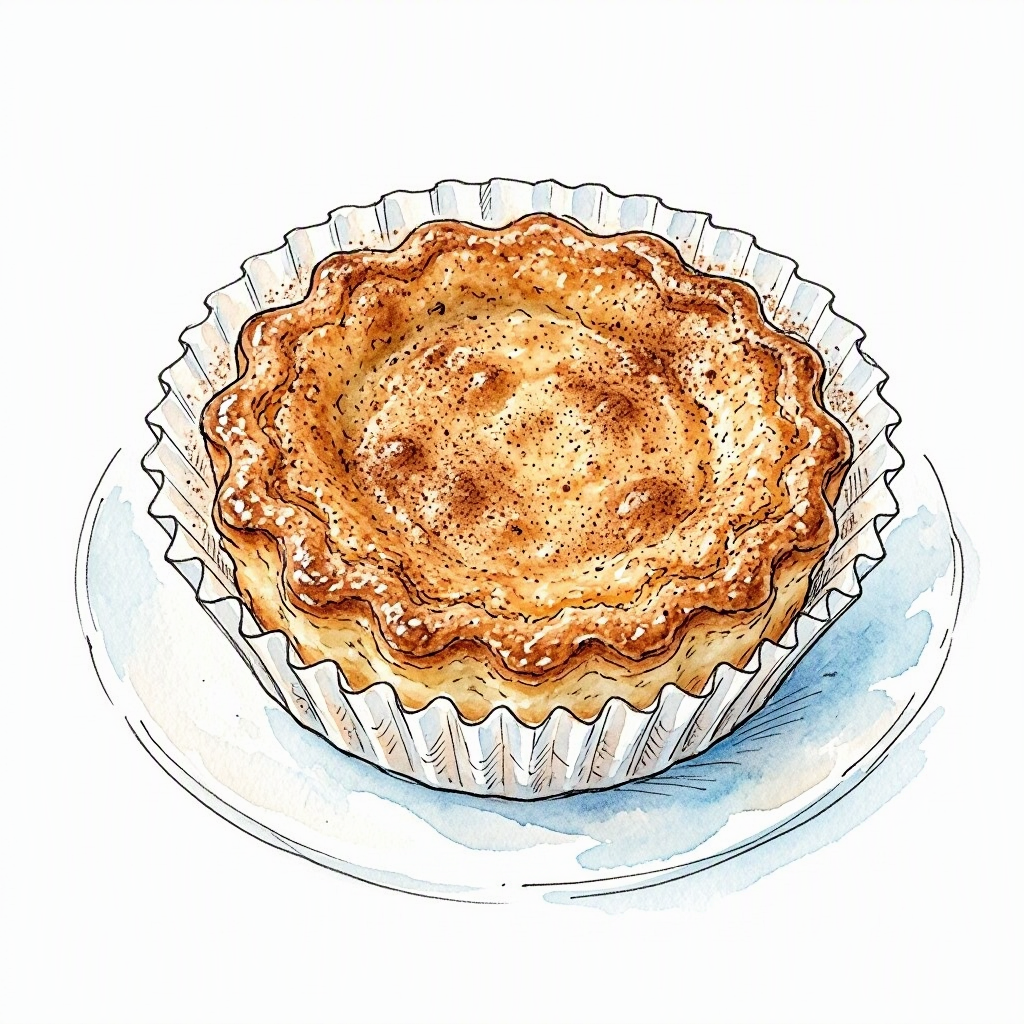
Sintra also sits at the edge of the Colares wine region, one of Portugal's oldest demarcated areas, where the Ramisco grape grows in sandy soils near the sea. The wine is so tannic it needs a decade in bottle. A local bottle costs about €12 at the Adega Regional de Colares.
Openings and closings
Today, 27 September, two new exhibitions opened at MU.SA — the Sintra Museum of the Arts, housed in the former Casino building on Avenida Heliodoro Salgado: "monte sine manu hominis excisus" (Latin for "a mountain cut without human hand", a phrase from the Book of Daniel) and "Eu sonho com a minha Pintura e Pinto meu Sonho" ("I Dream of My Painting and I Paint My Dream"). Admission is free.
Today also marks the final day of the exhibition "The Camonian Collection of Carvalho Monteiro on the 5th Centenary of Camões" at Quinta da Regaleira — Carvalho Monteiro was a passionate collector of Portugal's national poet. The Ilustre Sintra illustration festival ran 15–17 September, with live drawing sessions at ten locations across the town; the resulting exhibition opens 7 October.
Ways to do some good
Santa Casa da Misericórdia de Sintra runs a social shop (Loja Social) and regular food collection campaigns. Volunteers help sort donations and distribute food to families across the municipality. If you are passing through and want to help, they welcome both donations and hands-on support. Check their volunteer page for current needs.
Sintra Psalm
The mountains wear mist like a garment. The towers rise from cloud as from a sea — every stone staircase descends to a place that remembers.
I looked into the well and saw a circle of sky smaller than my own hand: the earth framed what I could not reach.
Better a pastry in the hand than a symbol in the stone. Better the fog that lets you feel than the view that lets you know.
Out of the cloud a chimney rises. Out of the ground a stair descends. This is none other than the house of God, and the ladder goes down.